Are Foldable Houses Worth It? Costs, Pros & Cons
Key Takeaways
- Value Drivers: Foldable houses can be worth considering when speed, transport, limited site access, or specialized use matters most. However, a low advertised price does not necessarily mean a low total project cost.
- Due Diligence: Buyers should check zoning, permits, certification, foundation requirements, utilities, insulation, weather performance, delivery, installation, financing, and insurance before ordering.
- Best Use Cases: They can be suitable for ADUs, guest spaces, remote retreats, and other specialized housing needs, but permanent primary residences require careful evaluation of local approval, building performance, and total project cost.
A foldable house can look almost too good to be true.
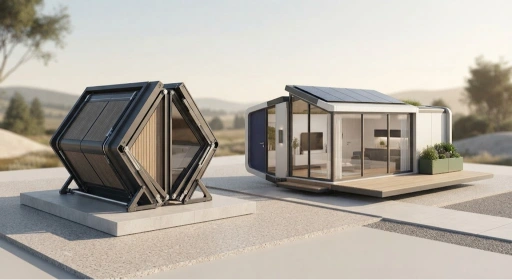
You see a compact unit arrive on a truck. Workers unfold it. Walls lock into position. Windows and doors are already installed.
Then comes the price.
Some advertised units cost far less than a conventional home.
That naturally raises one question:
Are foldable houses worth it?
The answer depends less on the folding mechanism and more on what happens after delivery.
A $40,000 or $60,000 factory price is not the same as the cost of having a legal, finished home on your property.
You may still need a foundation, engineering, permits, transportation, a crane, utility connections, insulation upgrades, site work, inspections, and interior finishes.
This guide explains those costs and the questions you should answer before buying.
What Is a Foldable House?
A foldable house is a factory-built structure designed to be transported in a compact configuration and expanded or unfolded at its destination.
Some models use steel frames and insulated panels.
Others use timber or engineered wood systems.
Some resemble shipping containers.
Others are closer to small modular homes.
The term foldable house is not a single U.S. building classification.
That distinction matters.
A manufacturer may call a product a foldable home.
Your local building department may classify it differently.
Depending on its design and intended use, it could fall under rules for a modular building, manufactured housing, accessory structure, temporary building, recreational structure, or another category.
The classification can affect permits, inspections, foundation requirements, utilities, financing, and occupancy.
The International Code Council explains that off-site construction still needs to comply with the code requirements adopted by the jurisdiction where it is assembled. There is not one universal U.S. “foldable house” code.
That means you should investigate the local approval path before paying a deposit.
Are Foldable Houses Worth It?
Foldable houses can be worth the money when their biggest advantages solve a real problem. Those advantages include compact transportation, fast deployment, factory construction, and flexible use. They may be less attractive when the goal is a conventional permanent home and the finished project cost approaches that of other permitted housing options.
Think about the purchase as a complete building project.
Do not compare the factory price with the price of a traditional house.
Compare:
Delivered + permitted + installed + connected + finished cost
with the alternatives available on your property.
That is a much better comparison.
Foldable houses can make sense when you need:
- An accessory dwelling unit.
- A guest house.
- A backyard office.
- A vacation property.
- A remote retreat.
- Temporary accommodation.
- Construction-site accommodation.
- Emergency or disaster housing.
- A small rental unit.
- Housing where transporting a large conventional module is difficult.
They can also make sense where construction time and logistics are more important than having a large floor plan.
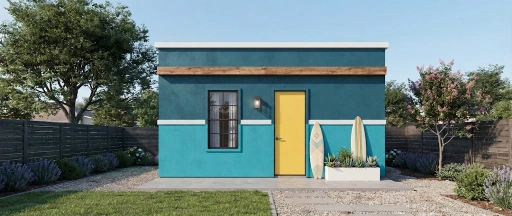
Foldable Houses vs. Standard Prefab Homes
Here is a quick breakdown of how foldable houses differ from standard prefabricated modular homes:
📦 Foldable Houses
- Design: Built with hinges and collapsible frames to fold flat for easy transport.
- Setup: Unfolds and sets up rapidly on-site.
- Portability: Designed for easy relocation and temporary use.
🏡 Standard Prefab Homes
- Design: Built as rigid, fixed modules or panels.
- Setup: Requires standard modular assembly and cranes.
- Portability: Built to stay in one permanent spot once installed.
Key Takeaways
- • Durability: Standard prefabs typically offer better long-term insulation and structural weather resistance, whereas foldable units require careful maintenance around their joints and seals.
- • Best Uses: Foldable options shine for rapid, temporary, or remote setups, while standard prefabs work best as reliable, permanent backyard offices, guest houses, or ADUs.
They may make less sense when:
- Your local government will not approve the design.
- The supplier cannot provide acceptable certification.
- You need a large family home.
- You live in a severe climate.
- The foundation is expensive.
- Utility connections are difficult.
- The delivered price approaches conventional construction.
- You need conventional mortgage financing.
- Resale value is a major priority.
How Much Does a Fold-Up House Cost?
There is no single national price for a fold-up house.
Current advertised products vary widely by size, construction method, manufacturer, certification, shipping distance, and finish level.
For example, current market listings show some foldable units with base prices in the tens of thousands of dollars. But delivered estimates can be substantially higher after transportation, site preparation, foundation work, installation, utilities, permits, and other project expenses.
That difference is one of the most important things buyers should understand.
A realistic project budget should include:
| Cost | What to investigate |
| House/unit | Base manufacturer price |
| Freight | Factory-to-property transportation |
| Unloading | Crane, forklift, or specialized equipment |
| Foundation | Slab, piers, footings, or engineered system |
| Site preparation | Grading, clearing, drainage and access |
| Permits | Building, electrical, plumbing and other approvals |
| Engineering | Structural and site-specific engineering |
| Utilities | Water, sewer, septic, electricity and gas |
| HVAC | Heating and cooling equipment |
| Installation | Assembly and connection labor |
| Interior work | Flooring, cabinets, fixtures and finishes |
| Exterior work | Steps, decks, drainage and landscaping |
| Inspections | Required inspections and final approval |
This is why comparing a $50,000 unit with a conventional $200,000-plus project can be misleading.
The meaningful number is the total completed project cost.
Why Are Foldable Houses So Much Cheaper to Transport?
Transportation is one of the strongest arguments for foldable construction.
The structure can be compressed before shipment.
That means the manufacturer can move more building volume using less transportation space.
This can be particularly useful for remote projects.
The advantage is not necessarily that the entire home is cheap.
The advantage is that the transportable package is more compact.
However, freight costs still depend on:
- Distance.
- Shipping method.
- Port charges.
- Customs requirements.
- Oversize-load restrictions.
- Local trucking.
- Crane access.
- Number of units shipped.
- Fuel prices.
- Import duties and other charges.
Always request a written delivered quote.
A factory quote is not enough.
What Are the Biggest Advantages of Foldable Houses?
1. Faster deployment
Factory construction can reduce the amount of work performed at the property.
That can shorten the on-site phase.
But “unfolded in one hour” does not mean “legally ready to occupy in one hour.”
Utilities, inspections, foundation work, permits and site preparation can take much longer.
2. Compact transportation
The folded configuration can reduce transportation volume.
This is especially useful for remote projects or multiple-unit developments.
3. Factory production
Factory construction can provide controlled working conditions.
It can also make repetitive production more predictable.
However, factory construction does not automatically guarantee high quality.
The actual materials, engineering, inspection process and quality control still matter.
4. Less weather exposure during construction
Much of the construction occurs indoors.
That can reduce some weather-related delays compared with building everything on site.
5. Flexible applications
Foldable structures can serve purposes beyond permanent housing.
They can work as:
- Offices.
- Guest spaces.
- Studios.
- Site accommodation.
- Emergency shelters.
- Vacation units.
- Small rental spaces.
6. Potentially simpler logistics
A compact shipment can be easier to transport than a fully assembled modular building.
This matters on difficult sites.
What Are the Disadvantages of Foldable Houses?
The biggest weaknesses are often hidden behind the attractive videos.
1. The advertised price may not be the final price
This is probably the biggest buyer mistake.
A unit can look inexpensive until you add:
- Freight.
- Foundation.
- Crane.
- Engineering.
- Permits.
- Utility work.
- Site preparation.
- Installation.
- HVAC.
- Interior upgrades.
Get these costs in writing.
2. Insulation can be a major concern
Steel conducts heat efficiently.
A poorly insulated steel structure can become uncomfortable in both hot and cold weather.
This issue appeared repeatedly in user discussions about inexpensive foldable and container-style structures.
The solution is not simply to ask whether insulation exists.
Ask for the actual specification.
Request:
- Wall insulation type.
- Wall thickness.
- Roof insulation.
- Floor insulation.
- Insulation R-value.
- Window specification.
- Air-sealing details.
- HVAC design.
- Climate-zone suitability.
The Department of Energy identifies the building envelope, insulation, air sealing, HVAC, ventilation and related systems as important components of manufactured-home energy performance.
3. Local approval can be difficult
This is where many online buying guides are too optimistic.
A product being sold online does not mean it can automatically be installed as a residence in your county.
The local authority may require:
- Building plans.
- Structural calculations.
- Foundation plans.
- Engineering.
- Electrical approval.
- Plumbing approval.
- Energy compliance.
- Zoning approval.
- Site-plan approval.
- Final inspection.
HUD also advises manufactured-home buyers to check local requirements involving zoning, septic, electrical and building permits, site preparation, foundations and utility connections.
4. Foundation requirements can add significant cost
“Portable” does not mean “foundation-free.”
The required foundation depends on the product and jurisdiction.
A permanent residence may need an engineered foundation or other approved support system.
So ask the manufacturer:
What foundation system is required for my exact model in my location?
Do not accept “it can go anywhere” as an answer.
5. Structural performance varies
Not every foldable structure has the same engineering.
Ask for documentation covering:
- Wind loads.
- Snow loads.
- Seismic requirements.
- Structural connections.
- Roof loads.
- Foundation connections.
- Transport loads.
- Fire performance.
- Water intrusion protection.
ICC/MBI off-site construction standards specifically address planning, fabrication, assembly, inspection and regulatory compliance.
That is a useful reminder that off-site construction still involves serious structural and regulatory requirements.
6. Folding joints need attention
A traditional wall does not repeatedly fold.
A foldable structure has hinges, connections or flexible points designed for movement.
Those components need proper engineering.
They also deserve inspection over the life of the building.
Ask the manufacturer:
- How many deployment cycles is the system designed for?
- What components require maintenance?
- Are replacement parts available?
- What happens if a hinge fails?
- Is the warranty transferable?
7. Corrosion can become an issue
Steel structures need appropriate protection.
Risk can increase in humid, coastal or highly corrosive environments.
Ask about:
- Galvanized steel.
- Protective coatings.
- Paint systems.
- Rust protection.
- Fastener materials.
- Joint sealing.
- Maintenance requirements.
Do not assume “steel” automatically means maintenance-free.
Are Foldable Houses Safe in Severe Weather?
Safety depends on the engineering and installation of the specific model. A foldable house should be evaluated for the wind, snow, seismic, flood and other environmental loads applicable to its site. The folding mechanism itself does not determine whether a home is safe.
This is another area where generic advertising can be misleading.
A unit designed for one climate may not be appropriate for another.
For example, a buyer in Florida may care strongly about hurricane-related wind requirements.
A buyer in Colorado may need to focus on snow loads.
A buyer in California may have seismic considerations.
A flood-prone site creates another set of requirements.
The foundation and anchoring system are also important.
HUD installation guidance emphasizes site-specific foundation, anchoring and local-code considerations for manufactured housing.
Therefore, never rely only on a manufacturer’s statement that a product is “strong” or “weatherproof.”
Ask for engineering documentation applicable to your property.
How Long Does a Foldable House Last?
There is no reliable universal average lifespan for all foldable houses.
That is because “foldable house” describes a construction approach rather than one standardized building product.
A well-engineered structure with durable materials, proper installation and regular maintenance can have a very different service life from a low-cost temporary unit.
The lifespan can depend on:
- Steel quality.
- Corrosion protection.
- Foundation.
- Roof system.
- Waterproofing.
- Insulation.
- Window quality.
- Joint design.
- Climate.
- Maintenance.
- Frequency of relocation.
- Quality of installation.
Be cautious when a seller promises a specific lifespan without showing engineering or warranty documentation.
Instead, ask:
What components are expected to need replacement first?
That question is often more useful than asking for one big lifespan number.
Can You Use a Foldable House as a Permanent Home?
Sometimes, but approval depends on the product and location. A foldable structure does not automatically qualify as a permanent residence simply because it has a kitchen, bathroom and bedroom. Your local authority determines whether the proposed structure can legally be occupied for residential use.
Before purchasing, contact the local building department.
Give them:
- Manufacturer name.
- Model number.
- Floor plan.
- Structural specifications.
- Foundation details.
- Electrical specifications.
- Plumbing specifications.
- Intended use.
- Exact property location.
Ask whether the unit can be approved as a permanent dwelling.
Get the answer in writing when possible.
This step can prevent an expensive mistake.
What Is the Difference Between a Foldable, Modular and Manufactured Home?
These terms are often mixed together online.
They are not necessarily interchangeable.
| Type | General description | Main issue to verify |
| Foldable home | Designed to fold for transport | Certification and local approval |
| Modular home | Factory-built modules assembled on site | State/local modular requirements |
| Manufactured home | Built under federal HUD manufactured-housing standards | HUD compliance and installation |
| Container home | Uses a shipping-container structure or appearance | Structural modifications and local code |
| Tiny home | Small dwelling with varying construction methods | Local definition and zoning |
| Site-built home | Constructed mainly on the property | Traditional permitting and code |
The most important question is not what the manufacturer calls the building.
It is:
What regulatory category will your local authority recognize?
ICC explains that most off-site construction must meet the codes applicable in the jurisdiction where it is assembled, while manufactured housing is subject to the federal HUD manufactured-housing framework.
Is a Foldable House Cheaper Than a Traditional Home?
It can be cheaper in some projects, but there is no universal rule that foldable homes cost less. The comparison should use the completed project cost, not the advertised factory price.
Traditional construction also has major costs.
NAHB reported that regulatory costs alone added substantial expense to the price of a typical new single-family home in its 2026 study.
Construction costs also vary greatly by location.
NAHB’s recent data shows that material costs remain an important pressure on builders.
That means there is no useful nationwide answer such as “foldable homes are always 50% cheaper.”
Instead, obtain two complete project estimates.
Quote A
Foldable home:
Unit + freight + foundation + permits + site work + utilities + installation + finishes
Quote B
Alternative:
Modular home or conventional construction + foundation + permits + site work + utilities + finishes
Then compare the totals.
Can You Finance a Foldable House?
Financing can be more complicated than buying a conventional house.
The difficulty depends on:
- Whether the unit is legally classified as a dwelling.
- Whether it is permanently installed.
- Whether it meets applicable codes.
- Whether it has recognized certification.
- Whether it sits on land you own.
- Whether the lender accepts the construction type.
- Whether the property can be appraised.
Ask lenders about financing before ordering the unit.
Do not assume a standard mortgage will be available.
You should also ask insurance companies whether they will insure the exact structure.
What About Resale Value?
Resale value is difficult to predict.
A conventional home has a large established market.
A specialized foldable structure may have a smaller buyer pool.
Resale can be affected by:
- Local legality.
- Foundation type.
- Certification.
- Property classification.
- Financing availability.
- Insurance.
- Age.
- Condition.
- Manufacturer reputation.
- Local demand.
- Whether the unit can be relocated.
A cheap purchase price does not guarantee a good investment.
If resale matters, investigate comparable properties in your area before buying.
Are Smart Foldable Houses Worth It?
A smart foldable house can include features such as:
- Smart lighting.
- Smart locks.
- Remote HVAC controls.
- Energy monitoring.
- Security cameras.
- Automated blinds.
- Solar integration.
- Smart appliances.
These features can improve convenience.
But they should not be the first thing you evaluate.
First establish that the structure itself is suitable.
Prioritize:
- Code compliance.
- Structural engineering.
- Foundation.
- Weather resistance.
- Insulation.
- Electrical safety.
- Plumbing.
- Warranty.
- Delivered cost.
- Local approval.
Smart-home technology comes after those fundamentals.
What Should You Ask a Foldable House Manufacturer?
Before paying a deposit, request written answers to these questions.
Certification and legality
- What U.S. certification does this exact model have?
- Which states have approved it?
- Can it be used as a permanent residence?
- Has the model been approved in my jurisdiction?
- Who handles permitting?
Structure
- What structural system does it use?
- What are the wind and snow ratings?
- What seismic requirements does it meet?
- What foundation is required?
- How is the structure anchored?
Energy
- What is the wall R-value?
- What is the roof R-value?
- What is the floor R-value?
- What windows are included?
- What HVAC system is recommended?
Delivery
- What is included in the shipping quote?
- Does the price include unloading?
- Is a crane required?
- What site access is needed?
Utilities
- Are electrical components included?
- Is plumbing included?
- Are HVAC systems included?
- What must be completed locally?
Warranty
- How long is the structural warranty?
- What is covered?
- Are hinges covered?
- Are leaks covered?
- Are replacement parts available?
Total price
Ask for one written estimate covering:
Unit + delivery + installation + foundation + utilities + permits + required upgrades.
That number is much more useful than the website’s headline price.
A Foldable House Buyer Checklist
Before ordering, complete this checklist.
Property
- Confirm zoning.
- Confirm residential use is allowed.
- Check setbacks.
- Check lot coverage limits.
- Check HOA restrictions.
- Check flood-zone requirements.
- Check utility availability.
- Confirm road access.
Building
- Confirm certification.
- Obtain structural drawings.
- Obtain foundation requirements.
- Check insulation specifications.
- Check windows and doors.
- Check roof loading.
- Check wind rating.
- Check seismic requirements.
Money
- Get a delivered quote.
- Price the foundation.
- Price site preparation.
- Price utility connections.
- Price permits.
- Price engineering.
- Price installation.
- Ask about financing.
- Ask about insurance.
Manufacturer
- Verify company identity.
- Request references.
- Check warranty.
- Confirm parts availability.
- Ask about U.S. installations.
- Request written specifications.
- Confirm delivery timeline.
So, Should You Buy a Foldable House?
A foldable house is worth considering when its speed, compact transportation and flexible design solve a specific property or housing need. It deserves more caution when the seller cannot clearly document U.S. compliance, total installed cost, structural performance and warranty support.
The biggest mistake is buying the house first and asking about approval later.
Reverse that process.
Start with your property.
Then confirm zoning.
Then confirm the building department’s requirements.
Then evaluate the manufacturer’s documentation.
Then calculate the complete installed cost.
Only after those steps should you compare the foldable house with a modular, manufactured or site-built alternative.
For more home improvement planning and practical renovation guidance, explore Home Renova Hub and its resources on kitchen remodeling ideas and costs.
If you are planning a kitchen project after installing a small prefab home, you can also browse these 50 kitchen ideas for a more beautiful and functional home: 50 Kitchen Ideas for 2026.
For bathroom planning, see the bathroom fan size calculator and these minimalist bathroom ideas.
If this guide helped you understand the real costs and risks of foldable homes, share this with someone considering a prefab or tiny home.
FAQ Section
How much is a fold-up house?
A fold-up house can have a base price in the tens of thousands of dollars, but the final project can cost much more. Delivery, foundation, permits, engineering, site preparation, utilities, installation and interior work can substantially increase the total. Always compare the complete installed price, not only the advertised unit price.
Is it cheaper to buy a prebuilt house?
A prebuilt or prefab house can reduce some construction time and factory-build certain components more efficiently. However, it is not automatically cheaper than conventional construction. The best comparison is the total installed cost for the same property, size, specifications and level of finish.
What is the average lifespan of a container house?
There is no reliable universal lifespan for container houses. Durability depends on structural design, corrosion protection, foundation, climate, waterproofing, insulation, modifications and maintenance. Ask the manufacturer for engineering documentation, warranty terms and expected maintenance rather than relying on a generic lifespan number.
How much is a smart house foldable house?
There is no standard price for a smart foldable house. The cost depends on the structure, floor area, smart-home equipment, appliances, HVAC, electrical system, shipping and installation. Smart features should be priced separately from the basic building so you can see what you are actually paying for.
Can I put a foldable house on my property?
Possibly, but you must confirm local zoning and building requirements first. A foldable house may require permits, an approved foundation, utility connections and inspections. The fact that a manufacturer sells the unit does not mean your local jurisdiction automatically permits it.
Do foldable houses need foundations?
Many permanent installations require an approved support or foundation system. The exact requirement depends on the structure, site conditions and local rules. Ask for foundation drawings and have the local building department confirm what is acceptable before purchasing.
Are foldable houses good for full-time living?
Some may be suitable for full-time living, but suitability depends on code approval, insulation, ventilation, HVAC, structural performance, floor area, plumbing, electrical systems and local regulations. A unit designed primarily as temporary accommodation should not automatically be treated as a permanent residence.
Are foldable houses energy efficient?
They can be energy efficient, but the folding design itself does not guarantee efficiency. Insulation, air sealing, windows, HVAC, ventilation and building-envelope design matter much more. Request actual insulation and energy specifications instead of relying on general claims.
Can a foldable house withstand hurricanes or strong winds?
That depends on the specific engineering and installation. Buyers in hurricane-prone areas should request documentation showing the applicable wind design, structural connections, anchoring and foundation requirements. Do not assume that all steel or container-style structures have the same wind performance.
Can you finance a foldable house with a mortgage?
Financing depends on how the property and structure are classified, whether the home meets applicable requirements, whether it is permanently installed and whether the lender accepts the construction type. Ask potential lenders before placing a deposit.
Do foldable houses have good resale value?
Resale value varies considerably. Certification, legal residential use, location, foundation, condition, financing availability and buyer demand can all affect resale. A specialized foldable structure may have a smaller resale market than a conventional home.
Are foldable houses actually portable?
Some are designed to be relocated, but “foldable” does not necessarily mean that you can legally move and reinstall the structure anywhere. Relocation can involve transportation, permits, engineering, utilities and a new foundation or site.
What should I check before buying a foldable house?
Check five things first: legal approval, structural documentation, total delivered cost, building performance and manufacturer support. Then investigate foundation requirements, utilities, warranty, insurance, financing and resale before signing a purchase contract.
Disclaimer
Building codes, zoning rules, permit requirements, costs, financing options, product specifications and other housing regulations can change over time and can differ by state, county, city and property. Information in this article is provided for general educational purposes and should not replace advice from your local building department, qualified engineer, contractor, lender, insurer or other appropriate professional. Always verify current requirements and costs for your specific property before purchasing or installing a foldable home.