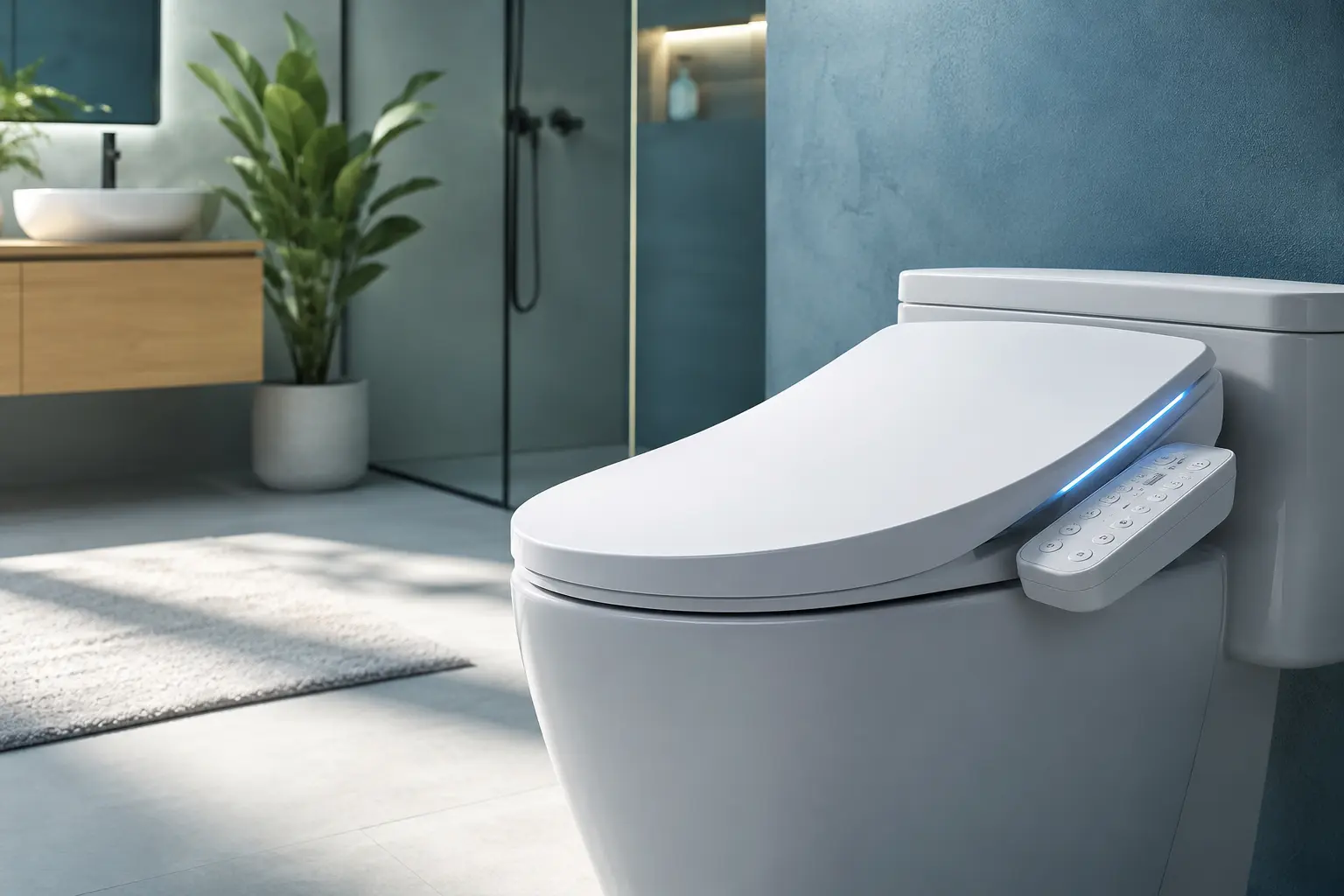
Best Bidet Toilet Seats for Comfort, Value and Fit
Updated July 2026
Shopping for the best bidet toilet seats can become confusing quickly. One model promises endless warm water, another has a dryer and remote, and a third costs much less but requires no electricity. Before comparing those extras, however, you need to know whether the seat will fit your toilet, whether your bathroom has a safe outlet, and which features will make a meaningful difference in daily use.
This guide compares eight strong options for different bathrooms, budgets, and comfort needs. It also explains bowl measurements, electrical planning, installation, accessibility, maintenance, and the difference between electric and non-electric seats.
The goal is not to persuade you to buy the most expensive model. It is to help you choose a seat that fits your toilet, your household, and your bathroom-remodeling plans.
Editorial transparency: This is a research-based buying guide. Recommendations are based on official specifications, recognized safety and plumbing standards, current availability, and independent editorial evaluations. Home renova hub did not conduct laboratory testing on every model listed.
What Is the Best Bidet Toilet Seat for Most Homes?
The Brondell Swash 1400 is our research-based overall pick because it combines endless warm water, an adjustable nozzle, a heated seat, a dryer, a deodorizer, user presets, and round or elongated configurations. It provides a broad feature set without requiring buyers to enter the highest luxury price tier.
The best choice still depends on your priorities. Someone who wants powerful water pressure may prefer the Bio Bidet BB-2000. A design-focused luxury bathroom may justify the TOTO S7A. A bathroom without an electrical outlet may be better suited to the Bio Bidet Slim Zero.
Quick recommendations
- Best overall: Brondell Swash 1400
- Best for a powerful wash: Bio Bidet BB-2000
- Best luxury option: TOTO Washlet S7A
- Best for multiple users: TOTO Washlet C5
- Best design-value balance: Kohler PureWash E820
- Best slim-profile seat: Alpha Bidet UX Pearl
- Best entry-level electric option: TUSHY Cloud
- Best non-electric seat: Bio Bidet Slim Zero
Best Bidet Toilet Seats Compared
| Bidet seat | Power | Heating system | Controls | Best for | Important consideration |
| Brondell Swash 1400 | Electric | Tankless, continuous warm water | Wireless remote | Best overall balance | Confirm outlet and toilet fit |
| Bio Bidet BB-2000 | Electric | Unlimited warm water | Wireless remote | Strong, adjustable wash | Powerful spray may require a lower initial setting |
| TOTO Washlet S7A | Electric | Continuous warm water | Remote | Premium bathrooms | High purchase price |
| TOTO Washlet C5 | Electric | Heated reservoir | Remote with presets | Multiple household users | Warm-water supply is not endless |
| Kohler PureWash E820 | Electric | Heated water | Remote | Sleek design and value | Commonly sold for elongated bowls |
| Alpha Bidet UX Pearl | Electric | Tankless | Remote | Slim profile and modern controls | Check rear clearance carefully |
| TUSHY Cloud | Electric | Continuous warm water | Side control | Simple electric upgrade | Side panel may be harder for some users to reach |
| Bio Bidet Slim Zero | Non-electric | Unheated | Side lever | Bathrooms without outlets | Water temperature matches the supply line |
Specifications can vary by bowl shape, product revision, and retailer package. Verify the manufacturer’s current specification sheet before ordering.
1. Brondell Swash 1400: Best Overall Bidet Toilet Seat
The Brondell Swash 1400 offers one of the most complete feature sets for a typical household. Its endless warm water, heated seat, adjustable nozzle positions, warm-air dryer, deodorizer, night-light, user presets, and round or elongated options make it suitable for many bathrooms and user preferences.
Brondell lists seven nozzle positions, two user presets, an activated-carbon deodorizer, an eco mode, hidden water and power connections, and a sittable lid. The seat is offered in both common North American bowl shapes and carries cETL and cUPC certifications. (Brondell)
Pros
- Continuous warm-water washing
- Round and elongated versions
- Two user-memory presets
- Adjustable spray position and pressure
- Heated seat and warm-air dryer
- Deodorizer and night-light
- Cleaner-looking concealed connections
Cons
- Requires a nearby electrical outlet
- More expensive than basic electric models
- Additional controls may feel complicated at first
Who should buy it?
Choose the Swash 1400 when several people will use the seat and you want strong everyday comfort without moving into the highest luxury price bracket.
2. Bio Bidet BB-2000: Best for a Powerful Wash
The Bio Bidet BB-2000 is a strong option for users who prioritize water pressure and wash performance. It combines an unlimited warm-water system with adjustable pressure, nozzle position, heated seating, air drying, deodorizing, a night-light, and a stainless-steel nozzle controlled through a remote.
Its signature vortex-style wash is designed to produce a more concentrated stream than many softer-spray seats. WIRED also selected the BB-2000 for users who prefer a notably strong spray. Start with a lower pressure setting and increase it gradually based on comfort. (Bio Bidet)
Pros
- Strong and adjustable spray
- Unlimited warm water
- Stainless-steel nozzle
- Heated seat and dryer
- Remote control
- Round and elongated models
- Front, rear, and specialty wash settings
Cons
- Strongest settings may be uncomfortable for sensitive users
- Bulky rear housing compared with slimmer seats
- Premium price compared with basic electric models
Who should buy it?
The BB-2000 is best for someone who values wash strength more than an ultra-slim design.
3. TOTO Washlet S7A: Best Luxury Bidet Seat
The TOTO Washlet S7A is the premium choice for buyers seeking refined controls, a slim profile, automated functions, consistent warm water, and polished bathroom integration. It makes the most sense in an upscale remodel where design, convenience, and finish quality matter as much as basic cleaning.
The S7A includes a remote, adjustable spray functions, warm-water washing, a heated seat, warm-air drying, bowl-misting features, and automated lid functionality on applicable configurations. Independent reviewers frequently place it among the strongest high-end choices, but its price is considerably higher than capable midrange seats. (WIRED)
Pros
- Slim, premium appearance
- Automated lid functions
- Continuous warm water
- Refined spray adjustments
- Heated seat and dryer
- Strong brand ecosystem and documentation
Cons
- Expensive
- Some convenience features may not justify the cost for every household
- Requires careful fit and outlet planning
Who should buy it?
Choose the S7A for a premium primary bathroom where the seat will be used daily and the budget allows you to prioritize design and automation.
4. TOTO Washlet C5: Best for Multiple Users
The TOTO Washlet C5 is well suited to households that want reliable comfort and saved settings without paying for TOTO’s most advanced models. Its remote includes user-memory options, while adjustable water temperature, pressure, nozzle position, heated seating, drying, deodorizing, PREMIST, and wand-cleaning functions cover the essential premium features.
Unlike tankless seats, the C5 uses a heated reservoir. That usually provides warm water immediately but not indefinitely. TOTO’s specification sheet lists compliance with relevant plumbing and electrical standards, including ASME, CSA, and UL requirements. (Toto USA)
Pros
- User-memory settings
- Reputable manufacturer
- Adjustable temperature and pressure
- Heated seat and dryer
- Deodorizer
- PREMIST bowl-wetting function
- Detailed official installation documentation
Cons
- Warm-water supply is limited by the reservoir
- Rear housing is larger than slim tankless models
- Requires electricity
Who should buy it?
The C5 is a practical choice for couples or families who want individual settings and dependable comfort but do not need automatic lid operation.
5. Kohler PureWash E820: Best Design and Value Balance
The Kohler PureWash E820 is a compelling choice for buyers who want a recognized bathroom brand, a streamlined appearance, remote operation, warm-water washing, and useful sanitation features without paying top-tier luxury prices. It works particularly well in coordinated Kohler bathroom projects.
WIRED praised the E820 for its sleek design, effective spray, dryer, backup controls, and value compared with some similarly equipped premium models. Check the exact product listing because bowl-shape availability and included features can vary by configuration. (kohler)
Pros
- Streamlined design
- Remote plus backup controls
- Heated water and seat
- Warm-air drying
- Brand-backed documentation
- Useful option for coordinated bathroom fixtures
Cons
- Frequently associated with elongated-bowl configurations
- Fewer user-memory features than some competitors
- Final price varies by retailer and finish
Who should buy it?
Choose this model when appearance and trusted bathroom-brand support are major factors, but you do not need the most advanced automation.
6. Alpha Bidet UX Pearl: Best Slim-Profile Seat
The Alpha Bidet UX Pearl is designed for buyers who dislike the bulky rear housing found on many electric bidet seats. Its low-profile body combines tankless warm water, a stainless-steel arc nozzle, modern remote controls, and bowl-freshening technology in a seat intended to look more integrated with the toilet.
The manufacturer describes a rear height of approximately 4.5 inches and includes continuous warm water, a stainless-steel nozzle, and a plasma-based bowl system. An automatic-lid version is also offered. Measure the area between the toilet bolt holes and tank carefully because low-profile designs still require minimum rear clearance. (Alpha Bidet)
Pros
- Slimmer rear profile
- Tankless warm-water system
- Stainless-steel nozzle
- Modern remote
- Automatic-lid configuration available
- Suitable for design-conscious remodels
Cons
- Fit can be sensitive to rear clearance
- Less widely available than larger mainstream brands
- Premium features increase the cost
Who should buy it?
The UX Pearl is best for modern bathrooms where minimizing the visual bulk of the bidet seat is a priority.
7. TUSHY Cloud: Best Entry-Level Electric Option
The TUSHY Cloud provides many desirable electric features at a lower entry point than numerous luxury seats. It offers continuous warm water, a heated seat, warm-air drying, a night-light, nozzle sterilization, and straightforward side controls, making it approachable for first-time electric-bidet buyers.
TUSHY specifies that the seat requires a grounded 120-volt, three-prong GFCI outlet and lists a 48-inch power cord. Its side control avoids a separate remote, although that layout may be less convenient for users with limited twisting or reaching ability. (TUSHY)
Pros
- Continuous warm water
- Heated seat
- Warm-air dryer
- Simple built-in controls
- Night-light
- Lower cost than many premium electric seats
Cons
- Side controls may be difficult for some users
- Requires an appropriately located GFCI outlet
- Designed for elongated toilets
Who should buy it?
Choose the Cloud for a straightforward first electric bidet, particularly when you prefer built-in controls and do not need multiple user presets.
8. Bio Bidet Slim Zero: Best Non-Electric Bidet Seat
The Bio Bidet Slim Zero is the best fit for bathrooms without an outlet or buyers seeking a simple, low-cost seat. It uses water pressure rather than electricity and includes dual nozzles, an adjustable side control, a slow-closing seat, and a battery-powered night-light.
Because it does not heat water, the spray temperature will generally match the incoming cold-water line. Its simpler construction reduces electronic maintenance and eliminates the need for electrical planning. The manufacturer offers round and elongated configurations. (Bio Bidet)
Pros
- No electrical outlet required
- Low purchase price
- Round and elongated versions
- Dual wash nozzles
- Simple controls
- Slow-closing seat
- Fewer electronic parts to maintain
Cons
- No heated water
- No heated seat
- No warm-air dryer
- Water pressure depends partly on the home’s supply
Who should buy it?
Select the Slim Zero for a rental, guest bathroom, powder room, or remodel where installing a new outlet would add too much cost.
How Do You Choose the Right Bidet Toilet Seat?
Choose a bidet seat by checking toilet shape, mounting clearances, electrical access, heating type, controls, wash adjustment, cleaning features, and warranty support. Start with compatibility rather than luxury features. A highly rated seat is still a poor purchase when it does not fit the toilet or cannot be powered safely.
1. Measure your toilet before shopping
Most residential toilets are either round-front or elongated.
A round bowl is commonly about 16.5 inches from the mounting-bolt centerline to the front edge. An elongated bowl is commonly about 18.5 inches. These are general reference measurements, not a substitute for the manufacturer’s fit diagram. (Business Insider)
Measure:
- From the center of the seat-mounting holes to the front rim
- The distance between the two mounting holes
- The clearance from the mounting holes to the tank
- The bowl width at its widest point
- Available space around the water shutoff and supply hose
One-piece, skirted, French-curve, and unusually compact toilets sometimes require special mounting hardware or may not accept every bidet seat.
2. Decide between electric and non-electric
Electric bidet seats offer warm water, heated seating, drying, and more precise controls. Non-electric seats cost less, need no outlet, and have fewer components to maintain. The right choice depends on comfort expectations, bathroom wiring, local climate, budget, and how frequently the seat will be used.
| Feature | Electric seat | Non-electric seat |
| Warm water | Usually available | Usually unavailable unless connected to a hot-water line |
| Heated seat | Common | No |
| Air dryer | Common | No |
| Adjustable temperature | Common | No |
| Outlet required | Yes | No |
| Purchase cost | Moderate to high | Low |
| Installation complexity | Moderate | Low |
| Electronic maintenance | Possible | Minimal |
A non-electric seat is not automatically inferior. It may be the smarter solution for a guest bathroom or rental where simplicity matters more than heated features.
3. Understand tank, hybrid, and tankless heating
Tank systems store a limited amount of heated water, tankless systems heat water as it flows, and hybrid systems combine stored water with on-demand heating. Tankless designs generally provide longer warm washes and slimmer profiles, while tank systems may cost less and deliver warm water immediately.
- Tank heating: Lower cost, but the warm-water supply can run cool during a long wash.
- Tankless heating: Continuous warm water and usually a slimmer rear housing.
- Hybrid heating: Attempts to balance fast delivery with longer warm-water availability.
For a single user and short wash cycles, a tank model may be completely adequate. A larger household may benefit more from tankless heating.
4. Prioritize adjustable pressure and nozzle position
Look for several pressure levels and enough nozzle-position adjustment to accommodate different body sizes. Oscillating or moving sprays can improve coverage, but maximum pressure is not always better.
Start with low pressure, especially for children, older adults, postpartum users, or anyone with sensitive skin.
5. Evaluate the controls
A wireless remote is often easier to see and operate than a narrow side panel. It may be especially helpful for users with reduced mobility, limited hand strength, or difficulty twisting.
Side controls have advantages too: they cannot be misplaced, do not need wall mounting, and may reduce product cost.
For multiple users, look for memory presets that save water temperature, pressure, nozzle position, and seat temperature.
6. Decide whether a dryer is important
Warm-air dryers can reduce toilet-paper use, but drying performance varies. Even effective dryers often take longer than wiping, and some users still prefer a small amount of paper to finish drying. Independent reviewers commonly identify dryer speed as one of the less consistent bidet-seat features. (WIRED)
A dryer is most valuable for:
- Users with limited reach
- People trying to reduce wiping
- Households seeking a more hands-free routine
- Anyone willing to allow extra drying time
7. Look for practical cleaning features
Useful features include:
- Retractable nozzles
- Automatic nozzle rinsing
- Removable nozzle tips
- Quick-release seat mounting
- Smooth surfaces with few seams
- Replaceable deodorizer filters
- Manufacturer-approved descaling procedures
“Self-cleaning” does not mean maintenance-free. The seat, nozzle area, filter, and toilet still need routine cleaning.
8. Check certifications and warranty terms
Look for recognized electrical and plumbing certifications listed in the official specification sheet. Do not rely only on a retailer’s marketing copy.
Read the warranty carefully. Some warranties are prorated, meaning coverage declines over time. Also check whether the company maintains replacement parts, filters, hoses, mounting plates, and remote controls.
What Electrical Outlet Does an Electric Bidet Need?
Most electric bidet seats need a grounded 120-volt outlet located close enough for the factory cord to reach without an extension cord. Because the appliance is used in a bathroom near water, a GFCI-protected receptacle and installation that meets local electrical code are important safety considerations.
The U.S. Consumer Product Safety Commission recommends GFCI protection for bathroom receptacles and advises consumers to test GFCI devices regularly. A GFCI is intended to interrupt power rapidly when it detects an imbalance that could indicate current flowing through an unintended path. (U.S. Consumer Product Safety Commission)
Before buying an electric seat:
- Check the manufacturer’s voltage, amperage, and cord-length specifications.
- Confirm which side of the seat the power cord exits.
- Ensure the plug can reach without crossing a walkway.
- Avoid placing the receptacle where it will be routinely sprayed.
- Do not assume an extension cord is an acceptable permanent solution.
- Ask a licensed electrician whether the existing bathroom circuit can support the load.
- Follow the current electrical code adopted in your city or state.
For remodeling projects, add the outlet before closing the wall or completing tile work. This is usually cleaner and less disruptive than retrofitting power later.
How Does a Bidet Seat Fit Into a Bathroom Remodeling Guide?
A bidet seat should be planned early in a bathroom remodel because it can affect outlet placement, toilet selection, supply-line access, clearances, seat height, and accessibility. Coordinating these details before tile, cabinetry, and electrical work are complete reduces the risk of visible cords, blocked controls, or an incompatible toilet.
Use this remodeling checklist:
Choose the toilet and bidet together
Do not select a toilet only for appearance and assume every bidet seat will fit. Check:
- Round versus elongated bowl
- Bolt-to-tank clearance
- Bowl width
- One-piece or two-piece construction
- Skirted side panels
- French-curve tank design
- Seat mounting access
Plan the outlet location
The receptacle should be close enough for the factory cord while remaining appropriately protected and accessible. Confirm whether the cord exits from the left or right side when facing the toilet.
Keep the shutoff valve accessible
The bidet’s T-valve typically connects at the toilet’s fill-valve inlet. Decorative panels, tight vanities, or skirted bowls can make the connection difficult to reach.
Consider finished seat height
Adding a bidet seat can slightly alter sitting height and the shape of the seating surface. In accessible toilet rooms, the U.S. Access Board generally identifies a water-closet seat height of 17 to 19 inches, with a broader 15-to-19-inch range permitted in certain residential settings. Verify the requirements that apply to your project. (Access Board)
Test the controls
A remote may be easier to position near a grab bar or on a convenient wall. A fixed side panel can conflict with a wall, vanity, mobility device, or a user’s reach range.
For more remodeling advice, explore Home renova hub’s practical home renovation resources.
Are Bidet Toilet Seats Sanitary?
A properly used and regularly cleaned bidet seat can reduce direct wiping and provide a gentle water-based cleaning method. However, a bidet is not a medical treatment, and hygiene depends on correct pressure, short wash times, clean equipment, handwashing, and routine maintenance.
Research does not support exaggerated claims that bidets prevent every infection or cure common medical conditions. A one-year study found no causal relationship between habitual bidet use and most of the urogenital conditions it examined, although researchers identified an exception involving bacterial vaginitis that required further consideration. Other reviews caution that prolonged or high-pressure use may irritate sensitive tissue. (PMC)
Good habits include:
- Begin with gentle pressure.
- Avoid unnecessarily long wash cycles.
- Use front-wash functions in the intended direction.
- Clean the nozzle and surrounding area as instructed.
- Wash your hands after using the toilet.
- Do not share detachable accessories that contact the body.
- Ask a qualified healthcare professional for advice after surgery, childbirth, or when managing a medical condition.
The strongest practical benefits are reduced wiping, improved comfort, and the potential for greater independence—not guaranteed medical outcomes.
Are Bidet Seats Helpful for Seniors or Limited Mobility?
Bidet seats can support independence for people who find wiping painful or difficult, especially when they include a remote, adjustable pressure, a warm-air dryer, clear buttons, and simple user presets. The seat should be considered alongside toilet height, grab bars, transfer space, balance, and the person’s ability to operate the controls safely.
Features to prioritize include:
- Wall-mounted or handheld remote
- Large, high-contrast buttons
- One-touch wash-and-dry cycle
- Adjustable low-pressure wash
- User presets
- Warm-air dryer
- Stable seat and lid
- Night-light
- Easy-clean design
A bidet seat should not replace a full accessibility assessment. Some seats reduce the usable opening or change the sitting position, so test comfort and transfer ability whenever possible.
How Much Should You Spend on a Bidet Toilet Seat?
A basic non-electric seat often costs under $200, entry-level electric seats commonly fall around $200 to $400, well-equipped midrange models often cost approximately $400 to $700, and luxury seats can exceed $1,000. Current pricing varies widely according to promotions, bowl shape, finish, and retailer.
| Typical price tier | What to expect |
| Under $200 | Non-electric washing, mechanical control, few comfort features |
| $200–$400 | Heated seat, warm water, basic dryer, side panel or simple remote |
| $400–$700 | Tankless heating, better remote, improved nozzle control, deodorizer, presets |
| $700–$1,000 | Slim design, refined controls, stronger dryer, enhanced sanitation functions |
| Above $1,000 | Automatic lid, premium styling, advanced automation, brand-specific integrations |
Do not pay more merely for a long feature list. Prioritize:
- Correct fit
- Comfortable wash adjustment
- Reliable water heating
- Easy controls
- Cleaning access
- Warranty and replacement parts
Can You Install a Bidet Toilet Seat Yourself?
Many homeowners can install a standard bidet seat using basic hand tools because the unit normally connects to the toilet’s existing clean-water supply. Electric models also require an appropriate outlet. Stop and call a professional when the shutoff valve leaks, the toilet uses concealed connections, electrical work is needed, or the manufacturer’s instructions conflict with the existing setup.
Basic installation steps
- Turn off the toilet’s water supply.
Flush the toilet and hold the lever down to empty as much water as possible. - Remove the existing toilet seat.
Clean the bowl’s mounting area before installing the new plate. - Disconnect the toilet supply connection.
Place a towel or shallow container below the connection because some water may remain. - Install the supplied T-valve.
Connect it only at the location specified by the manufacturer. Do not force mismatched threads. - Attach the mounting plate.
Center it carefully so the bidet seat aligns with the bowl. - Slide or fasten the seat into place.
Confirm that it locks securely and does not shift. - Connect the bidet hose.
Hand-tighten first. Follow the manual regarding any additional tightening. - Restore the water slowly.
Inspect every connection for leaks. - Connect power when applicable.
Use the specified grounded, GFCI-protected receptacle. - Test at low pressure.
Use the seat’s sensor or follow the manual’s testing procedure so water does not spray outside the bowl.
Recheck for leaks after the first use and again later that day.
What Are the Most Common Bidet-Seat Buying Mistakes?
The most common mistakes are ordering the wrong bowl shape, ignoring rear clearance, buying an electric model without a suitable outlet, assuming every dryer replaces toilet paper, overlooking control accessibility, and choosing features before checking warranty and maintenance requirements.
Avoid these errors
- Measuring from the tank rather than the mounting holes
- Assuming every elongated seat fits every elongated toilet
- Forgetting to check a skirted toilet’s mounting access
- Using an extension cord as a routine bathroom solution
- Choosing a fixed side panel for someone who cannot reach it
- Expecting instant, complete drying
- Using maximum pressure immediately
- Cleaning with harsh chemicals not approved by the manufacturer
- Sitting or standing on a lid not rated as sittable
- Treating promotional ratings as independent evidence
- Ignoring replacement-filter and spare-part availability
How Should You Clean and Maintain a Bidet Seat?
Clean a bidet seat with a soft cloth and a mild manufacturer-approved cleaner. Regularly wipe the seating surface, inspect the nozzle, clean removable nozzle tips, check hoses for damage, and follow the manual’s filter or descaling schedule. Unplug electric models before maintenance when the manufacturer instructs you to do so.
A sensible routine is:
- Daily or as needed: Wipe visible splashes.
- Weekly: Clean the seat, lid, control panel, and exterior nozzle area.
- Monthly: Run the manual nozzle-cleaning mode and inspect supply connections.
- Periodically: Clean or replace filters according to the manual.
- During extended absence: Follow the manufacturer’s shutdown and draining instructions.
- After freezing exposure: Do not operate the seat until it has been inspected and safely thawed.
Never submerge an electric bidet seat or spray cleaner directly into openings.
Which Bidet Toilet Seat Should You Buy?
Choose the Brondell Swash 1400 for the strongest all-around balance, the Bio Bidet BB-2000 for powerful washing, the TOTO S7A for luxury, the TOTO C5 for user presets, the Alpha UX Pearl for a slim profile, or the Bio Bidet Slim Zero when no electrical outlet is available.
Use this final decision guide:
- You want a balanced premium seat: Brondell Swash 1400
- You prefer strong pressure: Bio Bidet BB-2000
- You want high-end automation: TOTO S7A
- Several people need saved settings: TOTO C5
- You value bathroom-brand coordination: Kohler PureWash E820
- You dislike bulky rear housings: Alpha UX Pearl
- You want an affordable electric model: TUSHY Cloud
- You have no outlet: Bio Bidet Slim Zero
The right seat is not automatically the model with the most technology. It is the one that fits your toilet, works safely in your bathroom, provides comfortable controls, and includes features your household will genuinely use.
Before making a final decision, measure the toilet, read the current installation manual, check the return policy, and include outlet placement in your bathroom plan. Visit Home renova hub for more practical guidance on planning a comfortable, functional home renovation.