Is Kitchen Remodeling Worth It? What the Latest ROI Data Shows
A $30,000 Question Every Homeowner Asks Before Picking Up a Sledgehammer
Key Takeaways
- Minor kitchen remodels generally recover a higher percentage of their cost than major renovations in the cited Cost vs. Value data.
- National averages are benchmarks, not guarantees for an individual home.
- Local comparable sales can provide a better estimate of potential resale value.
- The right budget depends on whether you’re remodeling to sell or to live in the home.
Here’s what nobody tells you before you sign a contract with a kitchen remodeler: the size of your check and the size of your return are not the same curve. Spend $28,000 on the right updates and you can walk away having added more value than you paid for. Spend $160,000 on the wrong ones, and you’re financing someone else’s future kitchen at a loss. Both are called a “kitchen remodel.” Only one of them is a financial decision you’ll be glad you made.
We work on kitchen and bathroom remodeling content for a living, which means we spend a lot of time inside cost reports, contractor invoices, and Cost vs. Value data that most homeowners never see. The short answer to “is kitchen remodeling worth it” is: it depends entirely on scope, not on how nice the kitchen ends up looking. A modest, well-planned refresh regularly returns 100% or more of what it costs. A gut renovation with imported tile and a 48-inch range almost never does — even though it’s the one that gets featured on Instagram.
This guide breaks down the actual ROI numbers by remodel tier, shows where the data diverges by region, and explains exactly which upgrades pay for themselves versus which ones are simply for you to enjoy. No guesswork, no rounded-up marketing math — just the numbers contractors, appraisers, and real estate agents actually use.
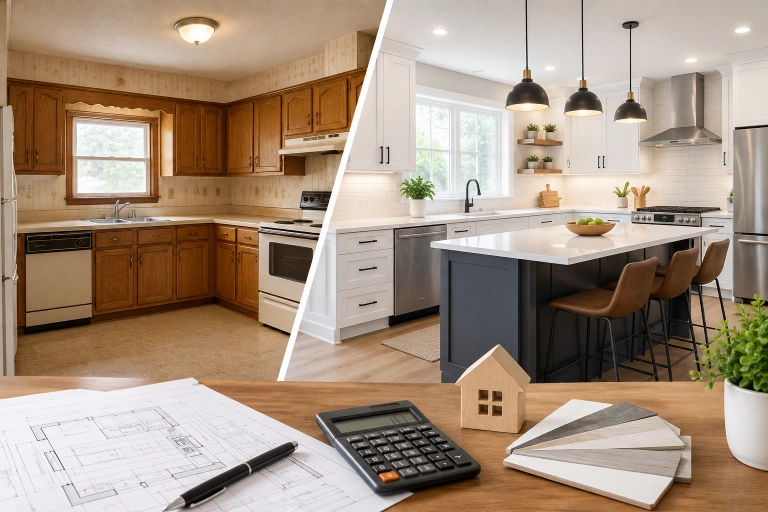
A minor kitchen remodel (cabinet refacing, new countertops, updated hardware, mid-grade appliances) costs about $28,458 on average and returns roughly $32,141 in resale value — a 113% ROI. A midrange major remodel (full layout changes, semi-custom cabinets, new appliances) costs about $82,793 and returns around 51%. An upscale major remodel (custom cabinetry, high-end appliances, designer finishes) costs about $164,104 and returns closer to 36%. The pattern holds nationwide: the less you spend, the more of it you get back.
What Actually Counts as a “Kitchen Remodel”?
Before any ROI number means anything, you need to know which tier you’re actually planning, because the industry uses “kitchen remodel” to describe three very different projects.
Minor Kitchen Remodel
You keep the existing cabinet boxes and layout. Work typically includes new cabinet doors and drawer fronts, updated hardware, new countertops, a new sink and faucet, fresh flooring, a repaint, and mid-grade replacement appliances. Nothing structural moves.
Major Kitchen Remodel (Midrange)
The layout can change. Walls may come out, an island may go in, cabinets are typically semi-custom, appliances are updated to energy-efficient models, and flooring, lighting, and paint are all redone. This is closer to what most people picture when they say “full kitchen renovation.”
Major Kitchen Remodel (Upscale)
Same scope as midrange, but every finish is bumped up a tier: custom cabinetry, natural stone counters, professional-grade appliances, designer tile, under-cabinet lighting, and premium fixtures throughout. This is the version that shows up in kitchen showrooms and design magazines.
What’s the Real ROI on a Kitchen Remodel in 2026?
The most reliable source for this data is the annual Cost vs. Value Report, compiled by Zonda and published through the Journal of Light Construction from thousands of real remodeling contracts, paired against appraiser-estimated resale value in the same markets. Here’s the current national breakdown:
| Remodel Tier | Average Cost | Value Added at Resale | ROI |
|---|---|---|---|
| Minor kitchen remodel | $28,458 | $32,141 | 113% |
| Major remodel (midrange) | $82,793 | $42,130 | 51% |
| Major remodel (upscale) | $164,104 | $58,561 | 36% |
Source: Cost vs. Value Report (JLC / Zonda), most recent national data, as reported by Zillow’s kitchen remodel ROI guide.
Notice the direction of that trend. It’s not that major remodels add less value in absolute dollars — an upscale remodel actually returns almost twice the raw dollar amount of a minor one ($58,561 versus $32,141). It’s that the cost climbs so much faster than the return that the percentage collapses. That distinction matters depending on whether you’re optimizing for resale profit or for total home value.
Why Do Minor Remodels Outperform Major Ones?
This is the part that surprises most homeowners, so it’s worth explaining rather than just citing. Buyers don’t evaluate a kitchen the way a contractor evaluates a receipt. They evaluate it the way a person walking into a room for 90 seconds evaluates it: Does it look current? Is it clean? Does anything look broken or dated? A buyer standing in a kitchen with painted cabinet fronts, a new quartz counter, and updated hardware reads that space as “move-in ready,” full stop. Whether the cabinet boxes underneath are original to a 1994 build doesn’t register.
The jump from a genuinely outdated kitchen to a clean, current-looking one is dramatic in a buyer’s mind. The jump from that clean kitchen to a magazine-cover kitchen with custom millwork and a 48-inch range is real, but it’s marginal to a buyer’s perception — and buyers don’t pay proportionally for marginal. That’s the entire ROI story in one sentence: cost scales linearly with finish quality, but perceived value does not.
What’s the ROI Difference Between Midrange and Upscale Major Remodels?
Both midrange and upscale major remodels involve changing the layout — moving walls, relocating plumbing, reconfiguring the work triangle. That structural work is expensive and adds almost nothing extra in buyer perception compared to a midrange layout change, which is why upscale ROI (36%) trails midrange ROI (51%) even though the finished result looks noticeably nicer.
Where upscale spending does pay off is in homes that are already priced at the top of their neighborhood. In a $1.2 million home, a builder-grade kitchen actively hurts resale because it doesn’t match buyer expectations for the price point. In that scenario, upscale finishes aren’t optional — they’re keeping the home competitive with its comps, even if the ROI percentage on paper still looks modest.
Does Kitchen Remodel ROI Vary by Region?
Yes, and the spread is wider than most homeowners expect. Minor kitchen remodel ROI runs from roughly 94% in the West North Central states up to about 129% in the Pacific region, per the regional Cost vs. Value breakdown. Even within the “best ROI project in the report” category, geography changes the math by 35 percentage points.
| Region | Avg. Minor Remodel Cost | Avg. Return | ROI |
|---|---|---|---|
| Pacific (CA, OR, WA, HI, AK) | $29,728 | $38,384 | 129% |
| National average | $28,458 | $32,141 | 113% |
| West North Central (IA, ND, SD, MN, NE, MO, KS) | $27,880 | $26,333 | 94% |
If you’re in a region or metro where minor kitchen remodels underperform, that’s a signal to check whether a different project — a garage door replacement, new entry door, or exterior refresh — might return more per dollar. A local real estate agent pulling recent comps for homes with and without updated kitchens is worth more than any national average when you’re deciding your own budget.
Which Specific Upgrades Give the Best Return?
If you’re doing a minor remodel, not every line item pulls equal weight. These are the upgrades that consistently do the most for buyer perception relative to their cost:
| Upgrade | Typical Cost | Why It Performs |
|---|---|---|
| Cabinet refacing or repainting | $4,000–$12,000 | Changes the whole room’s tone without replacing boxes |
| New cabinet hardware | $200–$800 | Cheapest visible upgrade in the entire remodel category |
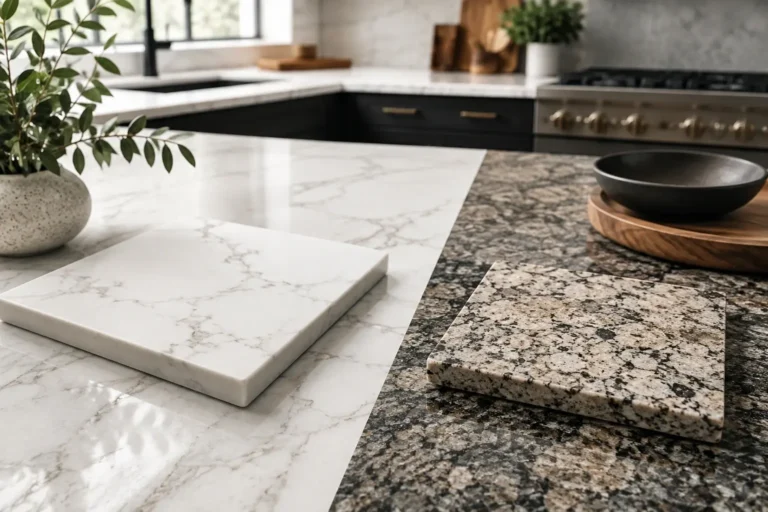
| Countertop replacement (quartz/granite) | $3,000–$8,000 | Buyers associate stone counters with “updated” instantly |
| Updated lighting (fixtures + under-cabinet) | $950–$5,500 | Brightens listing photos and in-person showings |
| Tile backsplash | $3,500–$5,600 | High visual impact for a low material cost |
| New faucet and sink | $1,250–$3,500 | Small cost, closes the gap on an otherwise dated detail |
Notice what’s missing from that list: high-end appliances, custom cabinetry, and premium natural stone. Those upgrades matter enormously for how much you’ll enjoy your own kitchen. They just don’t move buyer perception, or resale price, proportionally to what they cost — which is exactly why they belong in the upscale tier’s lower ROI number.
When Does a Kitchen Remodel Not Pay Off?
ROI isn’t just about scope. A few specific situations drag the return down regardless of what tier you choose:
- You’re the nicest kitchen on the block. Once your remodel outpaces every comparable home nearby, buyers won’t pay above the neighborhood ceiling, no matter how good the kitchen looks.
- You’re financing the remodel with high-interest debt. A HELOC or personal loan at a meaningful interest rate quietly erodes the ROI figure before you’ve even sold.
- You’re remodeling immediately before listing, in a slow local market. Buyers in a soft market negotiate hard regardless of upgrades, and you may not recoup the premium a hot market would have paid.
- You’re solving a problem buyers can’t see. Structural issues, outdated wiring behind the walls, or plumbing problems don’t show up in listing photos, so they don’t move price the way visible finishes do — even though they may be more urgent.
In any of these cases, a smaller, more targeted project — new hardware, paint, lighting, and a countertop swap — usually outperforms a full remodel on a dollars-in, dollars-out basis.
Should You Remodel Before Selling, or While You Live There?
These are two different financial questions, and conflating them is where a lot of homeowners lose money. If you’re remodeling to sell within the next year, the math above applies directly — optimize for the minor-remodel tier unless your home is priced well above the neighborhood average. If you’re remodeling to live in the space for the next 10–15 years and sell eventually, ROI matters less than usable value: a kitchen you actually enjoy cooking in, sized and finished the way your household needs it, has a return that doesn’t show up on any Cost vs. Value spreadsheet.
The mistake is treating a live-in remodel like a flip, or a pre-sale remodel like a forever kitchen. Know which one you’re doing before you meet with a designer, because it changes almost every decision that follows — layout, finish tier, and budget included.
How Do You Calculate Your Own Kitchen Remodel ROI?
National averages are a starting point, not a budget. To get a number specific to your home:
- Pull 3–5 recent comparable sales nearby — some with updated kitchens, some without — and compare sale prices directly.
- Get two or three contractor quotes for the specific scope you’re considering, not a national cost-per-square-foot estimate.
- Subtract your total project cost from the price gap between updated and non-updated comps. That gap, not the national ROI percentage, is your real expected return.
- Factor in financing cost separately if you’re not paying cash — interest is a real cost against your return.
Home Renova Hub’s Remodeling Budget Estimator walks through project type, square footage, finish tier, and region to give a realistic cost range before you get quotes — useful for sanity-checking a contractor’s number against market data rather than guessing.
Common Mistakes That Kill ROI
Over-personalizing finishes
Bold cabinet colors, unusual tile, and highly specific layouts appeal to you — and narrow the buyer pool at resale. Neutral, current, well-executed beats distinctive when ROI is the goal.
Skipping the permit
Unpermitted electrical or plumbing work is a red flag on inspection and can require a buyer’s lender to hold funds until it’s corrected — which drags out closing and erodes negotiating leverage.
Matching the kitchen to the wrong price point
A $60,000 upscale remodel in a $220,000 home rarely returns proportionally; the home’s overall value ceiling caps what any single room can add.
Treating appliances as an investment
Appliances depreciate the moment they’re installed, the same as a car driving off a lot. Mid-grade, matched appliances perform better for ROI purposes than one standout high-end range paired with builder-basic everything else.
Frequently Asked Questions
Is a kitchen remodel worth it if I’m not selling soon?
Yes, but judge it by daily usability and enjoyment rather than resale ROI. If you’ll be in the home 10+ years, a kitchen that fits how you actually cook and live is worth more to you than the percentage you’d recoup at sale.
What’s the average ROI on a kitchen remodel in 2026?
Nationally, minor kitchen remodels return about 113% of their cost, midrange major remodels return about 51%, and upscale major remodels return about 36%, according to the most recent Cost vs. Value data.
Does a kitchen remodel add more value than a bathroom remodel?
A minor kitchen remodel typically outperforms a midrange bathroom remodel on ROI percentage (113% versus roughly 80%), though both are strong choices compared to major structural additions.
Should I do a full gut renovation or a cosmetic refresh?
If ROI is the priority, a cosmetic refresh — cabinet refacing, new counters, updated hardware and lighting — consistently outperforms a full gut renovation on a percentage basis, even though the gut renovation adds more total dollars.
How much should I spend on a kitchen remodel before selling?
A useful ceiling is the price gap between comparable homes with and without updated kitchens in your specific market, not a national average. In most markets, that keeps a pre-sale remodel in the minor-tier range.
Do new appliances increase resale value?
Matched, mid-grade appliances help a kitchen read as updated, but individual high-end appliances rarely add resale value proportional to their cost — buyers notice mismatched quality more than they credit a single premium unit.
Is cabinet refacing worth it compared to replacing cabinets entirely?
For most homes, yes. Refacing keeps the existing cabinet boxes and changes only doors, drawer fronts, and hardware, at a fraction of full replacement cost, while delivering most of the visual impact buyers respond to.
Does kitchen remodel ROI vary by home price point?
Yes. Higher-priced homes can absorb upscale finishes without hurting ROI as much, because buyers in that price range expect them. In moderately priced homes, upscale finishes usually exceed what the market will pay back.
The Bottom Line
Kitchen remodeling is worth it — the data is unambiguous on that point. What the data also makes clear is that “worth it” and “impressive” are not the same target. If your goal is financial return, the minor-remodel tier wins every time, in every region, by a wide margin. If your goal is a kitchen you’ll use and enjoy for the next decade, cost recovery becomes a secondary consideration behind function and fit. Know which goal you’re solving for before the first quote comes in, and the rest of the budget decisions get a lot easier.