Cozy Home Design Ideas That Feel Luxurious: A Complete Guide for 2026
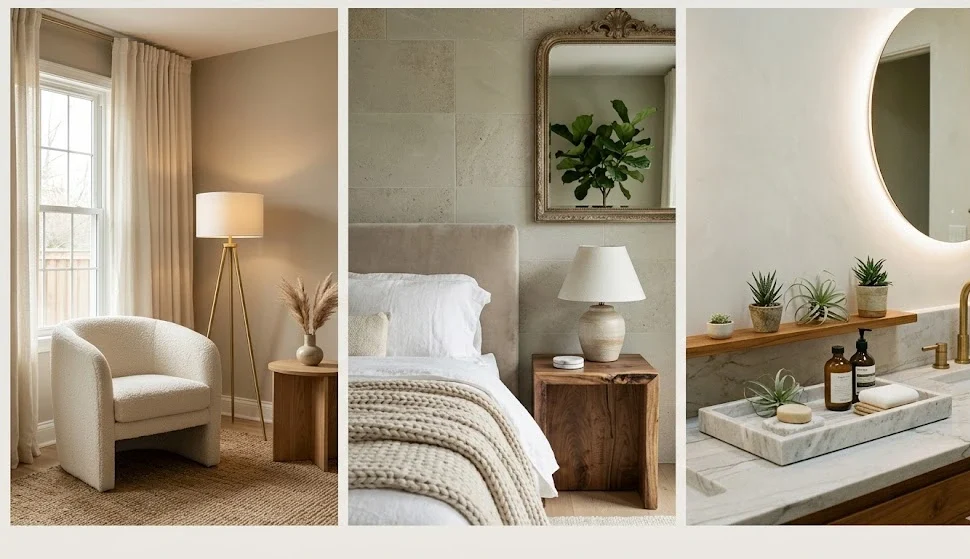
Cozy luxury home design combines warmth and minimalism using texture layering, ambient lighting, and neutral tones. It focuses on emotional comfort and visual elegance rather than expensive furniture alone. The result is a home that feels like a five-star retreat built around real life.
5 Things to Know Before You Read On
- Quiet luxury decor is the dominant home design trend of 2026 globally
- Warm neutral colors (muted taupe, creamy white, espresso brown) increase perceived room value by up to 15% per the National Association of Realtors 2025 Staging Report
- Layered lighting (ambient + task + accent at 2700K) is the highest-ROI upgrade under $500
- The global home decor market reaches an estimated $838 billion by 2027 (Statista, 2026)
- Japandi interiors and organic modern interior searches grew 67% year-over-year in early 2026 per Google Trends
Is This Guide for You?
This post is for you if:
- You want your home to look expensive without a full renovation
- You are curious about quiet luxury or warm minimalism but unsure where to start
- You live in the USA, UK, Canada, or Australia and want ideas that fit your market
- Your budget sits between $200 and $5,000 for home updates
- You feel overwhelmed by too many interior design trends 2026 and want clear direction
- You want a home that supports your wellness, not just one that photographs well
If two or more of those apply, this guide will help.
Why Does Cozy Luxury Home Design Feel So Expensive?
The 4-Layer Cozy Luxury Formula™
A designer-inspired framework for creating interiors that feel warm, intentional, and luxurious.
| Layer | Purpose |
|---|---|
| Light | Emotional warmth |
| Texture | Acoustic softness |
| Tone | Visual calm |
| Space | Cognitive clarity |
The 70-20-10 Warmth Formula
A balanced color and texture ratio used in luxury interior styling.
Cozy luxury design feels expensive because of how it engages the senses. Layered textures absorb sound, warm lighting removes harshness, and curated materials like natural wood and velvet create tactile richness. The result is a room that feels considered and calm, not assembled and random.
Most people assume luxury requires a large budget. It does not. It requires the right layering.
Walk into any five-star hotel lobby. You feel it before you see it. The warmth comes from soft lighting, the quiet comes from plush textiles, and the richness comes from natural materials. All three are available at any budget.
The three-layer formula designers use:
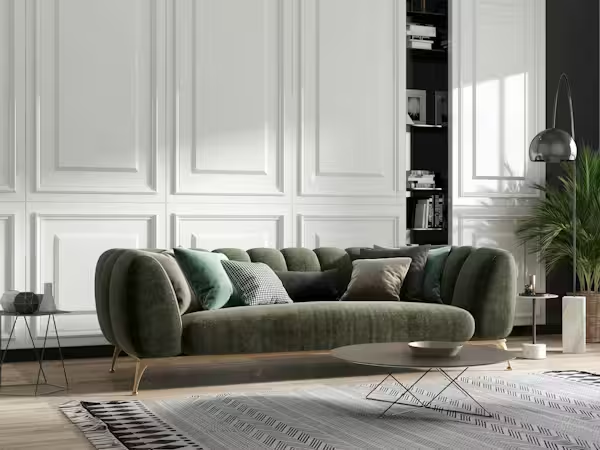
- Texture first. A textured rug, a velvet sofa, or boucle furniture introduces tactile warmth before anything else.
- Lighting second. Replace single overhead lights with three sources at 2700K warm white.
- Curation third. Remove anything that does not belong. What remains reads as intentional.
- What makes a home feel luxurious without spending a lot?
- Why do hotel lobbies feel expensive?
- How do designers make rooms feel warm and high-end?
What Is the Easiest Way to Make a Room Look Luxurious?
The easiest single upgrade is layered lighting. Replace one overhead light with three warm sources at 2700K: a floor lamp, a table lamp, and one accent light. This costs $150 to $400 and changes how the entire room feels after 5pm.
Here are five more high-impact, low-effort moves ranked by visual return:
| Upgrade | Estimated Cost | Impact Level | Time to Complete |
| Switch to 2700K warm LED bulbs | $20 to $60 | Very High | 20 minutes |
| Add a floor lamp with dimmer | $60 to $200 | Very High | 1 hour |
| Hang linen curtains ceiling to floor | $60 to $180 | High | 2 hours |
| Add a wool or jute textured rug | $120 to $800 | High | 1 hour |
| Introduce a cashmere throw | $50 to $150 | Medium-High | 5 minutes |
None of these require a contractor. All of them work in owned or rented spaces.
- What is the cheapest way to make a room look expensive?
- What one thing makes the biggest difference in a living room?
- How do I upgrade my home on a small budget?
What Colors Make a Home Look Expensive in 2026?
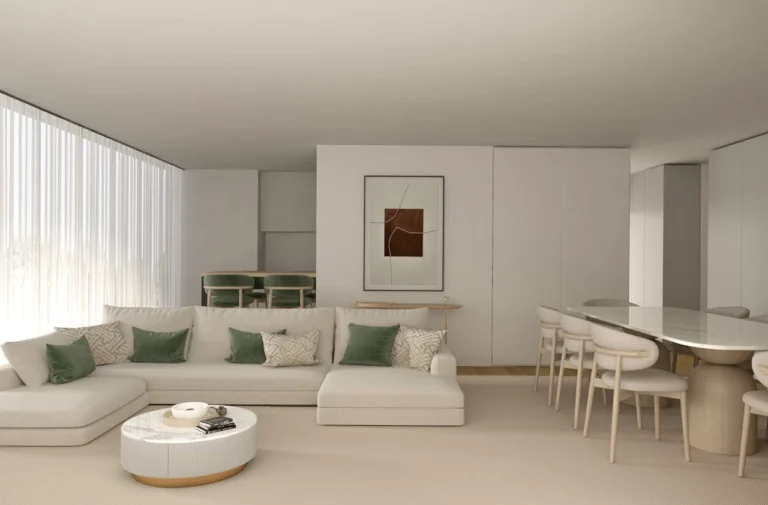
Warm neutrals make a home look expensive in 2026. Muted taupe, creamy white, soft sage, and espresso brown create a calming color palette that reads as sophisticated. Pure white walls are being replaced globally with warmer off-whites that hold warmth across different lighting conditions.
Why Do Warm Neutrals Look More Luxurious Than Bright Colors?
Warm neutrals work because they reflect light softly. Cool whites reflect light harshly and create glare. Warm tones like creamy whites and muted taupe absorb light and create visual depth. That depth is what the brain reads as “expensive.”
The 2026 Expensive Color Formula by Room:
| Room | Color Family | Specific Shade | Brand |
| Living Room | Creamy White | White Dove OC-17 | Benjamin Moore |
| Bedroom | Espresso Brown | Pelt No. 254 | Farrow & Ball |
| Entryway | Muted Taupe | Accessible Beige SW-7036 | Sherwin-Williams |
| Kitchen | Soft Sage | Dusty Miller | Behr |
| Whole Home | Warm Greige | Pebble Shore | Dulux UK |
| Bathroom | Earthy Terracotta | Red Earth | Farrow & Ball |
What Paint Colors Increase Home Value Perception?
According to the 2025 NAR Home Staging Report, homes with warm neutral color schemes sell 15% closer to asking price than those with bold or stark color palettes. The effect is psychological. Warm tones feel move-in ready. Cool and bright tones feel like a project.
Regional note: In Australia, warm sandstone tones dominated the 2025 Decorex Sydney show. In Canada, Muskoka-inspired earthy tones lead new-build color choices. UK, Farrow & Ball’s Elephant’s Breath remains the most searched paint color for three consecutive years. In the USA, Benjamin Moore’s Navajo White has seen a 40% increase in sample orders in early 2026.
What Is the Quiet Luxury Interior Trend in 2026?
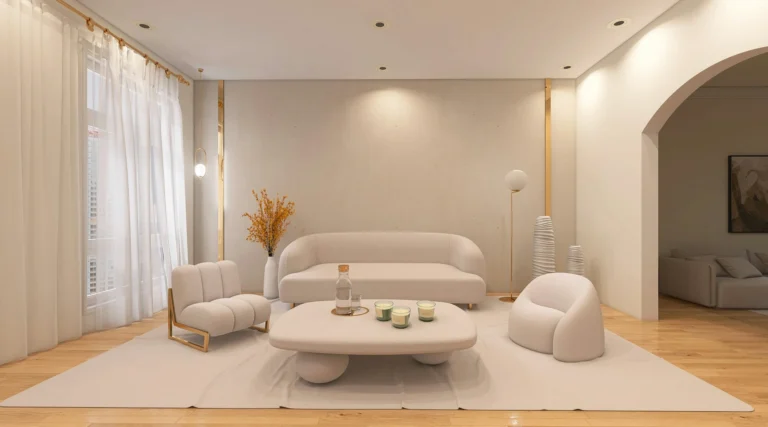
Quiet luxury decor is a design philosophy that values quality over quantity. It uses understated, well-crafted pieces in neutral tones rather than bold or logo-heavy items. Think natural wood finishes, linen curtains, cashmere throws, and marble accents chosen for their texture, not their brand name.
How Is Quiet Luxury Different from Minimalism?
| Feature | Quiet Luxury | Minimalism |
| Texture level | High (layered textiles, natural materials) | Low (smooth, bare surfaces) |
| Color palette | Warm neutrals, earthy tones | White, grey, black |
| Emotional feel | Warm, inviting, tactile | Clean, cool, austere |
| Object count | Curated (fewer but richer) | Minimal (as few as possible) |
| Budget approach | Invest in quality pieces | Invest in emptiness |
Quiet luxury feels warm. Minimalism can feel clinical. In 2026, homeowners across every market are choosing warmth.
Which Design Styles Fall Under Quiet Luxury?
- Japandi interiors: Japanese wabi-sabi meets Scandinavian design. Low furniture, natural materials, warm neutrals.
- Modern organic style: Clean lines with raw organic materials. Concrete softened by sheepskin. Steel paired with live-edge wood.
- Contemporary farmhouse: Warm wood tones, linen textures, and functional elegance without rustic cliche.
- Transitional interiors: Traditional proportions with modern finishes. Works in period homes across the UK and Canada.
- Warm minimalism: Minimalist structure with tactile warmth added through textiles and organic materials.
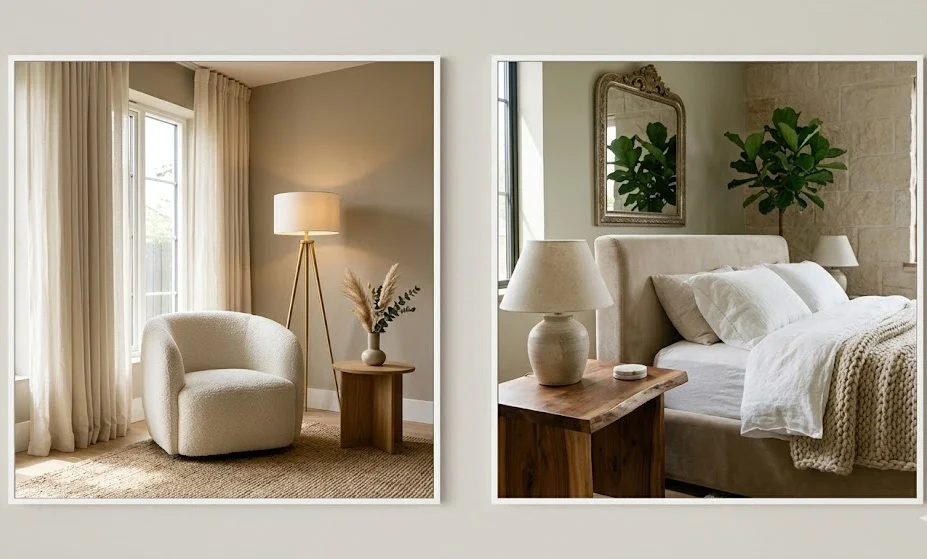
Case Study (Summary): A 2024 quiet luxury redesign in Melbourne, Australia achieved a high-end look for $3,200 AUD using boucle armchair ($680), sofa reupholstery in warm oatmeal ($950), jute rug ($320), 2700K LED bulbs ($60), and layered cashmere throws and linen cushions ($390). The room still reads current in 2026.
Key Entities: Japandi interiors, Scandinavian design, modern organic style, contemporary farmhouse, minimalist luxury, transitional interiors, organic modern interior, warm minimalism
How to Create a Cozy Luxury Living Room: Step-by-Step
Snippet Answer: Build a cozy luxury living room in four steps: anchor with a quality rug (8×10 feet minimum), add three-source layered lighting at 2700K, choose one upholstered statement furniture piece, and layer textiles in complementary textures.
Step 1: Get the Rug Size Right
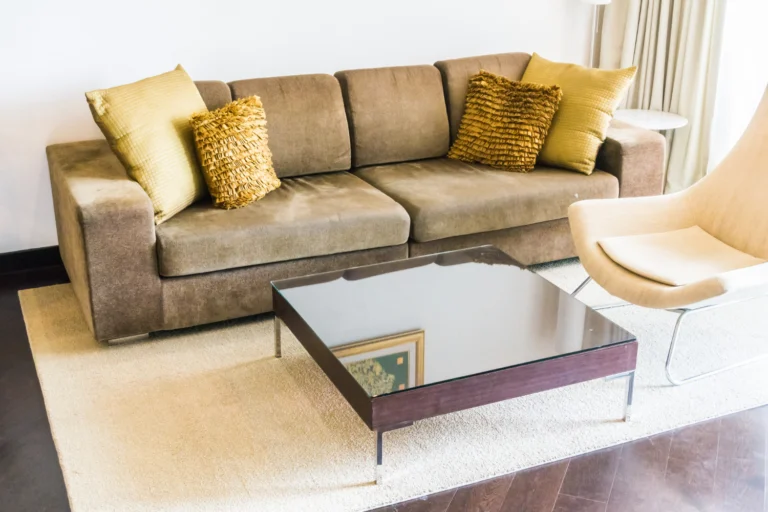
All four sofa legs should sit on the rug. A common sizing error makes rooms look cheap instantly. For a 12×15 foot room, use minimum 8×10 feet. Beni Ourain-style wool rugs run $400 to $1,200. IKEA’s Gaser collection offers solid quality from $199.
Step 2: Build Three-Source Layered Lighting
- Ambient source: Floor lamp or ceiling fixture on a dimmer ($60 to $250)
- Task source: Table lamp beside seating ($40 to $200)
- Accent source: LED strip behind furniture, a sculptural lamp, or candles ($15 to $80)
All bulbs at 2700K warm white. Philips Hue smart bulbs ($15 each) allow brightness and warmth control.
Step 3: Choose One Statement Furniture Piece
This is your anchor item. It should be the first thing someone notices. Budget $600 to $1,500.
- A velvet sofa in deep teal or warm terracotta
- A boucle armchair in cream or warm oatmeal
- An oversized upholstered ottoman used as a coffee table
Step 4: Layer Your Textiles
Aim for three textile layers: throw blanket draped over the sofa, two to three cushions in varying textures (velvet, linen, wool), and the rug beneath. Mix materials for depth. Never match everything exactly.
How Does Interior Design Affect Health?
Empirical data mapping the physiological and cognitive impacts of residential environments.
Which Materials Make a Home Feel Cozy? The Complete Texture Guide
The materials that make a home feel cozy are velvet, boucle, linen, wool, and natural wood. They absorb sound, add visual warmth, and invite touch. Combining three or more of these materials creates the layered textile effect used in high-end interiors worldwide.
Material Comparison: Budget to Premium
| Material | Best Use | Budget Option | Premium Option | Price Range |
| Velvet | Sofa, cushions, curtains | IKEA Sanela curtains | Jim Thompson velvet | $30 to $2,000+ |
| Boucle | Armchair, headboard | H&M Home cushion ($25) | Ligne Roset armchair | $25 to $2,500 |
| Linen | Curtains, bedding | IKEA Dytag panels ($59) | Society Limonta sheets | $59 to $400 |
| Wool | Rugs, throws | Amazon beni-style rug | Authentic Moroccan rug | $80 to $1,500 |
| Natural wood | Furniture, shelves | IKEA Hemnes range | Benchmark Furniture UK | $60 to $3,000+ |
| Marble accents | Trays, coasters, tiles | Amazon marble tray ($25) | Real marble slab | $25 to $200+ |
Why Do Hard Surfaces Make Rooms Feel Cold?
Hard surfaces (glass, polished concrete, lacquered wood) reflect sound and light. They feel energized and alert. Soft materials absorb both. The acoustic difference alone changes how a room feels emotionally. This is why textured rugs and upholstered furniture are the two highest-ROI purchases in any home refresh.
What Lighting Makes a Home Feel Luxurious?
Warm layered lighting at 2700K makes a home feel luxurious. Use three sources per room: ambient (overhead or floor lamp), task (table lamp), and accent (decorative or LED strip). Add dimmer switches to every main living area. This is the single most impactful change under $500.
The Architectural Lighting Upgrade
Architectural lighting refers to light built into the space rather than plugged in. Examples include cove lighting above kitchen cabinetry, recessed spotlights aimed at artwork, or LED strips behind furniture. These cost $200 to $800 installed and consistently appear in real estate agents’ top-ROI renovation lists.
The 30-Minute Lighting Audit
- Walk each room at 7pm with overhead lights only.
- Note every room with a single light source.
- Add a floor or table lamp to each within 30 days.
- Replace all bulbs with 2700K warm white LED.
- Install dimmers in main living areas ($15 to $40 at Home Depot, B&Q, or Bunnings).
The difference is noticeable the same evening.
Circadian Lighting for Wellness-Focused Interiors
Smart lighting systems that shift color temperature through the day support natural sleep cycles. Cool daylight tones (5000K) in the morning. Warm amber (2400K) by 8pm. The Philips Hue ecosystem (starter kit $80 to $200) or LIFX smart bulbs ($35 to $55 each) automate this entirely.
The Sleep Foundation links bedroom light temperature directly to sleep onset time. Shifting to warmer lighting after sunset reduces average sleep onset by 15 to 20 minutes.
Cozy Bedroom Design Ideas That Feel Expensive Without a Full Renovation
The most impactful bedroom upgrades are an upholstered headboard, hotel-style bed layering, and warm 2700K lighting on both sides of the bed. These three changes make a bedroom feel like a luxury hotel suite for under $800 in most cases.
How to Layer a Bed Like a Five-Star Hotel
Use eight layers in this order:
- Mattress protector
- Fitted sheet (400-thread-count cotton minimum)
- Flat sheet
- Duvet in a neutral cover (white, oatmeal, or soft greige)
- Two Euro shams (26×26 inch) at the back
- Two standard sleeping pillow shams
- One or two decorative cushions at the front
- Cashmere or chunky knit throw draped at the foot
Total cost: $300 to $1,200 depending on brands. The Sleep Foundation notes bedroom environment directly affects sleep quality. Temperature-regulating bedding reduces nighttime waking by up to 26% in controlled studies.
The Headboard Upgrade
An upholstered headboard is the single item that most transforms bedroom look. Choose linen or velvet in muted taupe or warm cream. Options by market:
- USA/Canada: Article and Pottery Barn offer upholstered headboards from $300 to $800 (queen size)
- UK: Made.com and Loaf offer linen headboards from £250 to £600
- Australia: Koala and King Living offer boucle and linen options from $400 to $900 AUD
- Etsy custom: Expect $250 to $600 USD for queen-size custom upholstered options
How Can You Decorate Elegantly on a Budget? Proven Strategies That Actually Work
Decorating elegantly on a budget works best when you prioritize paint, lighting, and textiles over furniture. These three categories deliver the highest visual impact per dollar. A $200 refresh using new lighting, velvet curtains, and one throw blanket transforms more than a $200 decorative accessory haul.
The $200 Luxury Upgrade Plan
- $60: Two warm 2700K LED bulbs per room, plus one secondhand floor lamp
- $40: Two IKEA Sanela velvet curtain panels in warm neutral
- $50: One secondhand ceramic lamp with a new drum shade
- $30: Dried botanicals in a simple ceramic vase
- $20: Two throw cushions in complementary textures
Total: $200. Visual shift: significant.
The $1,000 Room Refresh Breakdown
| Item | Budget Allocation | Where to Buy |
| Wool or jute rug | $300 | Wayfair, Ruggable, IKEA |
| Boucle or velvet accent chair | $250 | Article, Wayfair, Facebook Marketplace |
| Linen curtains, ceiling to floor | $150 | IKEA, H&M Home, Made.com |
| Statement table lamp | $150 | Anthropologie, West Elm, local thrift |
| Curated decor trio | $150 | Etsy, local markets, TK Maxx |
The Secondhand Advantage
Facebook Marketplace, Vinted, and Gumtree carry designer pieces at 60 to 80% below retail in every major city. A Habitat (UK) oak sideboard retailing at £900 regularly appears for £180 to £250. A West Elm upholstered chair at $1,200 new sells secondhand for $280 to $400. This is how patient buyers build genuinely luxurious rooms on realistic budgets.
Luxury Decor Elements That Add Warmth: Room-by-Room Guide
Brass fixtures, marble accents, and natural wood finishes are the three highest-ROI luxury decor elements. Each adds warmth without overwhelming a space. Grouped in odd numbers (three or five items), they create the curated look designers achieve in high-end homes.
Brass Fixtures: The Afternoon Project That Changes Everything
Replacing chrome or nickel hardware with brushed brass takes under two hours. Cabinet handles from Etsy or Anthropologie Home: $4 to $18 each. A full set of 20 kitchen handles costs $80 to $360. A brushed brass faucet (Moen or Kohler, $120 to $380) changes the entire character of a kitchen.
Marble Accents Without the Marble Price Tag
You do not need marble slabs. Small-scale marble accents create the same luxury signal:
- Marble tray: $25 to $80
- Marble coasters (set of 4): $20 to $35
- Marble catch-all dish: $15 to $40
- Marble-look porcelain tiles: $3 to $12 per square foot (vs. $20 to $60 for natural stone)
Biophilic Design: The Wellness Layer Most Guides Skip
This is the gap almost every competitor misses.
The US EPA reports that Americans spend 90% of their time indoors. Indoor air quality and exposure to natural elements directly affect mood, cognitive function, and stress levels.
Biophilic design incorporates living elements into the interior:
- Potted plants (fiddle leaf fig, monstera, snake plant) reduce cortisol levels
- Natural light access improves daytime alertness and evening melatonin production
- Organic materials (untreated wood, stone, jute) connect the nervous system to natural environments
Research from the University of Melbourne showed that spaces with plants improved occupant wellbeing by 15% and reduced stress markers measurably. This is not a soft benefit. It is a documented physiological response.
Sensory design goes one step further: designing for smell (cedar, beeswax candles, fresh linen), sound (acoustic textiles, running water elements), and touch (varied textures within arm’s reach) to create a fully immersive environment.
FAQ
Color and Mood Questions
Q: What are the best colors for a cozy luxurious bedroom?
A: Espresso brown, dusty rose, and deep olive work best. Darker tones in bedrooms create intimacy. Test any shade with a 12-inch swatch and observe it morning, afternoon, and evening before committing.
Q: How many colors should I use in one room?
A: Use the 60-30-10 rule. 60% dominant (walls, large furniture), 30% secondary (curtains, smaller furniture), 10% accent (cushions, art, small objects). More than three distinct colors typically creates visual noise.
Q: What paint colors increase home value perception?
A: Warm neutrals consistently outperform bold or stark colors. The NAR 2025 Staging Report shows homes with warm color schemes sell 15% closer to asking price than those with stark or bright palettes.
Texture and Material Questions
Q: What is the best rug material for a cozy home?
A: Wool is the top choice. It is naturally soft, durable, and temperature-regulating. Wool-jute blends offer a mid-range balance of softness and durability. Avoid synthetic rugs in main living areas as they flatten quickly and generate static.
Q: Are velvet sofas practical for families with children or pets?
A: Performance velvet fabrics (Crypton or Revolution Performance Fabrics) are stain-resistant, pet-safe, and machine-washable. Available through Interior Define and Joybird. Far more practical than standard velvet and nearly identical in appearance.
Q: Which materials are used in luxury interior design?
A: Consistently: natural stone or marble accents, solid natural wood, linen and wool textiles, brushed metal hardware (brass or bronze), and hand-crafted ceramics. These materials age well and photograph well in any lighting.
Lighting Questions
Q: What lighting temperature is best for a cozy home?
A: 2700K warm white for all living areas. 2400K for bedrooms (closer to candlelight). Avoid anything above 3000K in residential spaces as it creates a clinical feel that undermines warmth.
Q: How do I make my living room feel more expensive with lighting alone?
A: Add three sources: one floor lamp, one table lamp, one accent source. Put the main fixture on a dimmer. Replace all bulbs with 2700K LED. This costs $150 to $400 total and works in any room.
Style and Trend Questions
Q: What is the difference between quiet luxury and minimalism?
A: Quiet luxury is warm and tactile. Minimalism is sparse and cool. A quiet luxury room includes a boucle chair, cashmere throw, and marble accent. A minimalist room keeps only what is functionally essential. Both reduce clutter; only quiet luxury adds sensory warmth.
Q: Does Japandi design work in older or traditional homes?
A: Yes. Japandi values handcraft and natural materials, which are often already present in period properties. Edit out clutter, update textiles, and upgrade lighting. Exposed brick, original timber floors, and stone fireplaces enhance Japandi interiors rather than conflict with them.
Q: How is organic modern interior design different from contemporary farmhouse?
A: Organic modern uses raw materials (concrete, stone, unfinished wood) with clean architectural lines. Contemporary farmhouse leans warmer with more traditional elements (shiplap, vintage finds, warm wood tones). Both use natural materials but achieve different emotional tones.
Budget and Practical Questions
Q: How much does a living room redesign cost in 2026?
A: Budget refresh (paint, lighting, textiles): $300 to $1,500. Mid-range redesign (new rug, accent chair, curtains, lighting): $2,000 to $6,000. Full designer renovation: $15,000 to $50,000+ depending on location and scope.
Q: How long does a home design refresh take?
A: A DIY refresh (paint, lighting, textiles) takes one to three weekends. New furniture adds two to six weeks for delivery. A full renovation takes three to six months.
Q: What is the best paint brand for elegant interiors by country?
A: USA and Canada: Benjamin Moore and Farrow & Ball. UK: Farrow & Ball and Little Greene. Australia: Dulux Australia and Porter’s Paints. All offer zero-VOC options now, which matters for indoor air quality.
The Wellness and Sensory Layer:
Most cozy home design guides cover colors, textures, and furniture. Almost none cover the wellness dimension of design, and that is a significant gap.
The US EPA documents that indoor air quality directly affects cognition and physical health. Interior design choices determine that quality daily.
Four wellness upgrades any home can make in 2026:
- Air quality: Choose zero-VOC paints (Benjamin Moore Natura, Dulux EasyCare) and natural fiber textiles over synthetic ones. Add a HEPA air purifier ($80 to $300) to primary living spaces.
- Acoustic comfort: Textured rugs, upholstered furniture, and linen curtains reduce echo and ambient noise. Acoustic panels disguised as art from Acoustimac (USA) start at $60. A quieter home is measurably less stressful.
- Biophilic access: Introduce at least one living plant per main room. Group three plants at different heights for design impact. Snake plants and monstera thrive in low light and require minimal care.
- Circadian lighting: Use smart bulbs that shift from 5000K in the morning to 2400K by 8pm. This supports natural melatonin production and improves sleep quality. The Sleep Foundation links warm evening lighting to 15 to 20 minutes faster sleep onset.
2026 Material Watch: What Is Coming Into Cozy Luxury Design
These materials are appearing in design showrooms in 2026. Expect mainstream retail access by late 2026 or early 2027.
Limewash Paint. A mineral-based paint technique that shifts color throughout the day as light changes. Unlike flat paint, limewash creates depth and a handcrafted, organic texture. Portola Paints (USA) and Bauwerk (Australia) lead this market at $55 to $90 per gallon. Searches for limewash paint grew 210% in the first quarter of 2026.
Mycelium Acoustic Panels. Made from mushroom root networks, these panels are biodegradable and carry natural texture. They function as wall art while absorbing sound. Currently in boutique use in London and Melbourne. Mid-market retail expected by Q4 2026.
Recycled Fiber Woven Wall Coverings. Panels made from post-industrial reclaimed cotton and denim add texture and improve acoustics while carrying sustainability credentials. Kinnasand (Scandinavia) and Philip Jeffries (USA) lead this category.
Bio-Based Resin Furniture. Plant-derived resins (cashew shell, linseed oil) create furniture with the aesthetic of resin but a significantly lower environmental footprint. Tom Dixon (UK) and Jardan (Australia) are incorporating these into 2026 collections.
Tunable LED Plaster Niches. Built-in wall niches with embedded tunable LED lighting create architectural lighting effects with no visible fixture. Popular in luxury residential builds in Q1 2026. Installation runs $500 to $1,500 per niche.
Acoustic Velvet. A new generation of high-performance velvet woven with sound-absorbing fiber is entering the residential upholstery market. It functions like performance velvet but reduces ambient echo by up to 30% in tested settings. Expected in wider retail distribution by mid-2026.
Final Thoughts: The One Thing That Separates Cozy Luxury from Just Cozy
Every room benefits from warmth. But luxury adds one thing warmth alone does not: intention.
The difference between a comfortable room and a truly luxurious one is not the price of the sofa. It is whether every object in the room was chosen rather than accumulated.
Start with one room. Pick one layer: a rug, a lamp, or a throw. Then add the next. Every great interior was built this way, one considered choice at a time.
The ideas in this guide, from layered lighting to quiet luxury decor, from boucle furniture to Japandi interiors and organic modern interior design, are available at every budget in every market. What they all require is the same thing: the decision to begin.
What is the one change you could make this weekend that you would notice every single day? That is your first move.
Last updated: May 2026. Data verified against sources including the National Association of Realtors 2025 Home Staging Report, Statista Global Consumer Survey 2026, Dulux Colour Report 2025/2026, US EPA Indoor Air Quality data, and Sleep Foundation research. Pricing reflects market rates as of Q2 2026. Verify current pricing directly with retailers.