Repair or Replace a French Door?
Repair or Replace a French Door? A Homeowner’s Diagnostic Checklist
By Scott Denick
A French door that sticks, admits a draft or shows water staining can make replacement seem like the obvious next step. But those symptoms do not all point to the same problem. A worn seal may call for a compatible replacement part; damage around the opening may require a broader investigation. Buying a new door before understanding the cause can leave the original problem unresolved.
Key Takeaways
- Identify the cause of sticking, drafts or water intrusion before deciding to repair or replace your French door.
- Check weatherstripping, hinges, hardware and thresholds for visible signs of wear or damage.
- Do not assume water stains or operating problems mean the entire door needs replacement.
- Ask a qualified professional to assess whether targeted repairs can resolve the problem.
- Compare written repair and replacement estimates, including installation, surrounding damage and additional work.
- Consider the door’s security, condition, expected performance and long-term costs before making a decision.
The useful first step is to separate observation from diagnosis. Homeowners can record what happens, identify the door and gather information for a service visit. A qualified professional can then assess whether maintenance, a targeted repair or replacement offers a reasonable path forward.
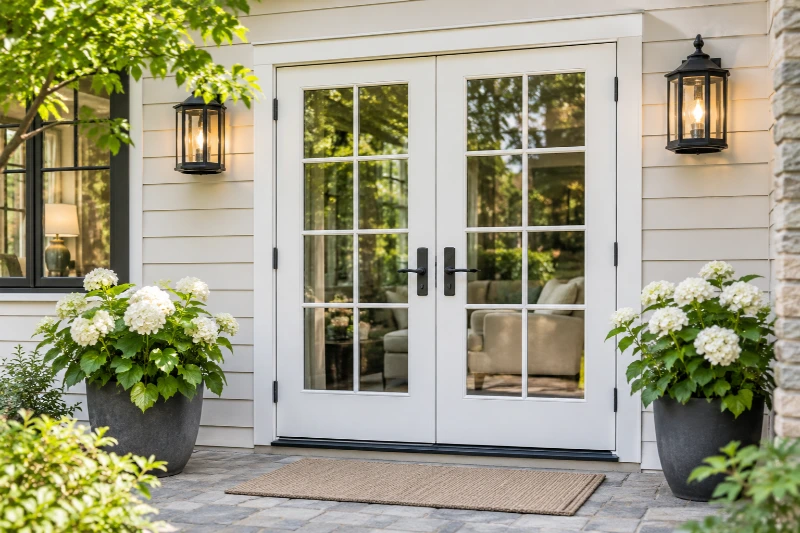
This checklist focuses on exterior hinged French doors. Interior doors and sliding patio doors have different weather-exposure and operating considerations. Follow the instructions for your specific product, and stop any check that requires force, unsafe access or handling damaged glass.
1. Identify the door before shopping for parts
Look for a manufacturer label, model information, an installation receipt or an earlier service record. Photograph the whole doorway, hinges, lock hardware, threshold and any visible identification. Avoid taking the assembly apart to find a label.
Record which panel normally opens and whether the second panel opens using separate bolts or other hardware. Also note when the problem began: after painting, a hardware change, a storm or gradually over several seasons.
This information helps a service provider look for compatible parts and product-specific instructions. A handle that looks similar online is not enough evidence that it will work with the installed lock. Before ordering, ask the manufacturer or repair professional to confirm compatibility and whether the proposed work affects any remaining warranty.
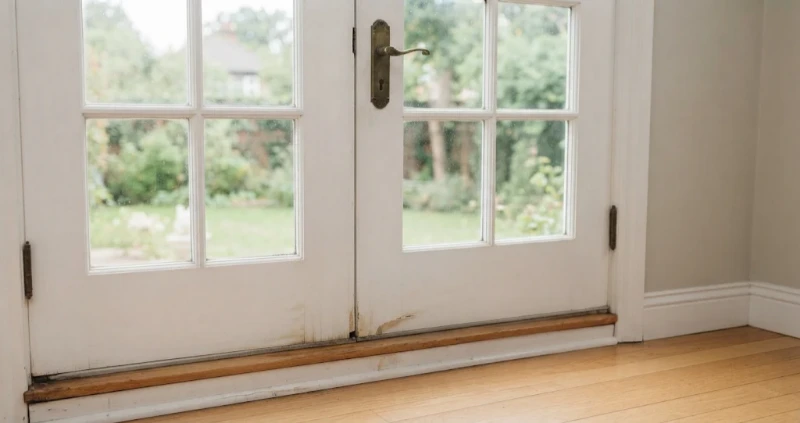
2. Check operation and alignment gently
With the area clear of rugs and furniture, open and close each operating panel as intended. Notice where resistance begins. Does the edge rub near the top, drag at the bottom or meet the other panel unevenly? Can the latch engage without lifting the handle or pushing hard against the door?
Write down the sequence rather than simply describing the door as broken. For example: “The active panel moves freely until the final few inches, then rubs near the lower corner.” That is useful information without claiming to know the cause.
Marvin’s maintenance guidance includes checking doors for smooth operation and cleaning debris from hinges, sills and tracks. Use the installed product’s instructions when cleaning or maintaining it. Do not assume a lubricant intended for one mechanism is suitable for another.
Ask a professional whether the issue is limited to an adjustable component or involves the frame, panel or surrounding opening. Avoid planing an edge, bending hardware or repeatedly moving the strike plate before the cause is understood. A change that makes the latch catch may still leave other concerns unresolved.
3. Locate drafts without assuming the entire door has failed
Note where air movement is noticeable: around the perimeter, at the meeting point between panels or near the bottom. Record whether it happens only during windy weather. Look for visibly torn, flattened, missing or paint-covered weatherstripping, without pulling seals out of their channels.
Keep the distinction between moving and stationary joints in mind. Weatherstripping is generally used where components move against one another; caulking addresses appropriate stationary gaps. The U.S. Department of Energy recommends weatherstripping or caulking gaps around windows and doors as air-sealing measures. The correct treatment still depends on the assembly and the location of the leak.
Ask whether replacing a compatible seal, servicing the threshold or correcting an operating problem could address the draft. Do not add layers of generic foam simply because they fit into a gap. Confirm that any proposed material allows the doors to close and lock correctly, and does not obstruct drainage or conflict with the manufacturer’s instructions.
4. Treat water intrusion as a cause-finding problem
Inspect the visible lower frame, threshold, adjoining trim and interior floor. Record staining, peeling finishes, visible deterioration and any water that appears during rain. Photograph the area before cleaning it, and note the weather conditions and approximate location where moisture first appeared.
A stain does not, by itself, identify the entry point. Ask the evaluator to consider the door assembly and its connection to the surrounding wall, rather than limiting the visit to the most visible mark. Explain whether the issue occurs during wind-driven rain, after washing or under other conditions.
Avoid covering the evidence with fresh paint or applying sealant indiscriminately. Do not conduct a forceful hose test yourself or block visible openings in an attempt to stop a leak. Ask which drainage paths must remain open and whether further investigation is needed before choosing a repair.
If deterioration is discovered, request an explanation of its extent. Replacement of the door alone may be an incomplete scope if the adjacent opening also needs work. Conversely, a water-related complaint does not automatically establish that every part of the door must be replaced.
5. Separate worn hardware from appearance changes
Check handles, hinges, exposed fasteners and accessible locking components for looseness, visible damage and difficulty operating. Keep appearance and function as separate notes: a finish that looks aged is a different concern from a lock that will not engage reliably.
Use a soft cloth and the cleaning instructions for the actual finish. Before polishing, identify whether the finish has special care requirements. Avoid abrasive tools or cleaners unless the manufacturer specifically permits them. Marvin also advises keeping paints, stains and varnishes away from weatherstripping.
For a repair proposal, ask which components will be replaced and why. Confirm whether replacement parts are available and compatible with the existing system. If the door cannot be secured, prioritize prompt professional attention rather than postponing the problem until a larger remodeling project.
6. Compare repair and replacement on the same scope
Request a written repair option when one is practical. It should identify the diagnosed issue, proposed work, parts, exclusions and any limitations. Ask what improvement the repair is expected to achieve and what concerns, if any, would remain afterward.
| Repair option | What to investigate |
|---|---|
| Weatherstripping | Seal condition and compatibility |
| Hardware repair | Hinges, handles and locking components |
| Threshold repair | Condition, adjustment and water management |
| Door replacement | Door unit, installation and surrounding repairs |
A replacement proposal should be equally specific. Ask whether it includes removal, installation, work around the opening, water-management details, interior and exterior finish repairs, disposal and any required approvals. Clarify who handles unexpected damage found after removal and how additional work would be authorized.
Compare the total proposed work rather than just the door-unit price. A lower quote that excludes surrounding repairs is difficult to compare with a more complete proposal. For an overview of replacement-budget variables, the FrenchDoors.com cost guide explains door and installation costs and common additions to the scope. Use it for planning rather than as a substitute for a site-specific estimate.
Before authorizing work, confirm local requirements with the building department and check applicable HOA rules. Do not assume that keeping the same opening automatically eliminates approval requirements.
A checklist to take to the service visit
- Identify the manufacturer and gather receipts, photos and prior service records.
- Describe exactly where the door rubs and how the latch and locks behave.
- Record the location and conditions of noticeable drafts.
- Photograph water-related concerns and explain when they occur.
- Separate cosmetic wear from operating or security problems.
- Ask which parts are available and whether a targeted repair is practical.
- Request comparable written repair and replacement scopes where appropriate.
- Clarify remaining concerns, warranties, exclusions and approval responsibilities.
Making the decision
Repair deserves consideration when a professional identifies a limited, serviceable problem and the proposed work addresses it adequately. Replacement deserves consideration when damage, unavailable components or the extent of necessary work makes a targeted repair impractical, or when the homeowner has separate goals for changing the doorway.
There is no universal age or repair-price percentage that decides the question for every home. Ask for an explanation grounded in the actual condition, then weigh cost, expected result, disruption and your plans for the property. The goal is a door that operates, secures and manages weather as intended—not simply a new-looking assembly with an unresolved problem behind it.
About the Contributor
Scott Denick founded FrenchDoors.com and is a former California-licensed general contractor whose contracting career began in 1986. A former co-owner of The Door Company, he has personally purchased, renovated and sold more than 100 residential properties through Due Over LLC, which also owns FrenchDoors.com. His experience includes French-door improvements and helping homeowners with door-installation projects.