
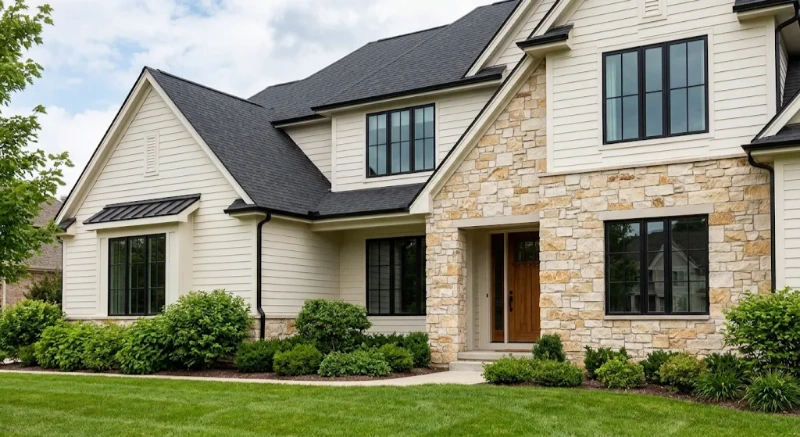
What Exterior Siding Colors Work Best With Black Windows and Warm Stone?
Key Takeaways
Choosing siding colours for a home with black windows and warm stone is about balancing contrast, undertones, and exterior materials. Keep these points in mind before making your selection:
- Warm white: Creates a bright, welcoming exterior and allows black window frames and natural stone to stand out.
- Greige, beige, and taupe: Provide balanced neutral options that complement the warm undertones in natural stone.
- Sage green: Adds an earthy touch, particularly when paired with cream or beige stone and natural wood accents.
- Charcoal: Creates a bold contemporary appearance but should be balanced with lighter stone or other contrasting features.
- Coordinate all exterior materials: Consider the roof, trim, garage door, and front door alongside the siding colour.
- Test before committing: Compare physical siding samples against the actual stone and window frames in sunlight and shade.
Black windows and warm stone create a striking combination for a home’s exterior. Black frames add definition and contrast, while warm stone brings natural texture, depth, and an inviting appearance. The siding color you choose connects these two features and determines whether the finished exterior feels modern, traditional, rustic, or contemporary.
The best exterior siding colors for black windows and warm stone usually complement the stone’s undertones rather than compete with them. Warm white, soft greige, muted beige, earthy taupe, sage green, and carefully balanced charcoal are all worth considering. However, the right choice depends on the stone’s color variation, the roof shade, the amount of natural light, and the architectural style of the house.
If you are planning a new exterior or updating an older home, choosing siding colors thoughtfully can help create a balanced design that looks attractive for years. This guide explores practical color combinations, material choices, common mistakes, and maintenance considerations to help you make a confident decision.
1. Why Black Windows and Warm Stone Work So Well Together
Black windows provide a defined outline around glass, creating a crisp architectural feature. Warm stone introduces softer colors, such as cream, sand, honey, brown, rust, and beige. Together, these materials create a contrast between clean lines and natural texture.
Siding acts as the visual connection between them. A carefully chosen color can soften the contrast, highlight the stonework, or create a more dramatic exterior.
For example, warm white siding can brighten a home with dark window frames, while greige creates a quieter transition between black windows and beige stone. Deep charcoal siding produces a more dramatic appearance, especially when paired with lighter stone accents.
Before choosing a siding color, examine the stone in natural daylight. Some stone looks beige from a distance but contains noticeable yellow, pink, gray, or brown undertones up close. Those smaller color variations can influence how the siding looks beside it.
The goal is not to match every exterior material perfectly. It is to select colors that work together without making one feature appear out of place.
2. Warm White Siding for a Bright, Modern Exterior
Warm white is one of the most versatile choices for homes with black windows and warm stone. It creates a clean background that allows both materials to stand out without overwhelming the exterior.
Unlike stark white, warm white often contains subtle cream or ivory undertones. These undertones can help the siding connect with golden beige, tan, or creamy stone.
This combination works particularly well on modern farmhouse designs, contemporary homes, and traditional houses that need a brighter appearance.
How to choose the right white
Look for whites that feel balanced next to the stone rather than noticeably blue or gray. A cool white can sometimes make warm stone appear more yellow by comparison.
Consider these design details:
- Use black window frames to create a strong outline against the light siding. Choose a trim color that coordinates with the windows or siding rather than introducing another competing shade.
- Let the stone remain a feature around the entrance, lower facade, or selected architectural sections.
- Consider the roof color before finalizing the siding shade.
Warm white siding can also work with horizontal lap siding, board-and-batten panels, and other exterior profiles. The material’s texture will influence whether the overall look feels traditional or contemporary.
3. Greige Siding for a Balanced and Sophisticated Look
Greige combines characteristics of gray and beige, making it a useful option when you want a neutral exterior without the starkness of white or the darkness of charcoal.
With black windows and warm stone, greige can create a smooth visual transition between cool and warm elements. It is especially useful when the stone includes a mixture of gray, cream, and brown.
The most important consideration is undertone. Some greige colors lean toward cool gray, while others have noticeable beige or taupe warmth.
Choosing greige that complements your stone
If your stone has golden or sandy undertones, consider a warmer greige. If the stone contains more gray and muted brown, a balanced greige may create a more cohesive appearance.
Greige siding can suit several architectural styles:
- Contemporary homes with simple rooflines and large windows
- Modern farmhouse exteriors with contrasting trim
- Traditional homes with stone foundations
- Two-story houses combining siding with partial stone cladding
For a coordinated design, consider how the siding will look beside the garage door, front door, roof shingles, and exterior lighting.
Greige is a strong option for homeowners who want a neutral exterior that feels modern without becoming overly stark.
4. Beige and Sand-Tone Siding for a Natural Exterior
Beige and sand-tone siding can emphasize the warm qualities of natural stone. These colors work especially well when the stone features cream, honey, tan, or light brown shades.
A beige exterior creates a softer transition than white and can make the overall color scheme feel grounded. When paired with black windows, it retains enough contrast to keep the design from appearing flat.
However, beige siding and warm stone should not be identical in color. If both materials have the same shade and intensity, their boundaries may become less noticeable, reducing the visual interest of the exterior.
How to prevent a flat-looking facade
Choose siding that is slightly lighter, darker, or more muted than the dominant stone color. This creates separation while keeping the palette cohesive.
You can also introduce contrast through different textures. Smooth lap siding beside rough-cut stone, for example, creates visual interest without requiring several additional colors.
Beige siding is particularly suitable for homes with traditional architecture, warm roofing materials, natural landscaping, or a welcoming entryway.
For a more contemporary appearance, pair a restrained beige siding color with black window frames, simple trim, and minimal decorative details.
5. Taupe Siding for Depth Without Excessive Contrast
Taupe offers a middle ground between beige, brown, and gray. Depending on its undertones, it can feel warm and earthy or more muted and contemporary.
With black windows and warm stone, taupe can create a layered exterior that feels coordinated rather than overly contrasting.
Medium taupe works particularly well when the stone has several shades of brown and gray. A lighter taupe can soften a darker stone facade, while a deeper taupe can give a larger house a more substantial appearance.
Where taupe works best
Consider taupe when you want an exterior that feels natural but offers more depth than a light neutral.
It can be used across the main body of the house, with stone reserved for the entrance, lower level, or prominent architectural sections. Black windows then provide a consistent accent throughout the facade.
Pay attention to the roof. A warm brown roof may complement a brown-based taupe, while a charcoal roof may work better with a more neutral shade.
Because taupe can change appearance under different lighting conditions, review physical samples in both sunlight and shade before making your final decision.
6. Sage Green Siding for an Earthy, Distinctive Exterior
Sage green is a useful choice for homeowners who want something more distinctive than beige or gray without selecting a very bright exterior color.
Muted green siding can complement natural stone because both materials draw on earthy colors. Black windows add definition, helping the green appear intentional rather than overly rustic.
Sage green can work particularly well with cream-colored stone, beige stone with brown details, and homes surrounded by trees or established landscaping.
Choosing a green that stays balanced
Look for muted greens with gray, olive, or earthy undertones. Highly saturated greens may compete with the stone and draw attention away from the home’s architectural features.
A balanced sage green can work with:
- Cream or sand-colored stone accents
- Black window frames and restrained dark trim
- Natural wood on the porch or entryway
- Neutral roof shingles and understated landscaping
This combination can create a modern farmhouse or nature-inspired exterior while maintaining a refined appearance.
Before choosing green siding, consider how the surrounding landscape affects the overall color scheme. Trees, shrubs, and seasonal changes can influence how the exterior reads from the street.
7. Charcoal Siding for a Bold, Contemporary Design
Charcoal siding creates a dramatic contrast with warm stone and black windows. It is a strong option for modern homes that feature clean lines, large glass areas, and simple architectural details.
The stone becomes an important source of warmth against the darker siding. Meanwhile, black window frames blend more closely with the exterior, producing a more continuous, streamlined appearance.
However, charcoal is not automatically the best choice for every home.
On a house with limited natural light, a small facade, or a large amount of dark stone, extensive charcoal siding may make the exterior feel visually heavy. The result also depends on the roof color and the proportions of the house.
How to use dark siding successfully
Consider using charcoal across the main facade while allowing lighter stone or a lighter entryway to provide contrast. Alternatively, use a dark shade on selected architectural sections rather than the entire house.
Review the color at different times of day. Dark siding can look substantially different in direct sunlight, shade, and overcast conditions.
Also consider the material’s finish, exposure, and maintenance requirements. Color fading and visible surface changes vary by product, so review the manufacturer’s information before choosing a dark exterior.
Charcoal works best when the complete color scheme has been considered, not when the siding color is selected in isolation.
8. How to Match Siding Colors With Different Warm Stone Shades
Not all warm stone looks the same. The right siding choice depends on the colors within the stone and how strongly they contrast with the windows.
| Warm stone appearance | Siding colors to consider | Overall effect |
|---|---|---|
| Cream and light beige | Warm white, sand, light greige | Bright and welcoming |
| Golden beige and honey | Warm greige, taupe, muted sage | Earthy and coordinated |
| Tan and medium brown | Cream, beige, medium taupe | Natural and balanced |
| Gray mixed with brown | Balanced greige, taupe, sage | Contemporary and understated |
| Dark brown with warm highlights | Warm white, light beige, selected charcoal accents | Strong contrast and depth |
These combinations are starting points rather than fixed rules. Two stones described as beige may look very different because of their undertones, surface texture, and color variation.
Whenever possible, place siding samples directly beside the stone rather than comparing them separately. The relationship between the materials matters more than how each color looks on its own.
9. Choose Siding Profiles That Enhance the Color Scheme
Color is only one part of the exterior design. The siding profile influences shadows, texture, and the overall architectural character of the home.
Horizontal lap siding
Horizontal lap siding creates a familiar, structured appearance. It works well with warm white, greige, beige, taupe, and sage green.
Its repeating lines can complement the natural irregularity of stone without making the facade appear too busy.
Board-and-batten siding
Board-and-batten siding creates stronger vertical lines and can emphasize the height of a house. It is often used on modern farmhouse and contemporary exteriors.
Warm white and sage green can create a softer look, while charcoal produces a bolder effect.
Mixed siding and stone
Combining siding profiles or materials can add architectural interest, but too many patterns may compete with the stone’s natural texture.
If the stone already has strong color variation or a rough surface, consider keeping the siding profile relatively simple. Let the materials create contrast through their different textures rather than adding unnecessary decorative elements.
The best combination depends on the home’s proportions, existing features, and desired style.
10. Coordinate the Roof, Trim, and Front Door
Even a well-chosen siding color can feel disconnected if the roof, trim, and front door do not work with it.
Black windows already introduce a strong dark accent. Repeating black in selected details can create consistency, but using it everywhere may make the exterior feel too dark.
Consider the following relationships:
- Roof: Charcoal or gray shingles often work with greige and cool-neutral siding. Brown or weathered warm-toned shingles may complement beige and taupe.
- Trim: Match the trim to the siding for a quieter appearance, or use a restrained contrasting shade to define the architecture.
- Front door: Natural wood, muted green, deep brown, or a carefully chosen accent color can add personality.
- Garage door: A neutral color can help the garage integrate with the facade instead of becoming the dominant feature.
- Exterior lighting: Fixtures in black or dark bronze can coordinate with window frames and other hardware.
You do not need a different color for every feature. A limited palette of two or three main colors, supported by the natural stone, is often easier to coordinate.
11. Test Siding Colors Before Committing to a Full Exterior
A color sample on a small screen does not always represent how the same color will look across an entire house.
Lighting, surface texture, surrounding landscaping, roof materials, and neighboring colors can all influence the final appearance.
Before selecting siding, follow a simple testing process.
- Identify the stone’s undertones. Look for cream, yellow, pink, gray, brown, or other noticeable colors.
- Shortlist three siding shades. Select one lighter option, one middle-tone neutral, and one more distinctive option if you are considering a color such as sage green.
- View samples together. Place the samples beside the actual stone, window frames, roof materials, and trim.
- Check different lighting conditions. Review them in morning sunlight, afternoon light, and shade.
- Compare the complete exterior. Consider how the colors look across the whole facade rather than focusing on one small section.
If you are still exploring ideas, a home exterior visualizer can help you compare possible siding colors and styles on a photo of your house. Treat digital previews as design concepts because screen colors and generated images may differ from the installed materials.
12. Check Existing Siding Before Planning a Color Upgrade
A new color scheme can improve the appearance of your home, but visible siding problems should also be considered during the planning process.
Cracked panels, loose sections, fading, moisture marks, and storm-related damage may require attention before a new exterior finish is selected. The appropriate solution depends on the material, the extent of the damage, and the condition of the underlying wall.
For example, homeowners looking to repair damaged vinyl siding panels should consider whether the damage is limited to individual panels or affects a larger area. The cause of the damage should also be investigated to reduce the risk of recurring problems.
If the existing exterior has widespread deterioration, it may be worth evaluating whether to replace old siding on house as part of a broader renovation. Replacement can provide an opportunity to reconsider the siding profile, color palette, and overall appearance.
For new construction or a complete exterior upgrade, homeowners can explore what is involved in how to install new siding on house. Proper material selection, preparation, flashing, and installation details all contribute to the performance of the finished exterior.
Before making a final decision, it can also be useful to inspect house siding for damage. A closer assessment may help identify loose siding repair needs, potential siding leak repair concerns, storm damaged siding, or conditions that could require siding panel replacement.
Siding repair, siding replacement, and siding installation are different services, so the best choice depends on the condition of the existing exterior and the goals of the project.
13. Common Color Selection Mistakes to Avoid
Even attractive colors can produce a disappointing result when they are not considered as part of the complete exterior.
- Choosing a white that looks too cool. A blue-based white can make warm stone appear more yellow or orange. Compare undertones before committing.
- Matching siding too closely to the stone. Similar colors can make the facade feel flat. A difference in lightness, undertone, or texture can create better separation.
- Using too many competing colors. Black windows, warm stone, patterned roofing, colorful siding, and contrasting trim can make the exterior feel visually crowded. Prioritize a cohesive palette.
- Ignoring the roof. The roof may occupy a substantial portion of the visible exterior. Siding that looks attractive beside the stone may not work as well beside the roof.
- Choosing a color from a screen alone. Online photographs and digital previews are useful for inspiration, but they cannot reliably reproduce every material’s real-world color.
- Overlooking maintenance. Different siding materials and finishes have different cleaning, repainting, and repair requirements. Review the product specifications before making a long-term choice.
Avoiding these mistakes can help you choose a combination that looks coordinated and suits the practical needs of your home.
14. Which Exterior Siding Color Is Best for Your Home?
The best siding color for black windows and warm stone depends on the atmosphere you want to create.
Warm white is a strong choice for a bright, clean exterior. Greige offers a balanced neutral look, while beige and taupe emphasize the warmth of natural stone. Sage green adds an earthy character, and charcoal creates a more dramatic contemporary design.
Before making your decision, consider the stone’s undertones, roof color, architectural style, surrounding landscape, and the amount of contrast you want. Compare real samples and look at the complete exterior rather than selecting siding by color alone.
If your existing siding also has visible damage, address those concerns as part of the renovation plan. The right color can improve the appearance of your home, but appropriate materials, sound installation, and proper maintenance are equally important. You can estimate project costs with the remodeling budget calculator.
For additional siding guidance, explore Home ExpertSiding.com.
A well-planned exterior does not need the most complicated color scheme. It needs the right balance of siding, windows, stone, and architectural details to create a home that feels cohesive, attractive, and suited to your style.
