Why Two Basement Repair Quotes Can Have Completely Different Prices?
Key Takeaways
- Different basement repair quotes often reflect different diagnoses, work scopes, materials and restoration requirements.
- Understand the suspected moisture source before deciding which repair method is appropriate.
- Compare written estimates by checking included work, quantities, materials, access requirements and finishing costs.
- Review exclusions, permits, warranties and potential change-order charges to avoid unexpected expenses.
- Ask contractors how they will verify the completed work and what maintenance or documentation they will provide.
- Do not automatically choose the cheapest quote. Compare the proposed solutions, responsibilities and remaining uncertainties before making a decision.
Two contractors can inspect the same damp basement and return very different prices without offering the same work. One proposal might cover a downspout change and grading near the foundation; another might call for a perimeter drainage system, a sump and substantial interior restoration. A third might address only the visible staining. Looking at the bottom line first treats these different scopes as interchangeable when they are not.
For homeowners, the more useful opening question is: What problem does each contractor say is causing the moisture, and exactly what work does the written quote promise to do about it? Price matters, but the scope makes price meaningful. A fair comparison starts with the evidence behind the recommendation, the quantities and materials proposed, and the work left outside the bid. It also requires realism: no article or online price range can diagnose a particular building.
The University of Minnesota Extension’s guide to basement moisture distinguishes rain and groundwater, interior humidity sources and condensation caused by humid air on cooler surfaces. Those sources can call for materially different responses. This is why the first stage of comparing bids is understanding the problem—not choosing the contractor who can write the smallest number.
Start with the moisture diagnosis, not the repair label
A proposal titled “basement waterproofing” can conceal several distinct questions. Does water appear during heavy rain, spring snowmelt or throughout the year? Is the moisture concentrated near a window well, at a wall-floor joint or below a bathroom? Is there standing water, staining, condensation or a musty smell? Have the gutters, downspouts, ground slope, exterior plumbing and interior humidity sources been examined?
A contractor should explain the observations supporting the proposed work and identify uncertainty. For instance, a damp basement wall is an observation; a claim that excavation is necessary is a proposed conclusion requiring an explanation. The comparison is stronger when each estimator describes the probable water pathway, what was and was not inspected, and what additional inspection may change the recommendation. If cracking, movement, significant water intrusion or suspected structural damage appears, ask whether a qualified structural engineer or other relevant licensed specialist should assess the condition before a repair scope is chosen.
The university extension guide recommends beginning with moisture sources and evaluating surface drainage, gutters and downspouts before escalating to more invasive measures where appropriate. The U.S. Environmental Protection Agency likewise advises resolving basement moisture problems before remodeling the space. Neither source means that simple drainage corrections will solve every house; it means a written scope should show why the selected approach fits the suspected cause.
Question to ask: “What evidence led you to recommend this specific method, what alternatives did you consider, and what would cause you to revise the scope?” A quote that cannot answer those questions is hard to compare, regardless of its price.
Put boundaries and quantities around every proposed task
Contractors may use similar project titles for very different quantities of work. A bid for exterior waterproofing should make clear which walls or sections are included and where excavation would start and end. A proposal for an interior perimeter drain should specify the approximate linear extent, affected rooms or walls, any slab removal and replacement, and how collected water will discharge. A sump proposal should identify the basin and pump scope, discharge routing and any backup provisions included or excluded. The licensed contractor should select and explain the appropriate technical design; the homeowner should not treat these examples as an installation prescription.
Where a bid uses phrases such as “repair affected area” or “replace as needed,” ask the contractor to define the included area, the trigger for additional work, the unit of measurement and how extra quantities will be approved. For foundation-related work, clarify whether the written scope includes engineering, permits, inspection fees, utility identification, access protections, excavation, backfill and site restoration. Some of these elements may not be required in a given job; the essential point is to state their inclusion or exclusion explicitly.
The same principle applies inside. If flooring or drywall must be removed to reach a drainage channel, does the price include replacing it? Does it include paint, baseboards, damaged insulation, cleanup and waste removal? Are stored belongings to be moved by the owner? Will the basement be ready for ordinary use at the end of the work, or simply left with functioning drainage and unfinished surfaces? Those distinctions can change both the homeowner’s cost and the amount of disruption.
Question to ask: “Can you mark the included work area on a simple sketch, list the approximate quantities and identify every surface you will open—and who will restore it?”
Access conditions can change the scope before the first tool is used
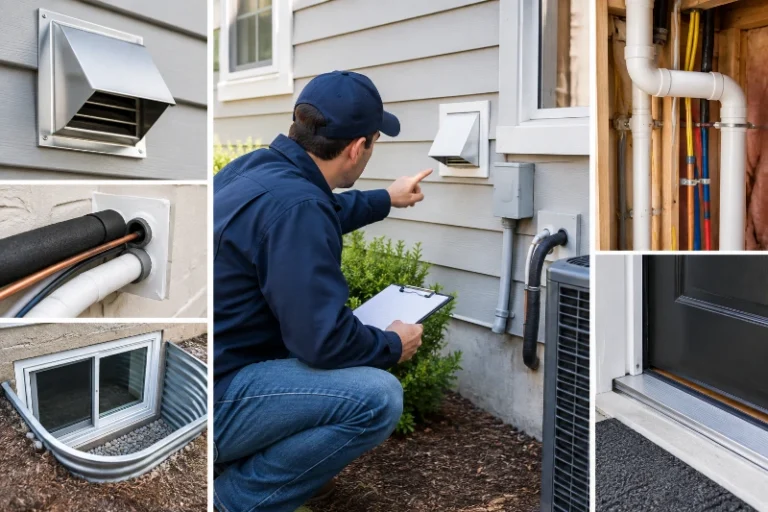
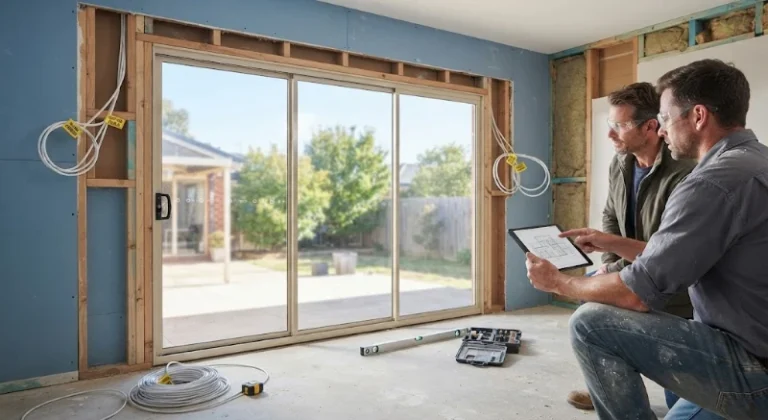
A basement repair does not occur in an empty diagram. Workers may need to move equipment through a narrow side yard, protect finished living space, work around landscaping, disconnect or safeguard utilities, or coordinate with another trade. Exterior work can involve patios, steps, fencing and plantings. Interior work may involve finished flooring, walls, cabinets or a laundry area. Even two otherwise similar drainage scopes can require different labor and restoration depending on the route into the work area.
Ask each contractor to state the access assumptions used in the estimate. Are excavation and disposal allowances based on clear equipment access? Is hand digging included if access is restricted? Who moves stored property? Are dust containment, debris removal, temporary protection and final site cleanup included? What happens if an unexpected buried obstacle appears?
The purpose is not to insist that every obstacle be priced before investigation. It is to distinguish fixed, included work from legitimate unknowns so those unknowns do not disappear into a vague “additional charges may apply” clause.
Compare materials, methods and finishing standards—not just line-item totals
If two bids specify different membranes, drainage components, pumps, wall repairs or restoration materials, they may deliver different work and different future maintenance obligations. Ask for enough detail to compare what is actually being installed: product type and intended use, manufacturer where relevant, key specifications, the extent of preparation, and how any associated finishing work will be completed. A verbal assurance that a system is “premium” is not a substitute for an identifiable specification.
A homeowner does not need to choose a waterproofing system independently. The qualified specialist remains responsible for recommending methods suitable for the building and applicable codes. What the customer can do is ask why that approach was selected, which standards or product instructions apply, and what result the contractor is promising. A repair that redirects water outside is different from one that manages water after it reaches an interior collection point; those approaches should not be treated as identical without a professional explanation.
Ask how the work will be tested or assessed at completion. Is the handover a visual inspection, a documented check of pump operation, photographs of concealed work, or something else appropriate to the scope? Which documents, warranties and maintenance instructions will the owner receive?
Watch for exclusions and change-order triggers
The most expensive surprise may be a task nobody priced. Typical questions include whether taxes, permits, disposal, temporary utilities, drainage discharge work, landscaping repair, hidden damage, mold assessment or remediation, electrical work, and interior finishing are in the proposal. Not every job will involve these items, but every estimate should tell the owner how they are handled.
Uncertain site conditions deserve their own paragraph in the contract. Suppose excavation reveals an unexpected buried obstruction or interior demolition reveals additional damaged material. The contract should describe who documents the condition, how revised work is priced and who must approve a change before it begins. A useful change-order process specifies the new work, its added or reduced price, and any schedule effect in writing. Avoid signing an estimate that gives one party unlimited authority to add undefined work at an undefined price.
The Federal Trade Commission’s homeowner guidance recommends obtaining multiple estimates, checking credentials and reviewing a written agreement carefully. It specifically cautions against automatically choosing the lowest bid and says a written estimate should describe the work, materials, completion date and price. Contract and cancellation rights vary by jurisdiction, so confirm local rules rather than copying terms from another state.
Question to ask: “What is excluded, what might trigger a change order, and will you obtain my written approval before doing work that changes the price?”
A comparison example: three bids that do not buy the same job
Imagine a fictional homeowner whose basement shows dampness along one wall after heavy rain. Three estimators visit and propose different responses. The following descriptions are illustrative only. They are not recommendations for the property, market quotes or evidence that any contractor is right.
Bid A: Surface-water management. The contractor proposes correcting one downspout discharge location and regrading a limited exterior area. The proposal includes a defined work area and cleanup but excludes investigation or repair of buried drainage, structural movement and interior finishes. The scope is relatively narrow; it may be appropriate only if site conditions support that diagnosis.
Bid B: Interior water collection. Another contractor proposes a defined length of slab-edge opening, an interior drain to a sump, concrete patching and a discharge line. The proposal excludes finished flooring replacement, repainting and landscaping disturbed near the discharge. Even if it addresses water entering at the wall-floor area, the homeowner still needs to know what happens to finishes and how the system will be maintained.
Bid C: Exterior foundation work. A third contractor proposes excavation along the affected wall, an exterior drainage and wall treatment system, backfill and partial site restoration. The written price assumes equipment access and excludes repairing an adjacent patio or unexpected underground obstructions. It is a different intervention with different access and restoration implications.
It would be misleading to declare A “best value” merely because its headline price is lower, or C “most complete” because its scope is larger. The homeowner needs a qualified diagnosis, a written comparison of the objectives and boundaries, and clarity about any residual work. If the contractors disagree materially about cause or structural safety, independent technical assessment can be more valuable than a fourth price for another unverified solution.
A useful comparison sheet records five columns for each proposal: suspected cause, work and quantities included, exclusions and owner responsibilities, verification or handover, and total price plus change-order terms. Only once those columns are filled out does a price comparison become meaningful.
Protect the home and budget before and after the work
Moisture-related work sometimes intersects with health or indoor-air concerns. EPA states that mold control depends on controlling moisture and emphasizes fixing the underlying water problem. Its homeowner mold guide recommends prompt attention to water-damaged areas. If extensive mold, contaminated water, structural concerns or other hazards are suspected, use appropriately qualified professionals rather than relying on a generic repair checklist.
Keep copies of the signed scope, plans or sketches, agreed changes, payments, photos of work that will be covered up, permits or inspections where applicable, and equipment or product information. Ask what maintenance is needed and which warranty exclusions apply. A warranty described only as “lifetime” tells a homeowner little without identifying whose lifetime, what defects are covered, whether transfer is allowed and what conditions may void coverage.
Payment arrangements also deserve a written schedule tied to defined project milestones. Verify licensing and insurance requirements locally, and do not treat a contractor’s marketing badge as proof. EPA’s basement remodeling guidance is also relevant if the plan includes converting damp space to finished living area: address moisture before closing up walls or adding flooring so the repair is not immediately concealed by a new finish.
Where online planning ranges fit—and where they do not
National repair-cost ranges can help a homeowner recognize which parts of a project may require further questions, but they cannot establish whether a particular quote is fair. Region, property age, access, diagnosis, selected method, local labor market, required permits and restoration can all change the scope. A single national number often mixes jobs that should not be compared directly.
A responsible online planning tool should identify the project type, disclose the source and limitations of its range, and tell readers what information they still need from an on-site specialist. It should never imply that a higher quote is automatically excessive or a lower quote automatically safe. Written scope comparison is most useful when it exposes why the quoted totals differ and which uncertainties remain.
The basement repair quote checklist
Before choosing between estimates, ask each contractor for written answers to these questions:
- What observations support the proposed diagnosis, and what remains uncertain?
- Which part of the building is covered? Can the work area be shown on a sketch?
- What quantities, materials, equipment and finishing standards are included?
- How will the proposal manage the identified water source or pathway?
- Which demolition, excavation, access protection and disposal tasks are included?
- Who restores flooring, drywall, paint, landscaping, patios and other disturbed areas?
- Are permit, inspection, electrical or engineering services needed, and who is responsible?
- What exclusions or unknown conditions could change the price?
- What written approval is required before added work begins?
- What completion checks, documents and maintenance instructions will be provided?
- What does the warranty cover, and what are its conditions and limitations?
- What are the payment milestones, anticipated schedule and applicable licensing or insurance details?
A good estimate is not necessarily the longest or the most expensive. It is the one that clearly describes a professionally justified intervention, gives the owner understandable boundaries and exposes uncertainty before the contract is signed. Once the bids describe comparable outcomes and responsibilities, the homeowner can evaluate cost with far fewer hidden assumptions.
Contributor note
Felix Cozmolici researches consumer-facing home-repair cost information and written contractor-bid comparisons. He runs RepairGauge, a free U.S. planning-range and quote-document research resource; he is not a licensed repair contractor or structural engineer. This article is general information and does not replace local inspection or professional advice.