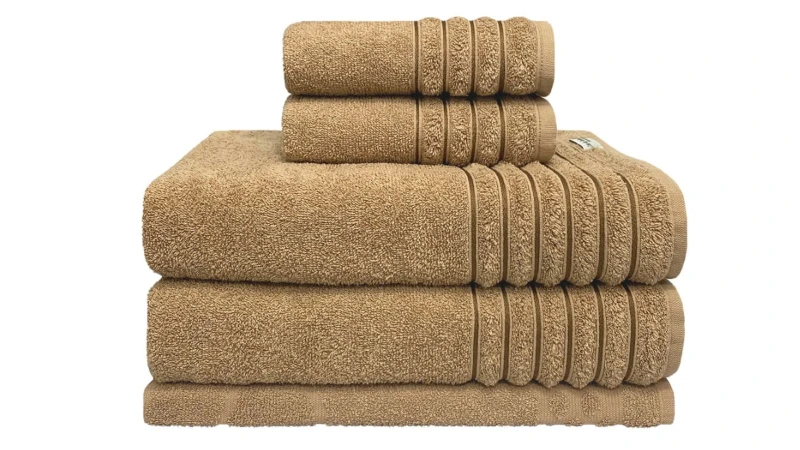
Towel Buying Tips for a Bathroom: What 21,546 Orders Tell Us
Key Takeaways
- Buy towels by GSM (300–600 for everyday use, 600+ for a plush hotel feel), rather than judging quality by how soft they feel on a shelf.
- Combed or ring-spun cotton can offer better durability than basic cotton-poly blends.
- Buy a matching set at once rather than replacing towels piece by piece, since dye lots can vary and mismatched towels can make a newly renovated bathroom look unfinished.
- Check the fibre-content label required for covered textile products in the U.S., and look for OEKO-TEX or GOTS certification if chemical testing or organic production matters to you.
- Real order data from a working towel retailer shows that buyers were more concerned about quality and softness than price, while November was the retailer’s peak sales month.
Most towel buying tips for a bathroom start with the tiles, the mirror, and the paint, and treat towels as an afterthought. That’s a mistake. Towels are one of the final details that bring a renovated bathroom together, and a mismatched, thin, or scratchy set can make an otherwise carefully finished space feel less polished.
This guide explains what to look for when buying bathroom towels, from GSM and cotton type to size, certifications, fibre content, colour, and care. It also examines real order data from more than 21,000 towel purchases to see what shoppers actually bought and what influenced their decisions.
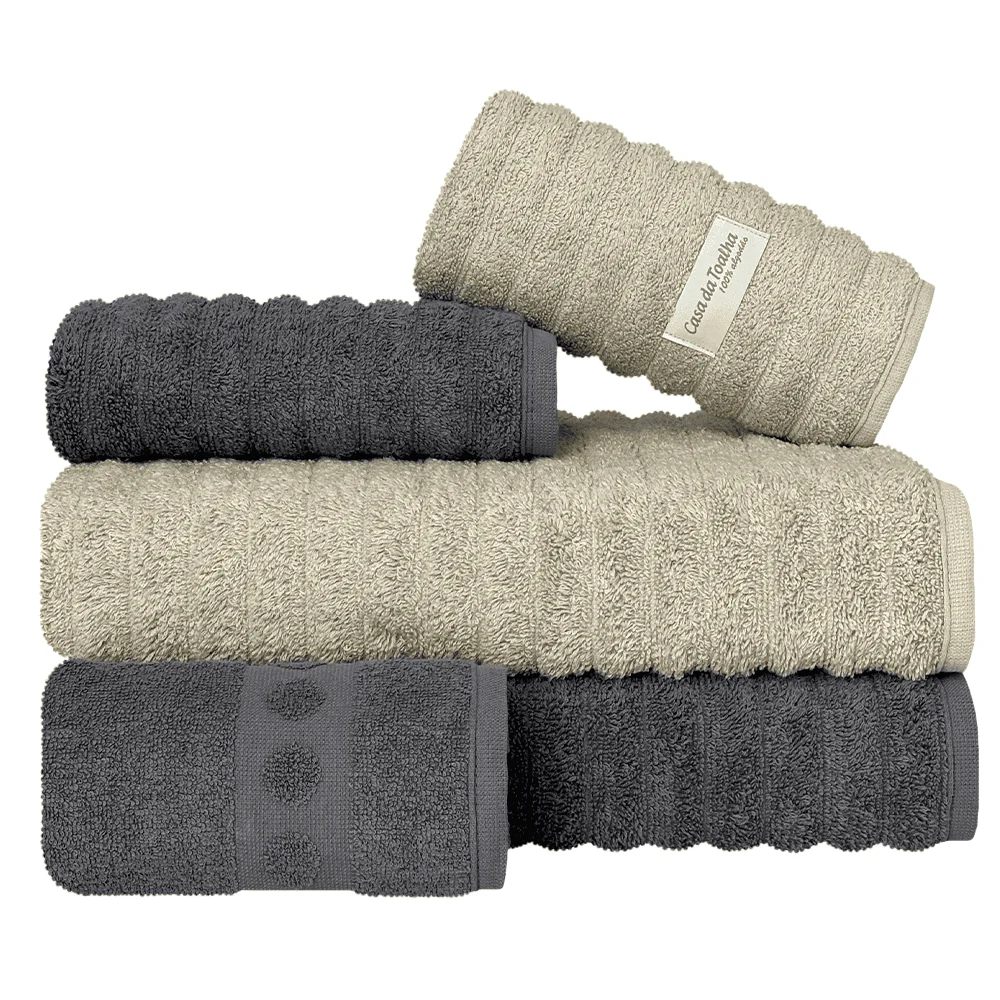
This guide covers what actually separates a towel that lasts five years from one that goes flat and thin after five washes: weight (GSM), cotton type, weave, certifications, and the label the U.S. government requires every towel to carry. We’ll also walk through a real case study built from over 21,000 towel orders — open data from a working retailer — that shows what people actually buy, not what they say they’ll buy in a survey.
What Is the Right GSM for a Bathroom Towel?
The best GSM for a bathroom towel is 500–600 grams per square meter for everyday bath towels, and 600–900 for a heavier, hotel-style feel. GSM stands for grams per square meter, and it’s the closest thing towels have to a nutrition label — a number, not an adjective, that tells you how dense and absorbent the fabric actually is.
Lower-GSM towels (below 400) dry fast and pack small, which suits gym bags and guest baths more than a primary bathroom. Anything above 900 GSM tends to feel heavy and takes longer to dry between uses, which matters in a humid bathroom without much ventilation.
| GSM Range | Feel | Best For |
|---|---|---|
| 300–400 | Thin, dries fast | Guest towels, gym bags, hot climates |
| 400–600 | Balanced, soft, absorbent | Everyday bath towels, most households |
| 600–900 | Thick, plush, slower to dry | Primary bath, hotel-style feel |
GSM ranges reflect widely published industry figures from towel manufacturers and retailers; ask any specific brand for its tested number rather than relying on the tag alone.
One caution worth repeating from people who actually weigh towels for a living: GSM on its own isn’t the whole story. A smaller towel and a heavier towel can land on the same GSM number, because it’s measured per square meter, not per towel. Always check GSM next to the actual dimensions, not instead of them.
Which Cotton Type Should You Buy — Egyptian, Turkish, or Pima?
Turkish cotton gives the best balance of softness and absorbency for most bathrooms, Egyptian cotton is the most absorbent long-staple option, and Pima or Supima cotton (grown in the U.S.) offers a similar long-staple feel at a slightly lower price point. All three outperform standard short-staple cotton, which sheds more lint and wears out faster.
Egyptian Cotton
Grown in Egypt’s Nile Delta, this is a long-staple cotton with extra-long fibers that spin into finer, stronger yarn. That translates to towels that absorb water quickly and hold up to repeated washing without pilling.
Turkish Cotton
Slightly shorter fibers than Egyptian cotton but a fluffier, more lofted yarn, which is why Turkish cotton towels often feel plusher straight out of the dryer. It’s the most common choice for mid-to-high-end bath towels sold in the U.S.
Pima and Supima Cotton
Pima cotton is a long-staple variety grown mainly in the U.S. Southwest; Supima is the trademarked, U.S.-grown version of it. Both are strong, soft, and a reasonable middle ground between budget cotton-poly blends and imported Egyptian cotton.
Skip anything labeled simply “100% cotton” with no staple length or growing region mentioned unless the price already tells you it’s a budget set — that phrase is accurate but tells you almost nothing about how the towel will perform after twenty washes.
What’s the Difference Between a Bath Towel, Bath Sheet, and Hand Towel?
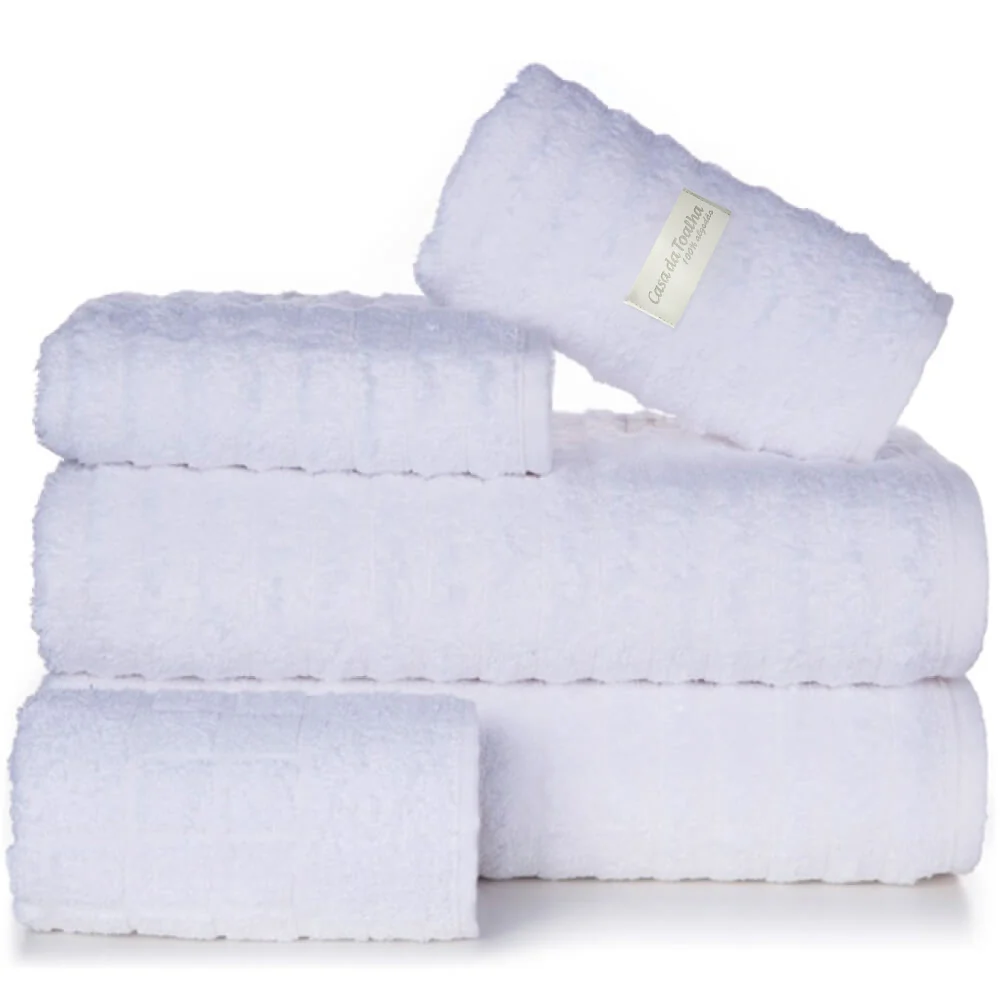
A bath towel typically measures 27×54 inches, a bath sheet is larger at roughly 35×60 inches for full-body coverage, a hand towel runs about 16×28 inches, and a washcloth is around 13×13 inches. Most households do best with a mix of all four rather than bath towels alone.
| Towel Type | Typical Size | Best Use |
|---|---|---|
| Washcloth | 13″ x 13″ | Face, cleaning, kids |
| Hand towel | 16″ x 28″ | Sink, guest bath |
| Bath towel | 27″ x 54″ | Everyday drying |
| Bath sheet | 35″ x 60″ or larger | Full-body wrap, taller households |
Bath sheets feel luxurious but take up more room on a towel bar and in the wash, and they’re heavier to launder. If your bathroom is on the smaller side, a slightly larger bath towel usually fits better than a full bath sheet — our guide to small bathroom ideas covers storage and layout if towel bar space is tight.
How Many Towels Does a Bathroom Actually Need?
A common rule of thumb is two to three bath towels per person, plus one to two hand towels and a couple of washcloths per bathroom, so that one set can be in the wash while another is in use. For a guest bathroom, one matching set per expected guest, stored out of sight, covers most situations without overbuying.
- Primary bathroom, one adult: 3 bath towels, 2 hand towels, 3 washcloths
- Primary bathroom, family of four: 8–10 bath towels, 4 hand towels, 6 washcloths
- Guest bathroom: 2–3 matching sets kept fresh and ready
Buying in complete sets rather than one towel at a time also solves a problem most people don’t think about until it happens: dye lots. Even a small color difference between an old towel and a newly bought one becomes obvious within a week on the same towel bar, which is one reason retailers see the overwhelming majority of bathroom-textile revenue arrive as full sets rather than single pieces — more on that in the case study below.
What Certifications Actually Matter When Buying Towels?
The two certifications worth checking for are OEKO-TEX STANDARD 100, which independently tests the finished towel for harmful chemical residue, and GOTS (Global Organic Textile Standard), which verifies the cotton was grown and processed organically from farm to finished product. Neither certification is required by law, but both are backed by independent, third-party testing rather than a brand’s own marketing claim.
An OEKO-TEX STANDARD 100 label means every component of the towel, not just the visible fabric, has been tested against more than a thousand regulated and unregulated substances that could cause skin irritation or allergic reaction. For a household with young kids or sensitive skin, that’s a more useful signal than the word “hypoallergenic” printed on a hang tag with no testing behind it.
The Global Organic Textile Standard goes a step further and certifies the entire supply chain, from how the cotton was farmed through dyeing and finishing. If sustainability is part of your buying decision, GOTS certification is a more verifiable claim than “eco-friendly” on its own.
How Do You Read a Towel’s Fiber Content Label?
Every towel sold in the United States is legally required to carry a label listing its fiber content by percentage, in descending order, along with the country where it was processed and the manufacturer’s identity. This isn’t a marketing choice — it’s federal law.
That requirement comes from the Textile Fiber Products Identification Act, enforced by the Federal Trade Commission. In practice, it means a tag reading “86% cotton, 14% polyester” is a legal disclosure, not a suggestion, and it’s worth reading before checkout, especially on towels marketed with vague terms like “premium” or “luxury” that don’t appear anywhere in the actual fiber breakdown.
If a towel’s fiber content is a poly-cotton blend rather than 100% cotton, it will typically feel lighter, dry faster, and absorb less than an equivalent all-cotton towel at the same GSM — not necessarily worse, just different, and worth knowing before you buy a full set.
Combed, Ring-Spun, or Zero-Twist — What’s the Difference?
Combed cotton has short fibers removed before spinning, producing a smoother, more durable yarn than uncombed cotton. Ring-spun cotton is twisted more tightly during spinning, which makes it softer and stronger but slightly less plush. Zero-twist cotton uses almost no twist in the loop yarn, giving it a cloud-like softness at the cost of some long-term durability.
For most bathrooms, combed or ring-spun cotton at 500–600 GSM hits the best balance of softness, absorbency, and how the towel looks after two years of regular washing. Zero-twist towels feel incredible in the first few months but tend to lose their shape and softness faster, so they suit a guest bath or occasional-use set better than a daily-use towel for a family of four.
What Towel Colors and Weaves Work Best in a Renovated Bathroom?
Neutral, warm-toned towels — ivory, sand, sage, soft grey — read as more current than stark white or bold pattern in most 2026 bathroom palettes, and they’re easier to match if you add pieces later. If your bathroom leans minimalist, a plain terry weave in one or two tones will read cleaner than a jacquard pattern; our guide to minimalist bathroom ideas covers the same logic for fixtures and storage.
In a smaller footprint, lighter towel colors paired with good task lighting make the whole room feel larger; see our guides on small bathroom ideas and the best LED bathroom mirrors for 2026 for how lighting and finishes work together.
Common Mistakes People Make When Buying Bathroom Towels
- Buying on softness alone in-store, without checking GSM or fiber content, then finding the towel goes flat after a month of washing.
- Replacing towels one at a time instead of as a set, leading to a visibly mismatched rail within a year.
- Choosing the biggest bath sheet available for a small bathroom with limited bar space and no room to dry it properly.
- Ignoring the fiber content label and assuming “100% cotton” always means the same quality across brands.
- Overlooking wash care until after the first wash shrinks or roughens the towel — check the care label before buying, not after.
How Should You Wash Towels So They Last Longer?
Wash new towels once before first use, wash regularly at a warm (not hot) temperature, avoid fabric softener, which coats fibers and reduces absorbency over time, and skip overloading the machine so towels can tumble freely.
- Wash before first use to remove manufacturing residue and open up the fibers for full absorbency.
- Skip fabric softener; a half-cup of white vinegar in the rinse cycle every few washes keeps towels absorbent without the coating.
- Dry on low-to-medium heat and remove promptly; over-drying breaks down fibers faster than the wash cycle does.
- Don’t wash towels with zippered items or heavily lint-producing fabrics that can snag the loops.
A Real Case Study: What 21,546 Towel Orders Reveal About How People Actually Buy
Here is a Real Case Study from Ana Carolina Nielson, Founder of Casa da Toalha
I am Ana Carolina Nielson. I founded Casa da Toalha in 2009, in Brusque, Santa Catarina, one of the textile regions of Brazil. We only sell online, which means the only thing we have ever really known about our customers is what they actually bought. That turns out to be a useful limitation.
Between January and July 2026 our shop recorded 21,546 orders. The average order was 332.13 Brazilian reais. Those orders are the base of the Annual Study of the Brazilian Towel Market 2026, which we published in August with the aggregated table open under a CC BY 4.0 licence. Every number below comes from there and can be checked.
People Do Not Buy a Towel, They Buy The Set
In the bath category, 89.7 per cent of revenue arrives in kits and five piece sets. Single towels account for 9.7 per cent.
That one line changes what a refresh looks like in practice. A household replacing its towels is not replacing a single worn out piece. It is replacing the whole rail at once, in one decision, on one day. The bath towel, the face towel and the hand towel arrive together and go up together.
For a small bathroom project, that is the useful part. The textile layer is not a slow drip of replacements spread across a year. It is one purchase, it is the last visible thing to change in the room, and it needs no building work at all.
Color is the reason it has to be bought together. Across five pieces in three different sizes, a small drift between dye lots is visible on the rail within a week of delivery. A mixed rail makes a new bathroom read as an old one.
What Worries The Buyer is Not The Price
We asked 502 people at checkout what had worried them most before finishing the purchase. Quality and softness came first, named by 22.3 per cent. High price was named by 2.2 per cent.
That gap is worth sitting with. In a category most people treat as a commodity, the thing that nearly stops the sale is not the number on the label. It is the fear that the towel will feel thin, or go stiff after three washes.
The fear is reasonable, because nobody can feel a towel through a screen. Which leads to the finding I did not expect.
The Shopper Learned the MILL’S Vocabulary
More than 20,000 searches a year reach us carrying the word gramatura. It is the Portuguese word for GSM, grams per square metre, and it is a specification that used to live in a mill’s technical sheet. Most of those searches have a number attached, in the form of towel gramatura 500.
Ordinary shoppers are not reaching for an adjective to describe what they want. They are reaching for a unit of measurement. They worked out on their own that softness is a promise anyone can print, and that grams per square metre is a number somebody has to stand behind.
Anyone writing for people who are renovating should take that seriously. The reader who arrives at a bathroom article in 2026 often already has a specification in their head, and a piece that answers only with adjectives will feel thinner than its reader.
One caution, from our own shelves. Weight per square metre on its own is not the whole story, because a smaller towel and a heavier cloth can end up at the same number. The specification only means something next to the dimensions.
November, Not December
In 46 months of series, November is the peak month, and it has been the peak for four years running.
For a renovation audience the practical reading is about timing rather than shopping. The month when households decide to refresh what they already own sits before the gift month, not inside it. Anything written to help people plan a refresh is most useful in October.
In a second survey, with 226 answers, 12.4 per cent of buyers said a consumer reputation platform was what convinced them to pay, and 7.1 per cent said it was other customers’ reviews and photographs.
Together that is close to one in five deciding on the strength of what strangers wrote, in a purchase where the product cannot be touched first. For anyone selling anything for the home online, that is the cheapest thing to work on and the slowest to build.
The whole country behaves this way, at least with us. All 27 federal units of Brazil placed orders inside the window.
What This Does Not Show?
The customer base comes from one shop, not a probabilistic sample of Brazil. The survey with 226 answers covers a short window, and we treat it as a signal rather than a measurement. And there is no color breakdown in this edition, because for years we recorded color in a way we could not read back. That last one is our own fault and we are fixing it for the next edition.
None of this replaces a proper market survey. It is one shop’s receipts, written down carefully and opened up. What it does offer is the thing a survey rarely has. Nobody was asked what they would do. They were watched doing it.
Frequently Asked Questions
What GSM is best for bath towels?
500–600 GSM suits most households for daily bath towels, balancing absorbency with reasonable drying time. Go above 600 GSM only if you’re prioritizing a plush, hotel-style feel over quick drying.
Is Turkish cotton or Egyptian cotton better for towels?
Egyptian cotton absorbs slightly more water thanks to longer fibers; Turkish cotton feels fluffier and plusher out of the dryer. Neither is objectively “better” — choose Egyptian for maximum absorbency, Turkish for everyday softness.
How often should I replace bathroom towels?
Most cotton towels perform well for 2–3 years of regular use before absorbency and softness noticeably decline. Replace sooner if a towel develops a musty smell that survives washing, which signals bacterial buildup in the fibers.
Do more expensive towels always dry better?
Not necessarily. Price tracks brand, certification, and finish more than pure performance. A mid-priced, higher-GSM combed cotton towel with no certifications often outperforms a cheaper towel dressed up in luxury marketing.
What does OEKO-TEX certified mean on a towel?
It means an independent lab tested the finished towel, including dyes and trims, against a strict list of regulated and unregulated substances and found it safe for skin contact. It is not the same as “organic.”
Should I buy a bath towel or a bath sheet?
Bath sheets suit taller households and larger bathrooms with generous towel bar space. Standard bath towels fit smaller bathrooms and washer capacity better and dry faster between uses.
Is 100% cotton always better than a cotton-polyester blend?
For absorbency, yes — 100% cotton typically outperforms cotton-poly blends. Blends dry faster and resist wrinkling better, which can suit a gym bag or guest towel more than a primary bath towel.
Why do my towels feel stiff after washing?
Stiffness usually comes from fabric softener buildup, hard water mineral deposits, or over-drying. Skip softener, use the correct detergent amount, and dry on lower heat to keep fibers soft.
How many towels should a family of four own?
A practical baseline is 8–10 bath towels, 4 hand towels, and 6 washcloths, enough for one set in use while another is in the wash.
What time of year is best to buy new towels?
Real retail sales data points to October, just ahead of the seasonal peak in November, as the best window to buy before prices and demand climb into the holidays.
The Bottom Line
Good towel buying tips for a bathroom come down to reading past the marketing: check GSM against the actual dimensions, buy a matched set rather than one towel at a time, and look for a fiber-content label and a real certification rather than a word like “luxury” on the tag. If you’re timing the purchase around a larger renovation, our bathroom budget planner and bathroom remodeling ideas and cost guide cover where towels fit into the rest of the budget.
Found this useful? Like it or share it with anyone mid-renovation — it saves them the same trial and error.
About the Case Study Source
Ana Carolina Nielson is the founder of Casa da Toalha, a Brazilian online retailer of towels and bed, table, and bath linens, based in Brusque, Santa Catarina. Since 2026, the company has published an annual, open-data study of the Brazilian towel market, drawn directly from its own sales records rather than survey responses alone.
Editor’s note: The following case study was supplied by Casa da Toalha and is reproduced from its 2026 market study. The findings are based on the retailer’s own sales and survey data and should not be interpreted as a nationally representative study of U.S. or Brazilian consumers.
Disclaimer: Product certifications, labeling regulations, and market data referenced in this guide reflect information available at the time of writing. Requirements and figures may change over time or vary by state and country — confirm current standards with the relevant certifying body or agency before making a purchasing decision.