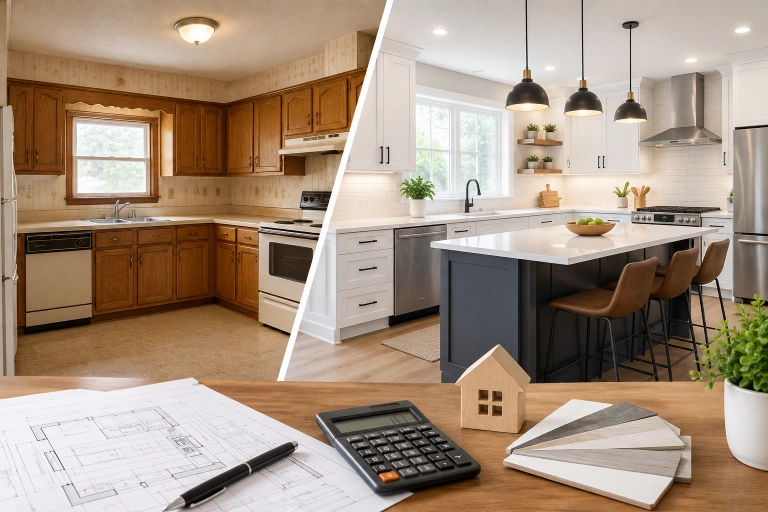
Kitchen Remodeling
Kitchen Remodeling: 2026 Cost, Layout, and Planning Guide
Kitchen remodeling in 2026 is not just about choosing cabinets and countertops. It is about building a kitchen that works for your family, fits your local market, saves energy, avoids hidden costs, and still looks good five years from now.
A smart kitchen remodel in 2026 usually starts with a clear budget, a functional layout, local contractor quotes, permit checks, cabinet planning, lighting, ventilation, and durable materials. Most homeowners should prioritize storage, workflow, energy-efficient appliances, safety, and resale value before spending on luxury finishes.
Who is this kitchen remodeling guide for?
Use this guide if you are:
- A homeowner planning a local kitchen remodel this year.
- Comparing contractor quotes and wondering what is fair.
- Searching for kitchen remodeling cost near you.
- Trying to update an older kitchen without overbuilding.
- Planning to sell in the next three to five years.
- Staying long-term and want comfort, storage, and safety.
- A local remodeling company that needs SEO-ready blog content.
- A real estate investor improving a rental or flip.
- A family that needs a better layout, not just a prettier room.
How much does kitchen remodeling cost in 2026?
Kitchen remodeling costs in 2026 vary by scope, region, layout changes, materials, and labor. A basic refresh can stay under $20,000 in some markets. A full remodel can move past $65,000, and luxury projects can pass $130,000.
Angi reports a 2026 average kitchen remodel cost of about $26,943, with many professional projects falling between $14,586 and $41,540. Minor projects are often listed around $10,000 to $20,000, major remodels around $20,000 to $65,000, and complete remodels at $65,000 to $130,000 or more. (Angi)
NerdWallet also points to wide cost swings. It cites 2025 Cost vs Value data showing a minor kitchen remodel at $28,458, a major midrange remodel at $82,793, and a major upscale remodel at $164,104. (NerdWallet)
Here is the practical truth.
The cheapest quote is not always the cheapest project. Reddit homeowners keep asking whether $40,000, $50,000, or $150,000 quotes are “insane” because kitchen quotes often hide different scopes. One quote may include cabinets, permits, demo, plumbing, electrical, and finish work. Another may exclude half of that. (Reddit)
Local kitchen remodeling cost ranges
| Remodel type | Typical 2026 budget | Best for |
| Cosmetic refresh | $8,000 to $20,000 | Paint, hardware, lighting, minor updates |
| Budget remodel | $15,000 to $35,000 | Stock cabinets, laminate or entry quartz, same layout |
| Midrange remodel | $35,000 to $75,000 | Better cabinets, quartz, new appliances, improved lighting |
| Full remodel | $75,000 to $130,000 | Layout changes, new electrical, plumbing, premium finishes |
| Luxury remodel | $130,000+ | Custom cabinetry, pro appliances, structural work, high-end design |
Local modifier tip: replace “near you” with your city name in the published title. Example: “Kitchen Remodeling in Dallas: 2026 Cost, Layout, and Planning Guide.”
What should you remodel first in a kitchen?
Start with layout, storage, electrical capacity, ventilation, and lighting before choosing finishes. Pretty materials cannot fix a kitchen that blocks traffic, lacks outlets, traps cooking fumes, or forces people to cross paths while cooking.
Here is what nobody tells homeowners early enough.
A kitchen does not fail because the backsplash is boring. It fails because the trash pull-out is too far from the prep zone. It fails because the dishwasher opens into the walking path. It fails because the range hood only recirculates air back into the room.
House Beautiful notes that designers are moving beyond the old work triangle and planning kitchens by zones, such as prep, cooking, cleanup, dry storage, coffee, baking, and drinks. (House Beautiful)
That is the right direction.
Plan these zones first:
- Prep zone near sink, trash, knives, and cutting boards.
- Cooking zone near range, pans, spices, oils, and landing space.
- Cleanup zone near dishwasher, sink, dish storage, and trash.
- Food storage zone near refrigerator, pantry, and small appliances.
- Family zone for snacks, coffee, lunchboxes, and charging.
A good local kitchen remodeling contractor should ask how you live before asking what cabinet color you want.
Is the kitchen work triangle dead?
The work triangle is not dead. It is just incomplete. In 2026, the best kitchens use both the triangle and work zones, especially when more than one person cooks, cleans, or moves through the room.
The old triangle connects the sink, stove, and refrigerator. That still matters. But it was designed for a simpler kitchen.
Today, one person may cook while another loads the dishwasher. Kids may grab snacks. Someone may make coffee. Guests may stand near the island. A pet bowl may sit near the pantry. A laptop may be open at the counter.
That is why zones work better.
For a small galley kitchen, the triangle still helps. For an open kitchen with an island, pantry wall, beverage station, and seating, zones prevent traffic jams.
What is the smartest kitchen remodeling budget strategy?
The smartest budget strategy is to spend on layout, cabinets, ventilation, lighting, and labor quality first. Then choose finishes. Most regret comes from spending too early on visible items and cutting money from hidden systems.
Use this order:
- Permits and design.
- Demo and repair work.
- Plumbing and electrical.
- Ventilation.
- Cabinets and storage.
- Counters.
- Appliances.
- Flooring.
- Lighting.
- Backsplash, hardware, paint, and styling.
This Old House recommends a reserve of about 15% to 20% for surprises, especially in older homes. (This Old House)
I would not treat that as optional.
Older kitchens hide problems. You may open a wall and find old wiring, water damage, venting issues, uneven floors, or previous DIY work. A budget with no contingency is not a budget. It is a wish.
Which kitchen upgrades add the most resale value?
Minor and midrange upgrades often return better value than luxury remodels. Cabinet refreshes, functional layouts, energy-efficient appliances, durable counters, lighting, and clean design usually matter more to buyers than ultra-custom features.
The 2025 Cost vs Value report listed a minor midrange kitchen remodel at $28,458 in job cost, $32,141 in resale value, and about 113% cost recouped. Major midrange remodels showed lower recouped value. (Journal of Light Construction)
That does not mean a luxury kitchen is wrong.
It means you should know why you are doing it.
If you will sell soon, avoid over-personal choices. If you will stay ten years, daily comfort may matter more than resale math. A steam oven, workstation sink, or custom pantry may not “pay back” on paper, but it may make your mornings calmer every day.
That matters too.
What are the biggest kitchen remodeling trends in 2026?
The strongest 2026 kitchen trends are warm wood cabinets, smarter storage, aging-in-place planning, work zones, natural materials, induction cooking, better ventilation, and less sterile all-white design.
Houzz reports that wood cabinets overtook white cabinets in its 2026 kitchen trends study. Nearly 29% of renovating homeowners chose wood cabinets, while white dropped to 28%. The same study found that 53% of renovating homeowners address current or future special needs, including aging household members, pets, disability needs, or young children. (Houzz)
Better Homes & Gardens also highlights smarter storage, warmer finishes, and comfort-focused kitchens for 2026. (Better Homes & Gardens)
Here is my strong opinion.
The all-white kitchen is not dead. Bad all-white kitchens are dead.
A white kitchen with texture, warm lighting, wood, stone, and good hardware can still look beautiful. A flat white kitchen with cold bulbs, gray floors, and no personality now feels like a clinic with a sink.
How do you choose cabinets without wasting money?
Choose cabinets by box construction, layout fit, storage function, finish durability, warranty, and installation quality. Do not choose cabinets by door style alone.
Cabinets often take the largest share of a kitchen budget. USA Cabinet Store estimates cabinetry at 30% to 40% of many kitchen remodel budgets. (USA Cabinet Store)
That means a cabinet mistake is not a small mistake.
Look at:
- Plywood vs particleboard box construction.
- Soft-close hardware quality.
- Drawer depth.
- Pantry storage.
- Corner solutions.
- Warranty terms.
- Installer experience.
- Delivery and damage policy.
Online RTA cabinets can save money, but SmartBuy Cabinetry warns that buyers often overlook material quality, measurements, assembly difficulty, vendor reviews, shipping, and installation costs. (Smart Buy Cabinetry)
Use RTA when the layout is simple and measurements are exact. Use semi-custom when storage and fit matter. Use custom only when the room truly demands it.
Should you keep the same kitchen layout?
Keep the same layout if the current plumbing, range, sink, refrigerator, and traffic flow already work. Change the layout only when the daily function is truly broken. Moving plumbing, gas, walls, and electrical can quickly raise the cost.
This is where many homeowners lose control.
They see a dream kitchen online and decide to move the sink to the island. Then they learn the floor must open. The drain needs rerouting. Electrical must change. The island needs outlets. The range hood plan changes. The permit becomes more involved.
Sometimes it is worth it.
Often, it is not.
Ask this before moving anything: “Will this change improve daily life enough to justify the cost?”
If the answer is weak, keep the layout and improve storage, lighting, surfaces, and appliances.
What permits do you need for a local kitchen remodel?
Permit needs vary by city and county, but kitchen remodeling often requires permits when you move plumbing, change electrical circuits, alter gas lines, remove walls, add windows, or change ventilation. Always check your local building department before work starts.
This is a major competitor gap.
Many blog posts talk about countertops for 1,000 words and barely mention permits. That is dangerous.
A simple cabinet swap may not need much approval. A full remodel with electrical, plumbing, ventilation, and structural changes likely will.
How important is kitchen ventilation?
Ventilation is one of the most underrated parts of kitchen remodeling. It affects comfort, indoor air quality, moisture, odor, and long-term cabinet durability. A beautiful kitchen with weak ventilation is an expensive mistake.
The EPA says people spend about 90% of their time indoors and that inadequate ventilation can increase indoor pollutant levels. It also lists combustion sources, building materials, cabinetry, cleaning products, and outdoor sources as potential contributors to indoor air concerns. (US EPA)
If you cook often, plan ventilation early.
Do not wait until cabinet installation to ask where the hood vents. A real range hood should ideally vent outdoors when possible. Recirculating hoods can help with grease and odors, but they are not the same as outdoor exhaust.
For gas cooking, this matters even more.
ENERGY STAR notes that electric cooking avoids burning gas or propane indoors, which can release pollutants. It also says induction transfers about 85% of heating energy to cookware, compared with about one-third for gas cooking products. (ENERGY STAR)
Are induction ranges worth it in 2026?
Induction is worth considering if you want fast heating, better energy transfer, easier cleaning, and less combustion inside the home. It may require compatible cookware and electrical upgrades, so price the full system before buying.
The Department of Energy says induction stoves are now the most efficient stove type and offer features not available with traditional electric or gas stoves. (The Department of Energy’s Energy.gov)
But do not buy an induction range before checking:
- Electrical panel capacity.
- Circuit requirements.
- Cookware compatibility.
- Ventilation plan.
- Appliance dimensions.
- Local rebate options.
- Delivery lead time.
A common failure: the homeowner buys the appliance first, then learns the electrical work costs more than expected.
What safety details do homeowners forget?
Homeowners often forget anti-tip brackets, GFCI protection, outlet placement, range clearances, slip-resistant flooring, lighting, child safety, and aging-in-place details. These are not exciting, but they protect the people using the kitchen.
The CPSC reports 38 fatalities linked to range tipovers from 1980 through 2008, with 53% involving children ages one to five. Anti-tip brackets have been required since 1991, but installation awareness remains a concern. (U.S. Consumer Product Safety Commission)
That one detail belongs in every remodel checklist.
Also consider:
- Pull-out shelves instead of deep lower cabinets.
- Rounded countertop corners in family homes.
- Easy-grip hardware.
- Brighter task lighting.
- Non-slip flooring.
- Wider pathways.
- Microwave placement below shoulder height.
- Lever-style faucets.
Aging-in-place is not just for older homeowners. It makes kitchens easier for everyone.
What are the best kitchen remodeling materials in 2026?
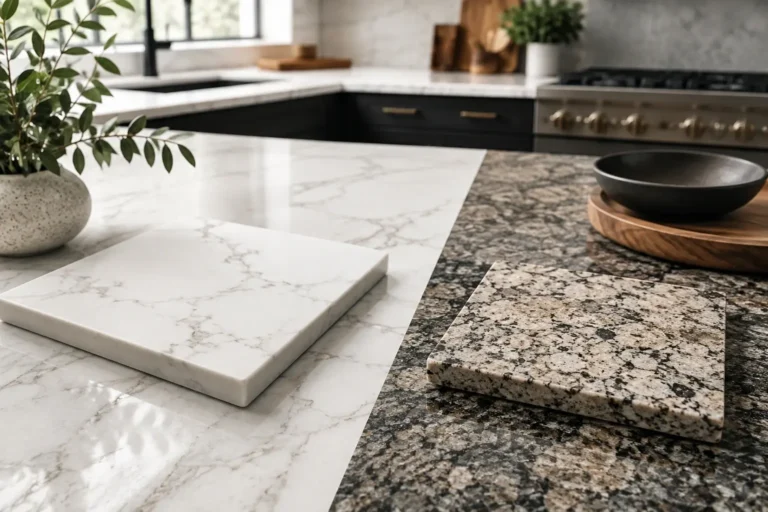
The best materials are durable, repairable, easy to clean, locally available, and appropriate for your home value. Quartz, porcelain, warm woods, durable laminates, engineered flooring, and quality hardware all have a place.
Do not choose materials only from photos.
A glossy black counter looks dramatic online. It may show every crumb. Marble looks classic. It can stain and etch. Cheap cabinet hardware feels fine for three weeks, then annoys you for ten years.
Use this quick guide:
| Material | Best use | Watch out for |
| Quartz | Busy family counters | Heat limits and seam placement |
| Porcelain slab | Durable modern surfaces | Higher fabrication skill needed |
| Butcher block | Warm accent areas | Water maintenance |
| Laminate | Budget counters | Edge damage and heat |
| Solid wood cabinets | Premium look | Cost and movement |
| Plywood cabinets | Strong value | Finish quality varies |
| LVP flooring | Budget durability | Subfloor prep matters |
| Tile flooring | Long-term wear | Cold feel and grout maintenance |
How long does a kitchen remodel take?
A kitchen remodel can take a few weeks for cosmetic work and three months or more for a full renovation. Planning, design, product ordering, permits, demolition, rough-ins, inspections, cabinet installation, counters, and punch-list work all affect the timeline.
Livingetc notes that a well-fitted kitchen renovation can take three months or more, depending on size and scope. (Livingetc)
A realistic sequence looks like this:
- Planning: 2 to 6 weeks.
- Design and selections: 2 to 8 weeks.
- Contractor bids: 2 to 4 weeks.
- Permits and ordering: 2 to 10 weeks.
- Demo and rough work: 1 to 3 weeks.
- Cabinets and surfaces: 2 to 6 weeks.
- Finish work and punch list: 1 to 3 weeks.
The kitchen may be unusable during construction. Plan a temporary setup with a microwave, coffee maker, mini fridge, water source, disposable plates, and one easy prep table.
How do you choose the right local kitchen remodeling contractor?
Choose a contractor by license, insurance, references, scope clarity, communication, payment schedule, warranty, recent local projects, and how well they explain risks. A good contractor protects you from surprises.
Ask these questions:
- Have you remodeled kitchens like mine in this city?
- Are permits included?
- Who handles electrical and plumbing?
- Are cabinets included in the quote?
- What is excluded?
- How do change orders work?
- What deposit is required?
- What is the payment schedule?
- How often will I get updates?
- Who is on site daily?
- What happens if materials arrive damaged?
- What warranty do you provide?
Reddit threads show the same fear again and again: homeowners do not know whether a quote is fair because each contractor defines scope differently. (Reddit)
That is why scope clarity beats charm.
What kitchen remodeling mistakes should you avoid?
The biggest kitchen remodeling mistakes are starting without a scope, choosing finishes before layout, underbudgeting labor, ignoring ventilation, skipping lighting layers, buying cabinets too early, trusting vague quotes, and following trends without considering daily use.
Avoid these expensive mistakes:
- Choosing an island too large for the room.
- Forgetting landing space near appliances.
- Blocking the dishwasher path.
- Placing the trash too far from prep.
- Using one ceiling light only.
- Ignoring under-cabinet lighting.
- Buying appliances before measuring.
- Skipping permit checks.
- Choosing delicate materials for rough family use.
- Forgetting the temporary kitchen plan.
- Paying too much upfront.
- Failing to document change orders.
One strong opinion: a kitchen should be designed around your worst weekday, not your best dinner party.
If it works on a rushed Monday morning, it will work when guests arrive.
Kitchen remodeling FAQs
How much should I budget for kitchen remodeling near me?
Budget based on local labor, scope, and materials. Many 2026 remodels fall between $15,000 and $75,000, but full projects in high-cost areas can exceed $100,000. Get at least three detailed quotes.
Can I remodel a kitchen for $15,000?
Yes, but usually only if you keep the layout, limit labor, use stock materials, refinish or reface cabinets, and avoid major electrical or plumbing changes.
What is the most expensive part of a kitchen remodel?
Cabinets are often the largest cost category. Labor, appliances, countertops, and layout changes can also take a major share.
Should I remodel before selling?
If selling soon, focus on visible, broad-appeal updates. Repaint, repair cabinets, improve lighting, update hardware, and replace damaged counters. Avoid luxury personalization.
Is it better to reface or replace cabinets?
Reface cabinets if the boxes are strong and the layout works. Replace cabinets if the boxes are damaged, storage is poor, or the layout needs a major change.
What is the best kitchen layout?
The best layout depends on the room. Galley, L-shape, U-shape, and island layouts can all work. The real goal is smooth movement between prep, cooking, cleanup, and storage.
Do I need a designer?
You may need a designer if you are changing the layout, mixing many finishes, ordering custom cabinets, or investing heavily. For simple updates, a good contractor and cabinet supplier may be enough.
How can I save money on kitchen remodeling?
Keep the layout, reuse appliance locations, choose stock or semi-custom cabinets, avoid moving plumbing, compare quotes, phase upgrades, and use trends only in easy-to-change details.
What kitchen trend should I avoid in 2026?
Avoid copying a trend that does not fit your home. Oversized islands, delicate marble, open shelving, dark counters, and bold colors can work, but only in the right lifestyle and space.
What should I ask a contractor before signing?
Ask what is included, what is excluded, who pulls permits, how payments work, how change orders are priced, who supervises the job, and what happens if the schedule slips.
Conclusion
Kitchen remodeling in 2026 rewards homeowners who plan slowly before they spend quickly.
Start with the boring parts: layout, permits, ventilation, wiring, cabinet function, lighting, and contractor scope. Then choose the beautiful parts. That order saves money, reduces regret, and creates a kitchen that feels better every day.
My prediction is simple. The best kitchens over the next five years will not be the flashiest ones. They will be the calmest, most useful, healthiest, and easiest to maintain.
2026 Material Watch
Keep an eye on these kitchen remodeling materials and systems:
Smart Glass: Useful for kitchen extensions, privacy zones, and daylight control without heavy window treatments.
Heat Pump Integration: More homes are connecting kitchen planning with whole-home electrification, efficient water heating, and induction cooking.
Recycled Steel Framing: Worth watching for structural remodels, additions, and resilient building projects where durability and lower waste matter.
Large-Format Porcelain: Strong for counters, backsplashes, and waterfall islands, but it needs skilled fabrication.
Low-VOC Cabinet Finishes: Important for homeowners who care about indoor air quality during and after remodeling.