Bathroom Remodeling Guide 2026: Costs, Ideas, Mistakes
Bathroom Remodeling in 2026: The Homeowner’s Guide to Costs, Design, Contractors, Materials, and Mistakes to Avoid
Bathroom remodeling in 2026 works best when homeowners plan around five things first: budget, layout, waterproofing, ventilation, and long-term safety. A smart remodel does not begin with tile. It begins with moisture control, fixture placement, realistic labor costs, and a clear contractor scope. Most homeowners should keep plumbing in place, upgrade ventilation, choose durable materials, and reserve 10 to 20 percent for surprises.
Current research shows homeowners still invest heavily in bathrooms. Houzz reports that 84 percent of bathroom renovators hire professionals, and wet rooms now appear in 16 percent of renovated bathrooms. Angi’s 2026 data places many bathroom remodels around $70 to $250 per square foot, depending on size, materials, and complexity. (Houzz)
Who Will Benefit From This Bathroom Remodeling Guide?
This guide is useful for:
| You Are | This Helps You With |
| A homeowner planning a first remodel | Budget, layout, materials, and contractor questions |
| A seller preparing a home for market | ROI-focused upgrades without overspending |
| A family with one busy bathroom | Timeline planning and dust disruption |
| An older homeowner | Safer showers, grab bars, and future-ready design |
| A DIY beginner | Knowing what to handle and what to hire out |
| A landlord or investor | Durable finishes and simple maintenance |
| A luxury remodel buyer | Smart glass, wet rooms, heated floors, and spa features |
Why Does Bathroom Remodeling Go Wrong So Often?
Bathroom remodeling goes wrong because homeowners treat it like a decorating project when it is really a water, ventilation, electrical, and sequencing project. Tile is visible. Waterproofing is not. That is exactly why the hidden work matters more.
Here is what nobody tells you early enough. A bathroom is a tiny room with more failure points than most kitchens. Water hits the floor. Steam hits the ceiling. Hair clogs drains. Grout cracks. Fans get ignored. Then a homeowner says, “But the tile looked perfect.”
That sentence usually means the remodel was judged too soon.
In homeowner forums, the same concerns appear again and again: “What can I DIY?” “What is a fair price?” “Why did the subfloor rot?” “How do I know the contractor is honest?” One Reddit homeowner said they felt confident with demo and small repairs, but hesitated at waterproofing a walk-in shower and tile. That is exactly the right hesitation. Waterproofing is not the place to learn through hope. (Reddit)
The first strong opinion in this guide is simple: never spend luxury money on visible finishes while using bargain methods behind the wall.
Use the pretty tile. Choose the warm oak vanity. Add the smart mirror. But first, make sure the shower system, fan, drain slope, GFCI protection, and substrate are correct.
How Much Does Bathroom Remodeling Cost in 2026?
Bathroom remodeling costs in 2026 vary widely, but many projects fall between budget cosmetic updates and full gut renovations. Angi reports $70 to $250 per square foot, with labor often taking 40 to 65 percent of the total budget.
A small powder room refresh may only need paint, a faucet, a mirror, lighting, and hardware. A full primary bath remodel can involve demolition, plumbing, electrical work, waterproofing, tile, ventilation, cabinetry, fixtures, and permits.
Angi’s 2026 bathroom remodel data shows that labor can represent 40 to 65 percent of the budget. It also lists plumbers at $45 to $200 per hour, designers at $50 to $200 per hour, and electricians at $50 to $200 per hour. (Angi)
Bathroom Remodel Cost Snapshot
| Remodel Type | Typical Scope | Best For |
| Cosmetic refresh | Paint, mirror, faucet, lighting, hardware | Tight budgets |
| Midrange remodel | Vanity, toilet, shower update, tile, fan | Most homeowners |
| Full gut remodel | Walls opened, plumbing, electrical, waterproofing | Old or damaged bathrooms |
| Luxury remodel | Wet room, smart glass, steam, custom tile | Long-term lifestyle upgrade |
| Accessibility remodel | Curbless shower, grab bars, wider entry | Aging in place |
My practical rule is this: if you open walls, act like you are buying insurance. Upgrade the fan, inspect plumbing, check framing, and document waterproofing before tile goes up.
What Should You Plan Before Choosing Tile?
Before choosing tile, decide the bathroom layout, plumbing locations, shower type, ventilation plan, electrical needs, storage, lighting layers, and future safety upgrades. Tile should support the plan, not lead it.
The Home Depot’s bathroom remodel checklist starts with planning, style, logistics, additions, vanities, sinks, and shower or tub decisions. That sequence is useful because it keeps homeowners from buying materials before the scope is clear. (The Home Depot)
Start with these questions:
- Will the toilet stay in the same place?
- Will the shower or tub move?
- Is the fan vented outdoors?
- Does the room need more lighting?
- Is there hidden water damage?
- Is this bathroom for resale, family use, rental durability, or aging in place?
- Can the home function during construction?
A composite example: a couple planned a $9,000 “simple” remodel. They picked handmade tile first. Once demo started, they found a soft subfloor near the toilet. The project became a $15,500 repair because the old toilet flange had leaked for years. The lesson is not “avoid nice tile.” The lesson is “inspect before you romanticize.”
Should You Remodel the Shower, Tub, or Both?
Most homeowners get better daily value from improving the shower than from adding a rarely used tub. Keep a tub when resale, children, pets, or personal soaking habits make it useful. Otherwise, a larger shower often wins.
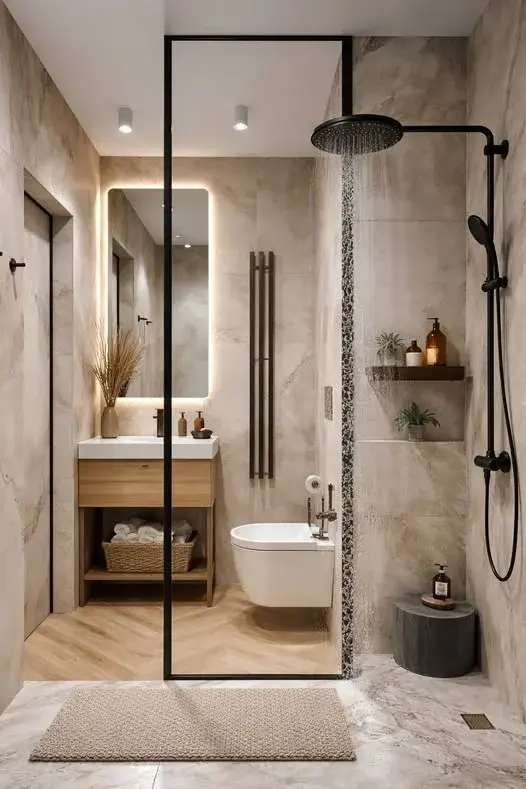
Showers are now the emotional center of many bathroom remodeling projects. Houzz reports wet rooms now appear in 16 percent of renovated bathrooms. Half of those homeowners chose wet rooms for better use of space, while others cited aesthetics and accessibility. (Houzz)
A wet room can look stunning. It can also feel cold, splashy, and expensive if poorly planned. The floor slope must be right. The drain must be right. The waterproofing must be continuous. The glass placement must control spray.
Shower and Tub Decision Table
| Choice | Pros | Cons |
| Tub-shower combo | Budget friendly, family friendly | Less luxurious |
| Walk-in shower | Daily comfort, strong resale appeal | Needs good waterproofing |
| Curbless shower | Accessible, modern, easy entry | Requires precise floor work |
| Wet room | High-end look, space efficient | Costly and detail-sensitive |
| Freestanding tub | Beautiful focal point | Often underused |
A contractor once described wet rooms as “simple to admire and complicated to build.” That line sticks because it is true.
What Are the Best Bathroom Materials for 2026?
The best bathroom materials in 2026 are water-resistant, low-maintenance, slip-conscious, and repairable. Porcelain tile, quartz surfaces, solid wood-look finishes, quality grout, and proven waterproofing systems usually beat trendy materials that need constant care.
The 2026 design shift is warmer and more personal. NKBA says bath design is becoming deeply personal, with smart fixtures, wellness features, energy systems, and aging-in-place innovations moving into the mainstream. (NKBA)
Good materials do three things:
They survive water.
Clean easily.
They still look good after daily use.
Honest Brand and Tool Notes
| Brand or Tool | Use | Honest Assessment |
| Schluter-KERDI | Shower waterproofing | Excellent system when installed exactly right |
| Wedi | Waterproof shower panels | Fast and reliable, but not cheap |
| LATICRETE Hydro Ban | Waterproofing membrane | Strong pro-grade option |
| Custom Building Products RedGard | Liquid membrane | Useful, but thickness control matters |
| Durock cement board | Tile backer | Durable, but still needs waterproofing strategy |
| Kohler | Fixtures and toilets | Broad range, strong availability |
| Moen | Faucets and shower valves | Good replacement part support |
| Delta | Faucets and shower systems | Reliable midrange choice |
| TOTO | Toilets and washlets | Excellent performance, higher upfront cost |
| Panasonic Whisper series | Exhaust fans | Quiet and respected for ventilation |
| Broan-NuTone | Exhaust fans | Wide selection and easy availability |
| WaterSense | Product label | Helps identify efficient fixtures |
Do not choose bathroom materials only from mood boards. Hold the tile. Check slip rating. Ask how the grout will be sealed. Ask if the vanity base can handle humidity. A bathroom remodel should feel beautiful on day one and still behave on day one thousand.
Why Is Ventilation One of the Most Important Bathroom Remodeling Decisions?
Ventilation protects the remodel after installation. A strong bathroom fan helps remove steam, control moisture, reduce odor, and lower mold risk. If your old fan is loud, weak, or vented into an attic, upgrade it during the remodel.
EPA guidance says to run the bathroom fan or open a window when showering, and to use exhaust fans or windows to reduce moisture. EPA also recommends increasing ventilation or air movement to help prevent condensation. (US EPA)
ENERGY STAR says certified ventilation fans use about 48 percent less energy than standard models and help control moisture and odors. Models with lighting use 70 percent less energy on average than standard models with lighting. (ENERGY STAR)
Here is my blunt view: a quiet fan is not a luxury. It is compliance with real life. People do not use loud fans. They flip them off. Then the new paint bubbles and the ceiling spots begin.
For better results, consider:
- A quiet ENERGY STAR fan
- A humidity sensor
- A timer switch
- Exterior venting
- Proper duct size
- Sealed ceiling penetrations
Which Water-Saving Upgrades Are Worth It?
Water-saving upgrades are worth it when they perform well and reduce waste without making the bathroom feel cheap. Look for WaterSense labeled showerheads, faucets, and toilets when replacing fixtures.
EPA says standard showerheads use 2.5 gallons per minute, while WaterSense labeled showerheads must use no more than 2.0 gallons per minute and still meet performance criteria. EPA also says an average family can save 2,700 gallons per year by installing WaterSense labeled showerheads. (US EPA)
The mistake is buying the cheapest low-flow fixture and then hating every shower. Efficiency without performance creates resentment.
Better approach:
Choose WaterSense for showerheads and faucets.
Choose a strong-flush toilet from a trusted brand.
Ask about replacement cartridges and parts.
Check local rebates where available.
For global readers, look for your country’s equivalent water-efficiency label if WaterSense is not used in your market.
What Bathroom Remodeling Mistakes Cost the Most?
The most expensive bathroom remodeling mistakes are moving plumbing without need, skipping waterproofing details, hiring the lowest bid, ignoring ventilation, buying materials too late, and changing scope after demolition begins.
Houzz’s 2026 renovation study found that 37 percent of homeowners exceeded their set budget in 2025. Many overspent because they chose higher-end materials or expanded the scope during the project. (Houzz)
That matches what homeowners say in forums. One Reddit discussion about DIY savings included a homeowner who saved labor but spent months on the work, while another dealt with a rotted subfloor around the toilet. Real remodels are rarely as neat as online before-and-after posts. (Reddit)
Avoid These Costly Errors
| Mistake | Why It Hurts | Better Move |
| Moving plumbing casually | Adds labor, permits, and risk | Keep fixtures where possible |
| Skipping fan upgrade | Causes moisture damage | Add quiet fan and timer |
| Buying tile late | Delays schedule | Order early with overage |
| No contingency | Creates panic | Add 10 to 20 percent buffer |
| Lowest bid wins | Often hides missing scope | Compare line items |
| No waterproofing photos | Hard to verify later | Document before tile |
The cheapest remodel is not the one with the lowest contract. It is the one you do not have to redo.
How Do You Choose the Right Bathroom Remodeling Contractor?
Choose a bathroom remodeling contractor by comparing scope, not just price. Ask for license, insurance, references, schedule, payment terms, waterproofing method, change-order process, and a written line-item proposal.
Realm’s 2026 quote guide makes a strong point: three quotes are only useful when you know how to compare them. A one-page lump sum and a detailed proposal are not equal documents. (realmhome.com)
Ask these questions before signing:
- What waterproofing system do you use?
- Who handles plumbing and electrical work?
- Are permits included?
- What is excluded?
- What happens if hidden damage appears?
- How are change orders priced?
- What payments are due at each stage?
- Will I see waterproofing before tile?
- How long is the workmanship warranty?
- Who is on site each day?
A good contractor does not get offended by detailed questions. They may not be the cheapest, but they explain risk clearly.
Can Bathroom Remodeling Be DIY?
Bathroom remodeling can be partly DIY, but waterproofing, electrical work, plumbing relocation, and complex tile showers usually deserve professional help. DIY is best for demolition, painting, hardware, mirrors, simple fixtures, and cosmetic upgrades.
The Reddit DIY discussion captures the real issue well. Homeowners may feel comfortable with demo and small repairs, but walk-in shower waterproofing and tile installation create hesitation. That hesitation is smart. (Reddit)
DIY can save money. It can also steal months.
One homeowner in a Reddit remodel thread said a first bathroom remodel took eight months and a second took four months. They noted that labor savings came with tool costs, study time, and the need to hire out harder tasks. (Reddit)
Best DIY Tasks
- Removing accessories
- Painting
- Installing towel bars
- Replacing mirrors
- Swapping cabinet hardware
- Basic demolition with care
- Adding storage shelves
Hire Out These Tasks
- Shower waterproofing
- Drain relocation
- Electrical changes
- Heated floor wiring
- Curbless shower slope
- Structural repairs
- Steam shower installation
A proud DIY result feels amazing. A leaking DIY shower feels expensive.
How Can You Make a Bathroom Safer Without Making It Look Medical?
You can make a bathroom safer by adding blocking for future grab bars, using slip-resistant flooring, improving lighting, choosing a curbless or low-threshold shower, and adding a comfort-height toilet. Safety can look elegant when planned early.
The National Institute on Aging recommends grab bars near toilets and inside and outside tubs and showers, plus nonskid mats or strips on surfaces that may become slippery. (National Institute on Aging)
The Access Board’s ADA guidance includes detailed standards for toilet rooms, bathing rooms, grab bars, showers, and plumbing elements. While private homes may not need full ADA compliance, the design logic is still useful for future-ready bathrooms. (Access Board)
The best trick is invisible preparation. Add wood blocking inside walls before tile. You may not install grab bars today. But if someone needs them in five years, you will not have to rip open the wall.
Safe does not mean ugly. Many modern grab bars look like towel bars. Shower benches can look spa-like. A curbless entry can feel architectural. Good safety design should feel like luxury, not surrender.
What Bathroom Design Trends Matter in 2026?
The most useful 2026 bathroom trends are warm materials, wellness lighting, larger showers, smart fixtures, better storage, low-maintenance surfaces, and aging-in-place planning. Avoid trends that photograph well but clean poorly.
NKBA’s 2026 bath trends highlight smart home integration, intelligent showers, lighting, energy systems, wellness, and aging-in-place innovation. (NKBA)
Angi’s 2026 home trends also notes spa-inspired bathroom features like rainfall and steam showers, layered lighting, deep soaking tubs, warm wood tones, bold color, smart showers, heated floors, anti-fog mirrors, and built-in LED lighting. (Angi)
Trends Worth Considering
| Trend | Why It Works |
| Warm wood vanities | Softens hard tile surfaces |
| Layered lighting | Helps grooming and relaxation |
| Wet rooms | Good for space and accessibility |
| Curbless showers | Future-ready and stylish |
| Heated floors | High comfort in cold climates |
| Smart mirrors | Useful when lighting is good |
| Large-format porcelain | Fewer grout lines |
| Recessed storage | Keeps counters clear |
Trends to Question
All-white sterile bathrooms.
Black fixtures in hard-water areas.
Oversized showers that feel cold.
Tiny mosaic floors with too much grout.
Open shelves beside toilets.
The best bathroom remodeling trend is not the loudest one. It is the one that survives your daily routine.
What Is the Best Bathroom Remodeling Timeline?
A bathroom remodel timeline can range from a few days for cosmetic updates to several weeks for a full renovation. The planning phase often matters more than the construction phase because delayed materials and unclear decisions cause avoidable downtime.
The Home Depot suggests giving yourself around 12 weeks from planning to remodel day, especially when choosing materials, logistics, and project scope. (The Home Depot)
A realistic timeline looks like this:
| Phase | Time |
| Planning and measuring | 1 to 2 weeks |
| Contractor quotes | 2 to 4 weeks |
| Design and materials | 2 to 6 weeks |
| Permits where needed | Varies by location |
| Demolition | 1 to 3 days |
| Rough plumbing and electrical | 2 to 5 days |
| Waterproofing and inspections | 2 to 5 days |
| Tile and grout | 4 to 10 days |
| Fixtures and finish work | 2 to 5 days |
| Punch list | 1 to 3 days |
The emotional timeline is different. Day one feels exciting. Fifth day feels dusty. Day twelve feels endless. Then the mirror goes up and everyone calms down.
Internal link ideas: [bathroom remodel timeline], [renovation dust control guide], [temporary bathroom setup tips]
What Should You Put in a Bathroom Remodeling Budget?
A smart bathroom remodeling budget includes labor, materials, fixtures, ventilation, waterproofing, permits, waste removal, design fees, contingency, and temporary living disruption. Do not budget only for what you can see.
Here is a simple budget framework:
| Category | Budget Role |
| Labor | Usually the largest cost |
| Plumbing | Higher if fixtures move |
| Electrical | Lighting, fan, GFCI, heated floor |
| Waterproofing | Critical shower protection |
| Tile and flooring | Material plus skilled installation |
| Vanity and storage | Function and style |
| Fixtures | Toilet, faucet, shower valve |
| Ventilation | Fan, ducting, switch |
| Permits | Location dependent |
| Contingency | Hidden damage and scope changes |
Use a 10 to 20 percent contingency. Older homes may need more. If you have only one bathroom, also budget for inconvenience. That might mean hotel nights, gym showers, or portable arrangements.
A remodel does not fail only when money runs out. It also fails when patience runs out.
Bathroom Remodeling FAQ
How much should I budget for bathroom remodeling in 2026?
Budget by scope. Cosmetic updates may stay modest, while full remodels can rise quickly. Angi’s 2026 data places many bathroom remodels at $70 to $250 per square foot, with labor often taking 40 to 65 percent of the total. (Angi)
Is a walk-in shower better than a tub?
A walk-in shower is often better for daily use, accessibility, and modern resale appeal. Keep a tub if you have children, pets, or you genuinely soak often.
What is the biggest bathroom remodel mistake?
The biggest mistake is focusing on finishes before solving layout, waterproofing, ventilation, and budget. Pretty tile cannot save a poorly built shower.
Do I need a bathroom fan if I have a window?
A window helps, but a fan is more reliable. EPA recommends using bathroom fans or opening windows to reduce moisture from showering. (US EPA)
Are wet rooms worth it?
Wet rooms can be worth it for accessibility, space, and luxury appeal. They need excellent waterproofing, proper slope, and realistic expectations about splashing.
What bathroom upgrades add the most value?
Showers, ventilation, lighting, vanities, storage, toilets, and flooring usually matter most. Resale buyers notice clean function before novelty.
Can I remodel a bathroom myself?
Yes, but choose tasks carefully. Painting, hardware, mirrors, and simple demo are DIY-friendly. Plumbing, electrical, shower waterproofing, and curbless showers are better for pros.
What is the best flooring for bathrooms?
Porcelain tile is a strong choice because it handles water well. Luxury vinyl can work in some budgets. Natural wood is risky in wet zones.
Should I use smart bathroom technology?
Use smart tech when it solves a real problem. Heated floors, anti-fog mirrors, humidity sensors, and smart lighting can be useful. Avoid gimmicks.
How do I avoid contractor problems?
Get detailed quotes, verify license and insurance, compare scopes, ask about waterproofing, document changes, and never choose only by lowest price.
What is aging-in-place bathroom remodeling?
It means designing for future mobility and safety. Curbless showers, blocking for grab bars, better lighting, and slip-resistant floors are common upgrades.
How long does bathroom remodeling take?
A full remodel often takes several weeks after planning and materials are ready. Cosmetic updates may take days. Custom tile, inspections, and delays extend timelines.
Final Bathroom Remodeling Checklist
Before you sign a contract, confirm:
- The layout is final.
- Plumbing changes are necessary, not impulsive.
- Ventilation is upgraded.
- Waterproofing system is named in writing.
- Tile, vanity, fixtures, and hardware are ordered early.
- Electrical work includes lighting, GFCI, fan, and future needs.
- Safety blocking is added behind walls.
- Quote includes exclusions.
- Payment schedule is clear.
- A contingency budget exists.
- You have a temporary bathroom plan.
- You photographed rough work before walls closed.
Bathroom remodeling is not about chasing the most expensive finish. It is about building a small room that handles water, traffic, humidity, cleaning, and daily routines without drama.
The best remodel feels calm because the hard decisions were made before demolition.
2026 Material Watch
Smart Glass
Smart glass is moving from luxury hotels into high-end residential bathrooms. It can shift from clear to private, which helps open bathrooms feel flexible. It is still expensive, so use it where privacy and visual openness both matter.
Heat Pump Integration
Heat pump water heaters and efficient home systems matter more as homeowners connect comfort, utility bills, and sustainability. For bathroom remodeling, this affects hot water planning, shower performance, and mechanical room capacity.
Recycled Steel Framing
Recycled steel framing is worth watching for moisture-prone or termite-prone construction zones. It is not needed in every bathroom, but it can support durable, lower-waste building strategies.
Large-Format Porcelain Panels
Porcelain slabs reduce grout lines and create a clean spa look. They require skilled handling and careful substrate prep. They are not a beginner DIY material.
Low-Carbon Concrete and Tile Backers
More manufacturers are exploring lower-carbon materials. For now, performance still comes first. In wet rooms, choose proven waterproof assemblies before chasing green claims.