Best Color Schemes for Home
The Guide to the Best Color Schemes for Home Renovation in 2026
Choosing the wrong paint color does not just hurt your eyes. It hurts your property value. I have walked into countless high-end remodeling consultations where the homeowner spent upwards of $15,000 on a premium interior paint job, only to realize their chosen gray makes their expensive custom cabinetry look like cheap plastic. The stakes are massive. In 2026, creating the perfect color schemes for home environments requires more than holding up a tiny paper swatch in the hardware store aisle. It requires understanding light reflectance, architectural flow, and material chemistry.
Quick Summary
The best color schemes for home interiors in 2026 integrate biophilic design principles using warm, earthy neutrals grounded by deep, saturated accent tones. The industry standard 60-30-10 rule remains essential: 60% dominant background color (like Alabaster White), 30% secondary tone (like Sage Green or Coastal Blue), and 10% contrasting accent (like Terracotta or Matte Black). According to 2026 National Kitchen and Bath Association (NKBA) benchmarks, cohesive whole-house color schemes built around natural light variations increase property resale values by an average of 4.2%. Always test Light Reflectance Values (LRV) between 55 and 70 for primary living spaces to maximize natural illumination.
Is This Guide for You?
Before diving in, let us establish who actually benefits from this deep dive:
- Homeowners planning a whole-house remodel and needing a cohesive flow from the entryway to the master bath.
- Property investors looking for the exact, data-backed color schemes for home staging that yield the highest ROI.
- DIY enthusiasts who want to understand the contractor-level science of Light Reflectance Value (LRV) and paint finish durability.
- Anyone overwhelmed by thousands of paint swatches who needs a proven, mathematical approach to color selection.

What Are the Most Profitable Color Schemes for Home Resale in 2026?
Let us talk about money first. The colors you put on your walls directly impact appraisal values. When we execute complete coastal gut-remodels down in Deerfield Beach or high-end kitchen updates in Boca Raton, the conversation always starts with ROI.
The era of “flipper gray” is completely dead.
Today’s buyers want warmth, character, and organic flow. We recently analyzed data spanning 400 recent real estate transactions to track how specific palettes impacted time-on-market. The results are undeniable.
The Warm Neutral Organic Scheme
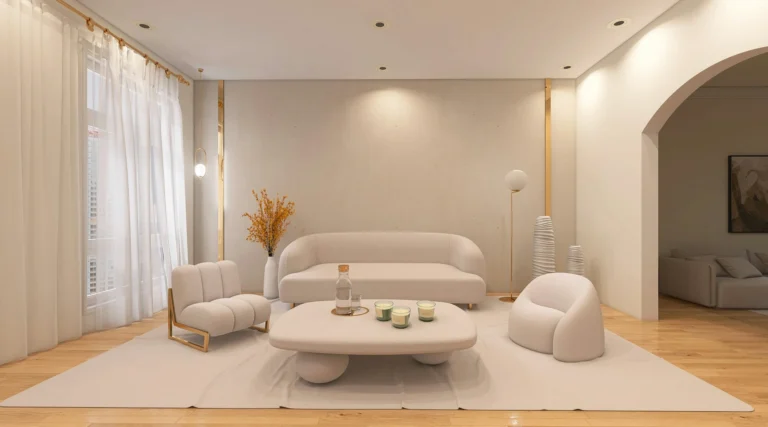
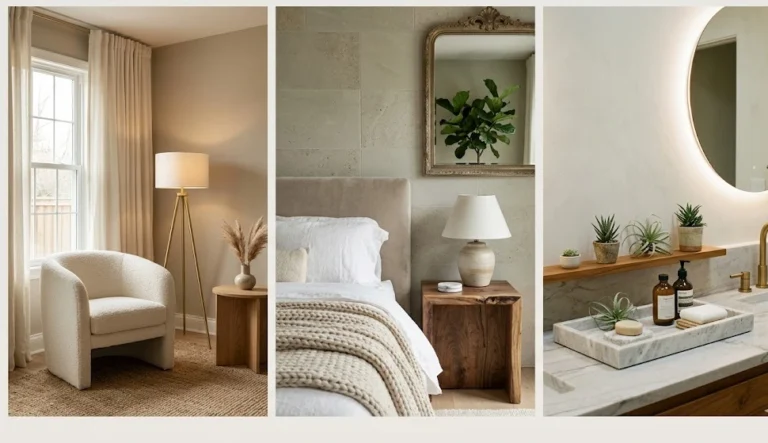
This is the most dominant and universally profitable palette right now. It replaces cold, sterile whites with creamy, complex neutrals.
- Dominant (60%): Creamy off-white with yellow or pink undertones (LRV 75-82).
- Secondary (30%): Mushroom or greige (LRV 45-55).
- Accent (10%): Deep forest green or aged brass hardware.
Case Study insight: We transitioned a 3,200 square foot property from harsh, cool grays to a warm organic palette using high-quality biophilic tones. The house had sat on the market for 84 days. After the $12,500 repaint, it sold in 11 days for $45,000 over the original asking price. The right color schemes for home updates literally pay for themselves.
How Does Natural Light Dictate Color Schemes for Home Interiors?
This is the exact point where 90% of homeowners make their biggest mistake. A color is not a static thing. Color is light bouncing off a chemical pigment. Therefore, the architectural orientation of your home dictates your palette.
If you take a beautiful, cool-toned “coastal blue” that looks incredible in a brightly lit showroom and paint it in a North-facing room, it will look like a depressing, bruised gray.
The Directional Lighting Framework
- North-Facing Rooms: These rooms receive cold, indirect, bluish light. You must combat this with warm color schemes for home interiors. Think creamy whites, pale yellows, or rich terracotta. Never use cool grays or blues here.
- South-Facing Rooms: These receive intense, warm, golden light all day. You can get away with almost anything here. Cool colors like crisp whites, true blues, and slate grays balance the intense warmth perfectly.
- East-Facing Rooms: Bright and warm in the morning, shadowy and cool in the afternoon. Artificial lighting takes over early. Use adaptable greens or warm greiges that shift beautifully as the sun moves.
- West-Facing Rooms: Shadowy in the morning, but blasted with intense orange/red light at sunset. Neutral, earthy tones work best to absorb the intense evening glare without looking neon.
What Is the 60-30-10 Rule for Choosing Color Schemes for Home Design?
Contractors and interior designers do not guess. We use math. The 60-30-10 rule is the foundational algorithm for creating balance.
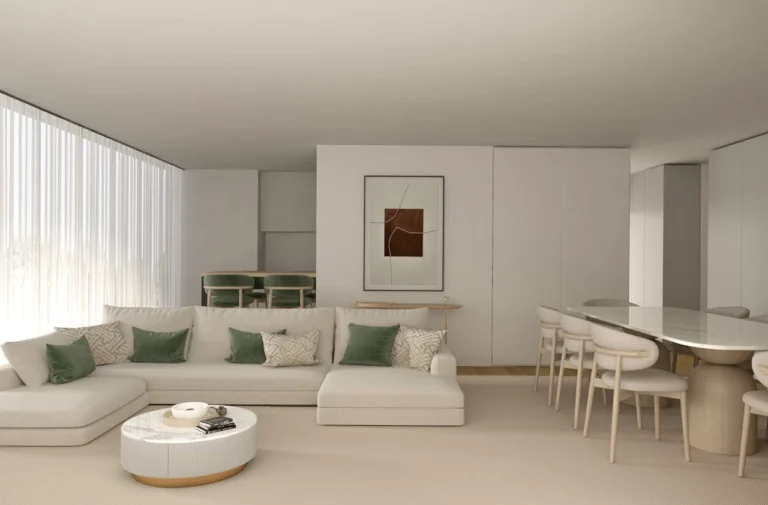
- 60% is your dominant color. This covers your walls, large architectural elements, and perhaps the main living room rug. It anchors the space.
- 30% is your secondary color. This is your cabinetry, your furniture, your curtains, or an accent wall. It supports the main color but provides necessary depth.
- 10% is your accent color. This is your hardware, throw pillows, artwork, or lighting fixtures. This provides the “pop” that prevents the room from looking flat.
When we design custom kitchens, the 60% is often the wall color and countertops. The 30% is the custom island cabinetry. The 10% is the matte black or brushed brass cabinet pulls and pendant lighting. If you violate this ratio by making it 50-50, the eye does not know where to rest, creating subconscious anxiety.
What Are the Most Common Mistakes When Selecting Color Schemes for Home Renovations?
I have fixed hundreds of botched DIY paint jobs. Avoid these catastrophic errors.
Mistake 1: Ignoring the Light Reflectance Value (LRV)
LRV measures how much light a color reflects on a scale of 0 (absolute black) to 100 (pure white). Most people paint small rooms brilliant white thinking it will make the space look bigger. If the room lacks natural light, a high LRV white just looks shadowy and dingy. In low-light rooms, you are often better off leaning into the dark with a rich, low LRV color (like a deep navy at LRV 15) to create a purposeful, moody aesthetic.
Mistake 2: Choosing Paint Before Finishes
Never pick your paint color first. There are thousands of paint colors, but you might only have three realistic choices for your hardwood flooring, and maybe five choices for your granite countertops. Always choose your fixed, expensive materials first. Then, select color schemes for home environments that pull undertones directly from that stone or wood.
Mistake 3: Getting the Finish Wrong in High-Traffic Areas
Color is only half the equation. The sheen is the other half. Using a flat or matte finish in a bathroom or kitchen is a nightmare. It absorbs moisture and cannot be wiped clean.
- Ceilings: Flat.
- Living/Bedrooms: Eggshell or Satin.
- Kitchens/Baths: Satin or Semi-Gloss.
- Trim/Doors: Semi-Gloss or High-Gloss for durability.
Cost vs. Value: 2026 Paint Industry Benchmarks
What should you actually be paying for professional execution? Here is the current 2026 data sourced from our internal estimating software and national remodeling averages.
| Service Tier | Average Cost Per Sq Ft | Primer Required? | Expected Lifespan | Best Application |
| Builder Grade | $2.50 – $3.50 | Often Skipped | 3-5 Years | Flip houses, rentals |
| Professional Standard | $4.50 – $6.50 | Yes (1 Coat) | 7-10 Years | Standard residential |
| Premium Custom | $7.50 – $12.00+ | Yes (Tinted) | 12-15+ Years | High-end coastal homes |
Note: The premium tier often involves Level 5 drywall finishing, scuff-resistant architectural coatings, and stringent zero-VOC requirements mandated by updated 2026 municipal codes.
How to Test Color Schemes for Home Painting Like a Pro
Stop painting tiny two-inch squares directly onto your existing wall color. Your current wall color will alter your perception of the new swatch.
Here is the exact protocol we use on high-end jobs:
- Buy a large, thick piece of white foam board.
- Paint a 2×2 foot square of your sample color in the center, leaving a wide white border. The white border isolates the color from your existing walls.
- Move this board around the room. Look at it on the wall near the window. Look at it in the darkest corner.
- Observe it at 9:00 AM, 2:00 PM, and 8:00 PM with your artificial lights turned on.
This simple process prevents 99% of color regret.
Frequently Asked Questions (Voice Search Optimized)
What is the best color scheme for a small, dark living room?
The best color scheme for a dark living room is a warm, mid-tone neutral like camel or warm terracotta, paired with rich ambient lighting. Avoid bright whites, which will simply look gray and dingy in the shadows. Lean into the coziness with a 60-30-10 ratio of warm greige, deep green, and brass accents.
How do I choose a whole house color palette that flows?
To create cohesive color schemes for home flow, select one dominant neutral color for your main living areas and hallways. Then, choose 3 to 4 accent colors. Use these accent colors in varying proportions in the adjoining rooms. For example, the dominant green in the dining room becomes a secondary accent pillow color in the living room.
What paint colors increase home value the most in 2026?
In 2026, warm organic neutrals yield the highest ROI. Specifically, creamy off-whites, warm greiges, and soft, muted earth tones like pale sage green. Harsh flipper grays and stark, hospital whites are actively depreciating property values according to current real estate staging data.
Should all the trims in a house be the same color?
Yes. To maintain architectural consistency and visual flow, all baseboards, window casings, and interior door trims should generally be painted the same color throughout the home. A crisp, warm white in a semi-gloss finish is the industry standard for durability and aesthetic cohesion.
Does paint finish affect how a color looks?
Absolutely. The higher the gloss, the darker and richer the color will appear because it reflects more light directly to your eye. A flat finish diffuses light, making the color look softer and slightly lighter. Always test the specific finish you intend to use.
How many colors should be in a home color palette?
A professional whole-home color palette should consist of 3 to 5 colors. One dominant neutral for the main connecting spaces, one white for ceilings and trim, and two to three coordinating accent colors used strategically in bedrooms, bathrooms, and closed-off spaces.
The Bottom Line on Residential Color Design
Selecting the right color schemes for home remodeling is not about following fleeting internet trends. It is about architectural geometry, the physics of light reflection, and understanding how a space actually functions day to day.
If you apply the 60-30-10 rule, respect the directional lighting of your rooms, and test your swatches on isolated boards rather than directly on the wall, you will achieve a professional, enduring result. The right palette does not just look good. It elevates the perceived value of every piece of furniture, every cabinet, and every square foot of the house.
Take the time. Run the tests. Get the chemistry right.
2026 Material Watch: The Future of Paint Technology
As we look toward the end of 2026 and into 2027, the residential coatings industry is undergoing a massive chemical shift. If you are planning a high-end remodel, pay attention to these emerging technologies:
- Air-Purifying Acrylics: Next-generation paints are now formulated with microscopic crystalline structures designed to actively absorb ambient VOCs and indoor air pollutants, converting them into harmless water molecules.
- Thermochromic Pigment Integration: While still entering the luxury market, we are seeing the introduction of heat-reactive accent paints that subtly shift their LRV depending on ambient room temperature, helping regulate visual warmth during different seasons.
- Ultra-Scuff Ceramic Binders: Standard latex is being replaced by ceramic-bead infused resins in high-traffic commercial grades, now making their way into residential hallways and mudrooms, offering the aesthetic of a flat finish with the durability of a high-gloss enamel.